Year: 2013

1.5 x 3.5, Orlando Museum of Art

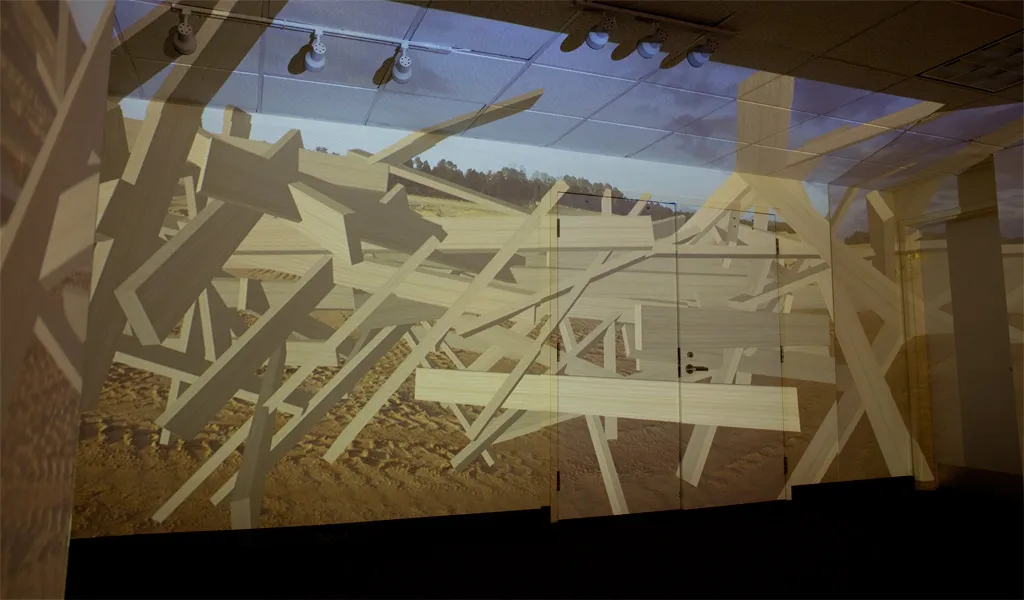
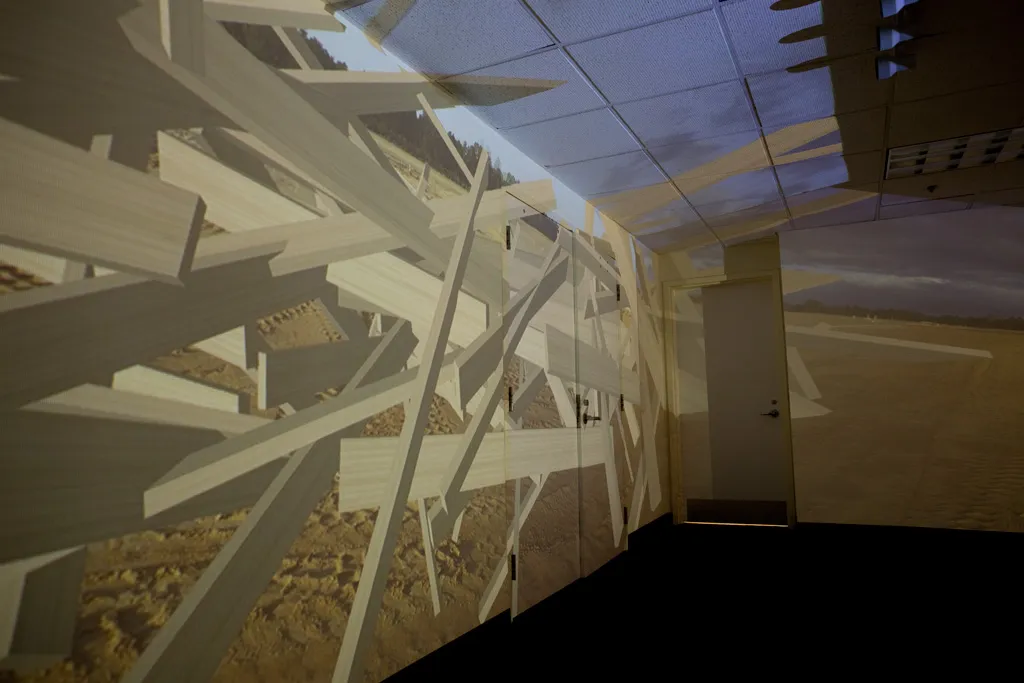
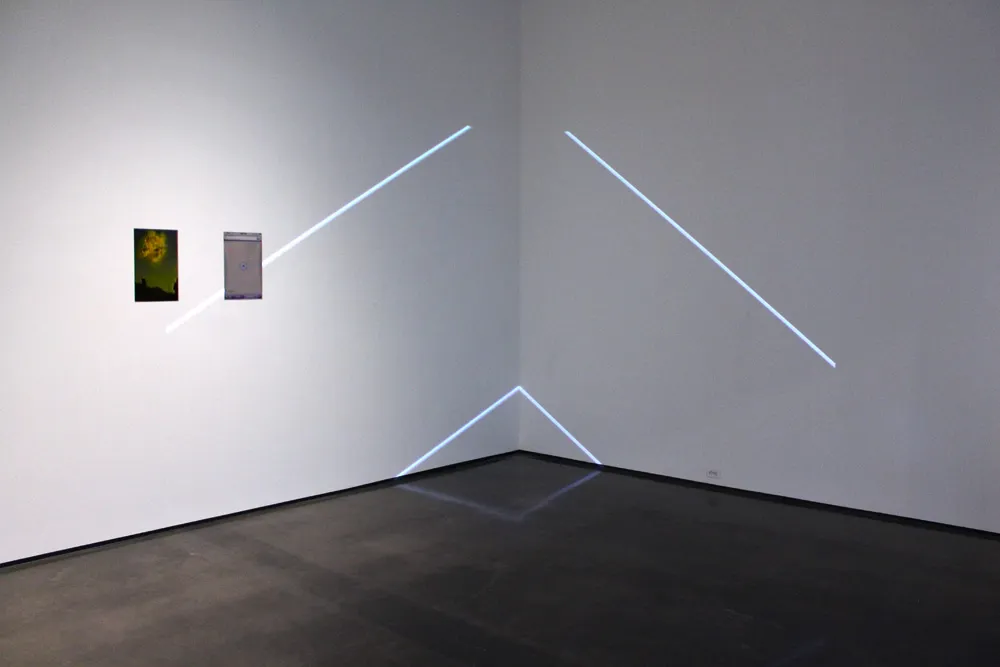
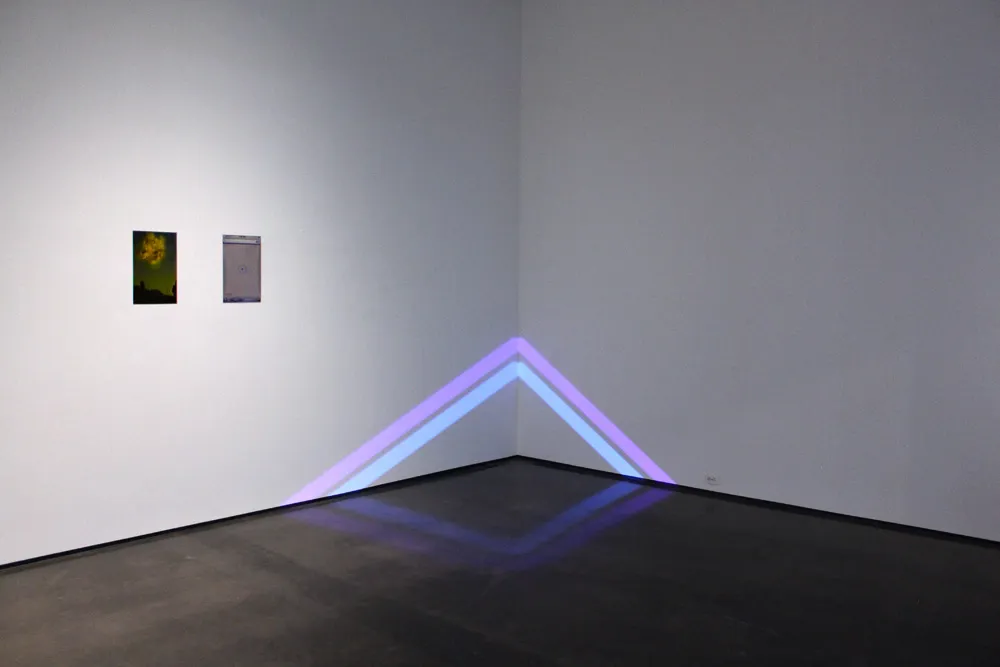
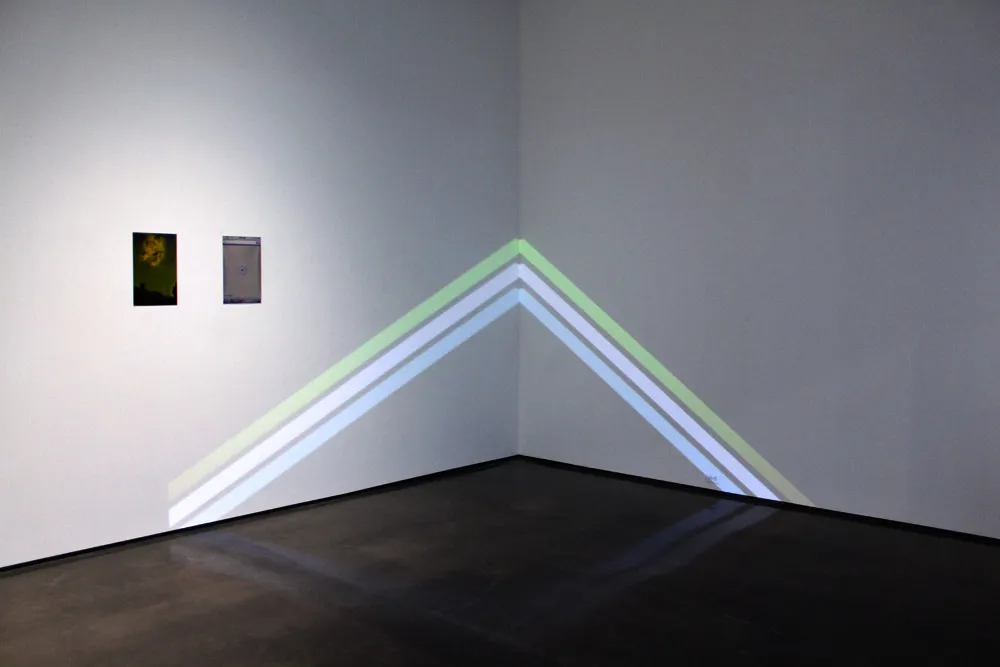
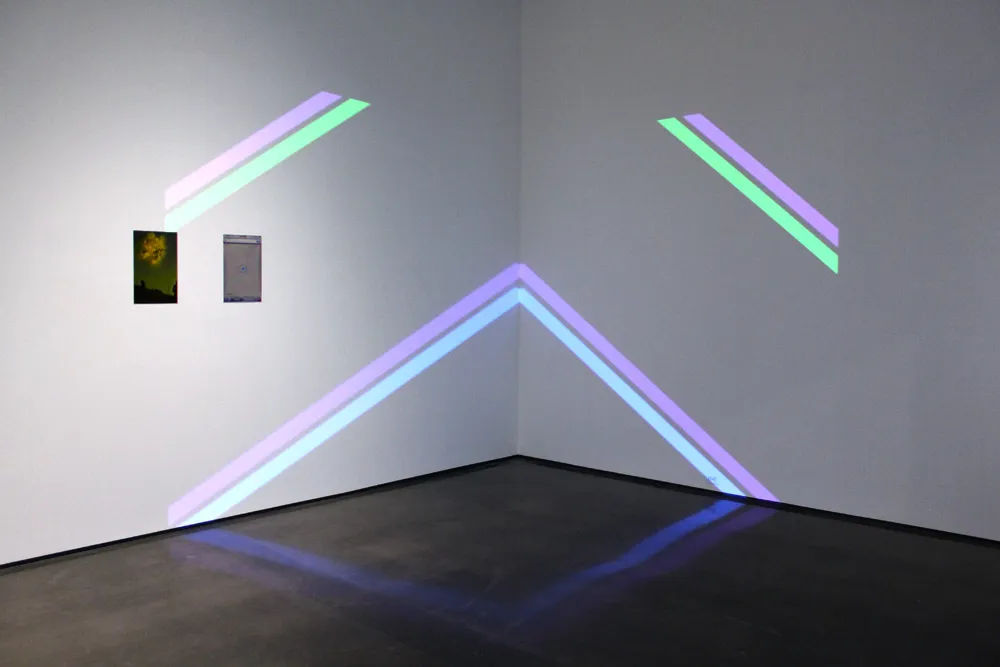
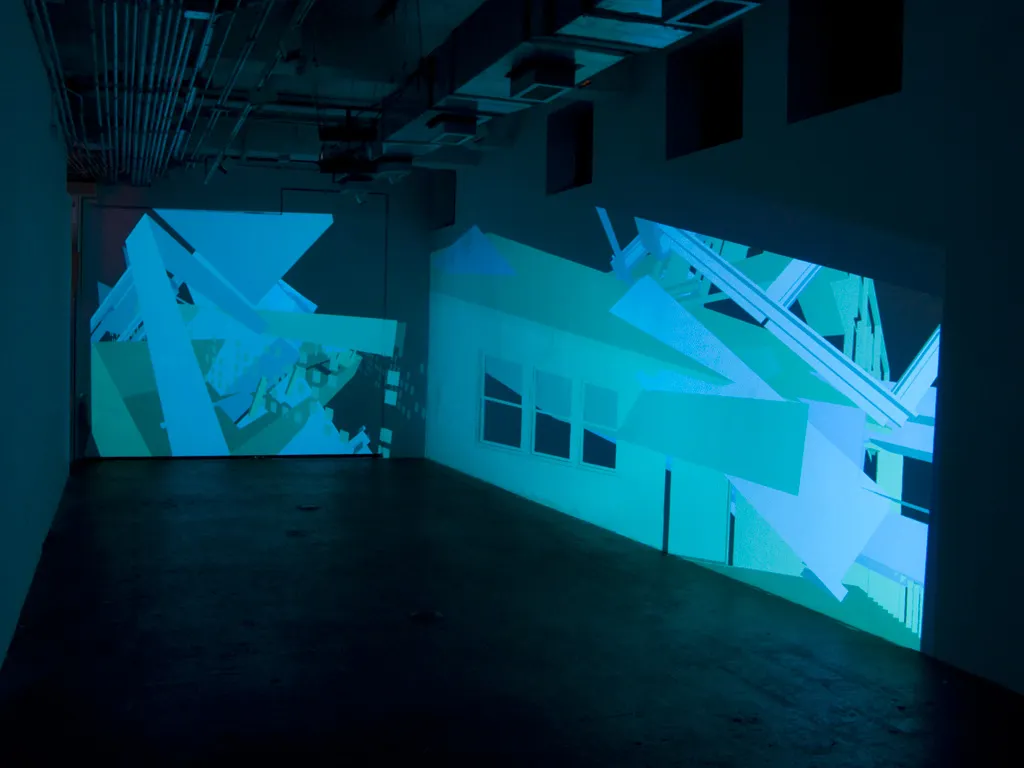
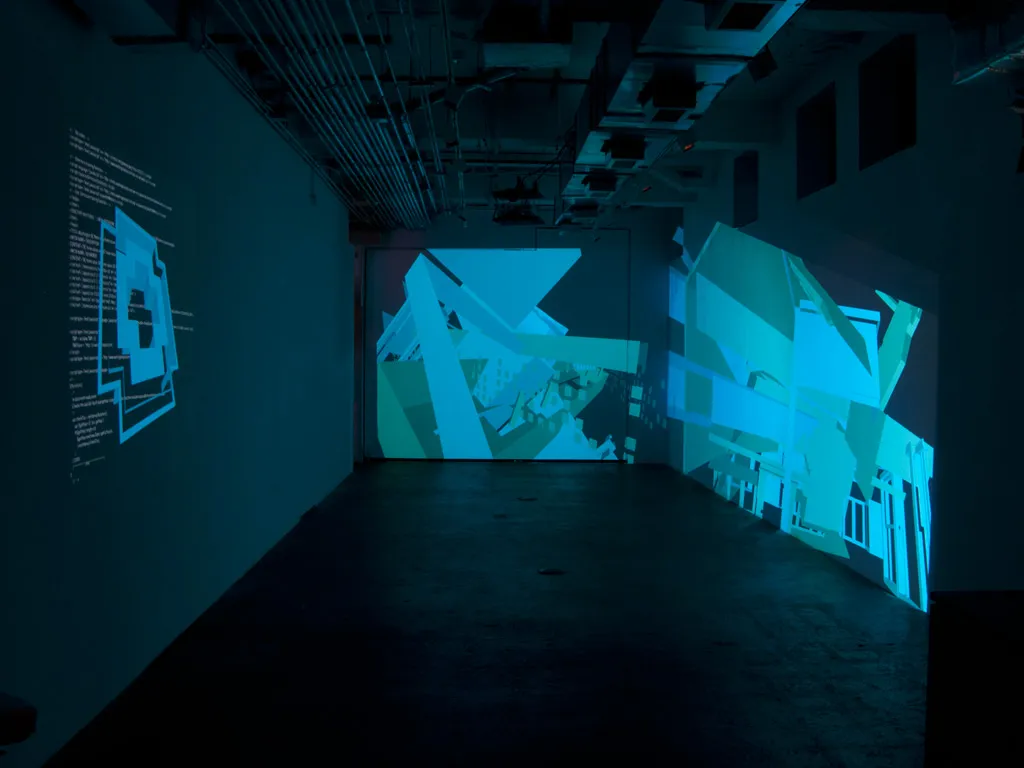
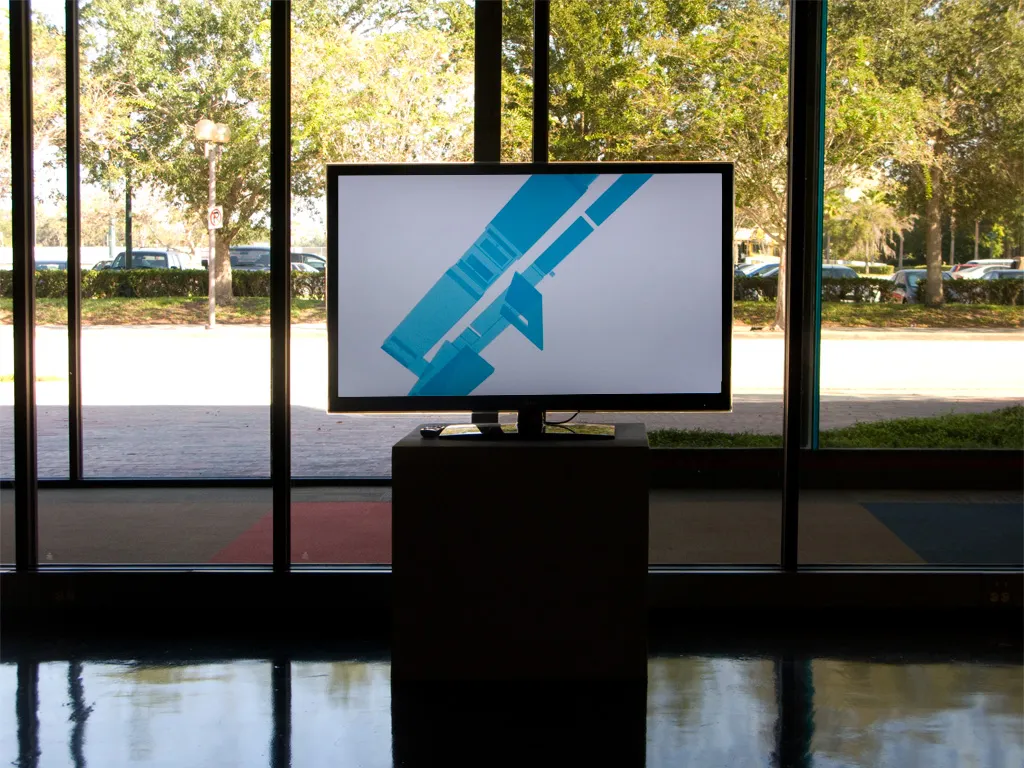
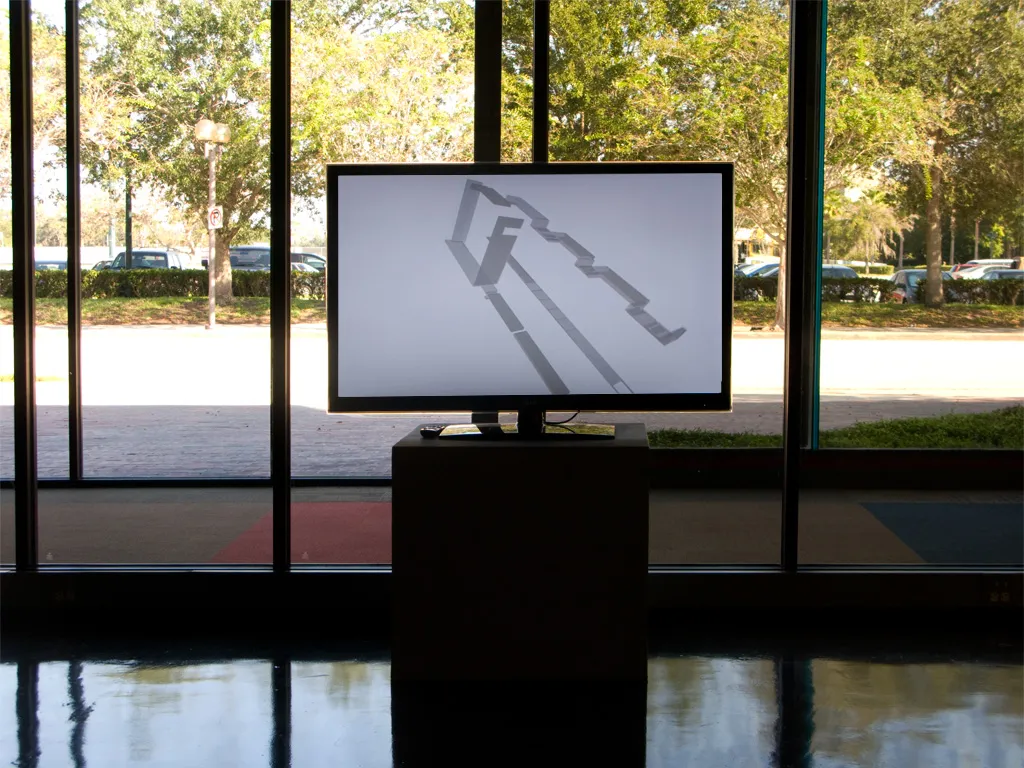
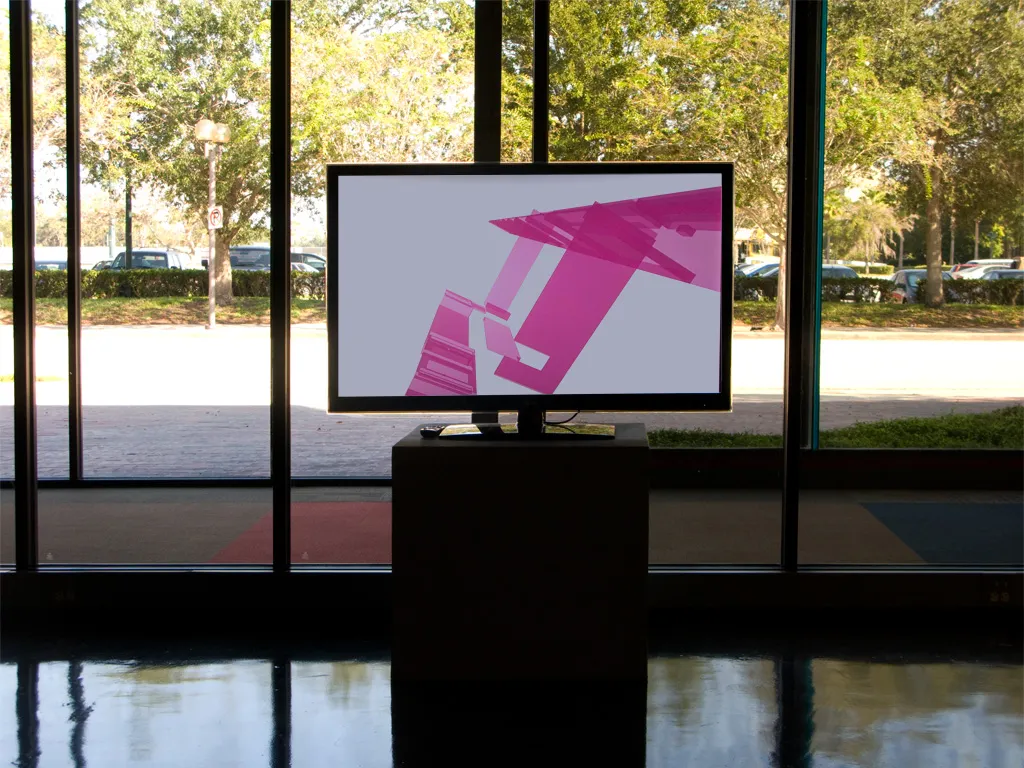
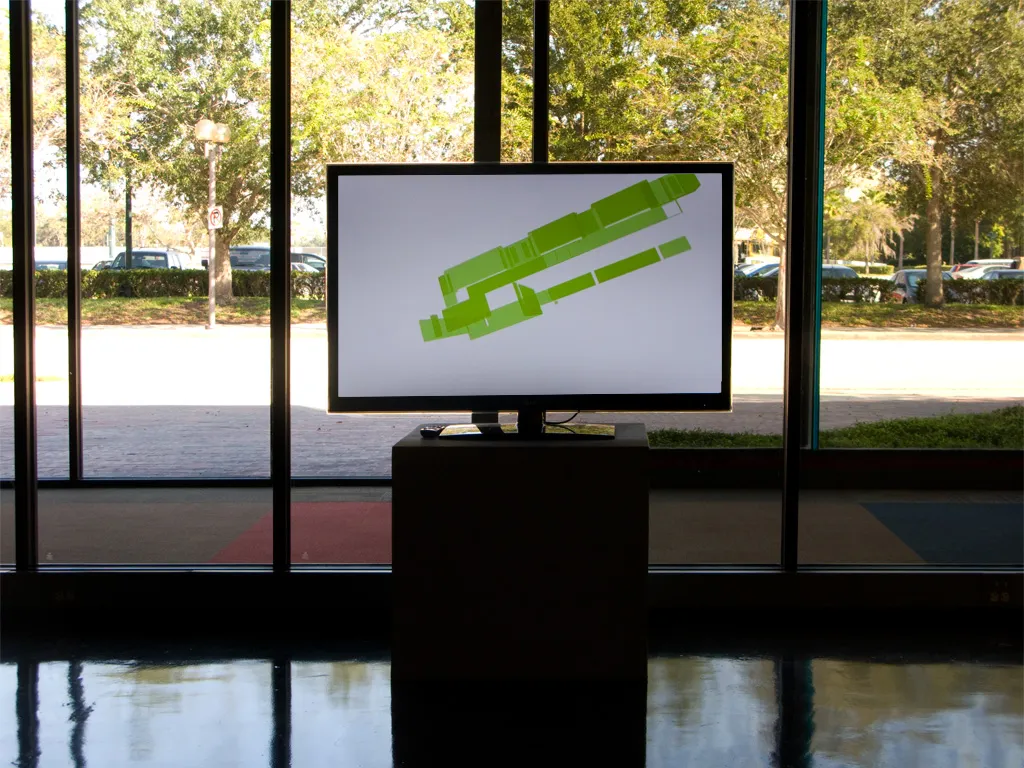
Joelle and I installed a new work at the Orlando Museum of Art this week…

2x4_oma_2013_30_1024w

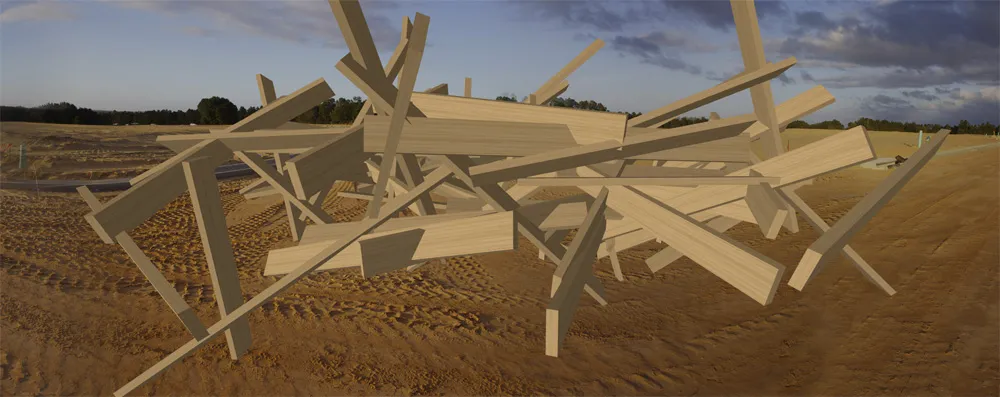
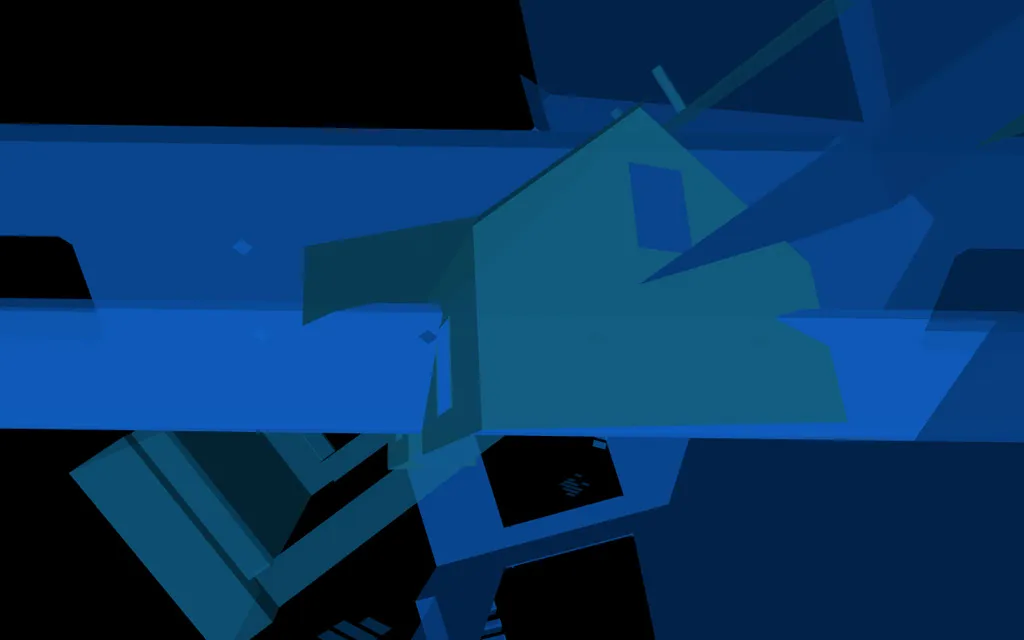
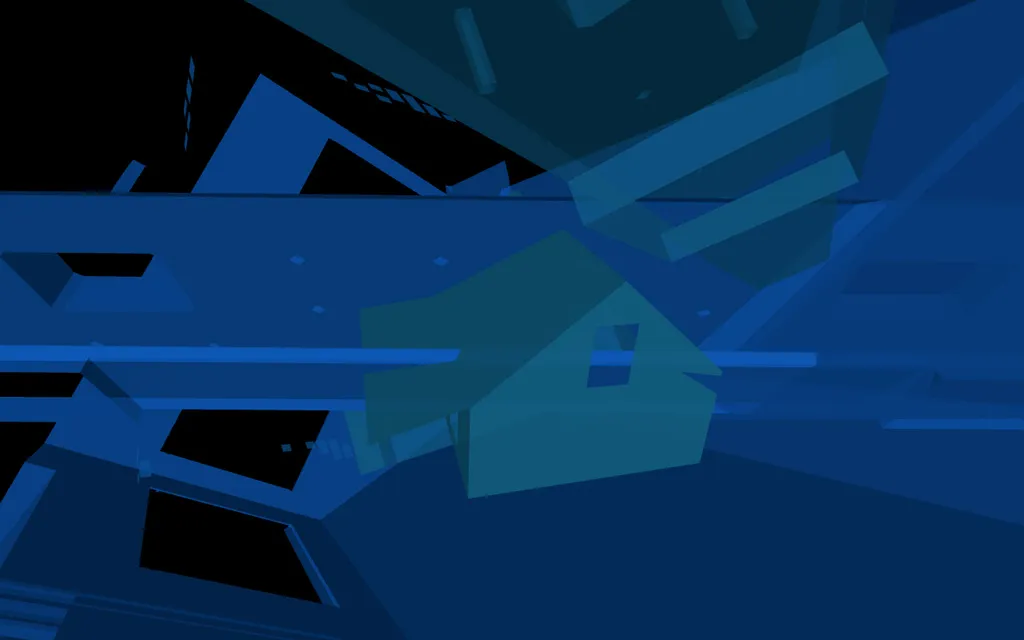
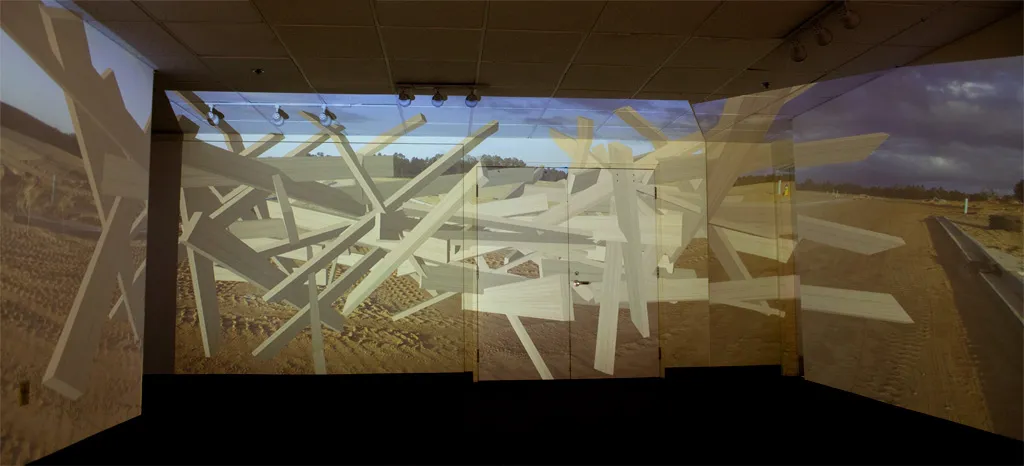
1.5 x 3.5 is a single-channel generative animation by Joelle Dietrick and Owen Mundy, currently displayed in the Orlando Museum of Art’s New Work Gallery. The title 1.5 x 3.5 is the actual measurement for a 2 x 4 inch board. Ubiquitous as an article for the construction of buildings, as well as a formal, minimal, primitive shape, the 2 x 4 here is transformed through its incorporation into a virtual space. The simulation of the generic form becomes an index for any building material, physical or digital, and its manipulation, a metaphor for the fragmentation of digital communication.

2x4_oma_2013_35_1024w

2x4_oma_2013_36_1024w

As the main character in their animation, the 2 x 4 is virtually constructed then multiplied and subtly manipulated to form an evolving cluster floating above a photograph of a contemporary construction site. From a housing development just northeast of Orlando, nestled between the Florida Turnpike and Old Country Road 50, this backdrop also calls to mind another space described by the minimalist sculptor Tony Smith. Smith describes a drive down an unfinished highway as a sublime experience. The highway’s liminal state-imagined, artificial, and full of potential-liberated Smith’s assumptions about art.

1.5 x 3.5 grows out of their recent series of installations, prints, and public artworks called Packet Switching. This body of work uses custom software to visualize architecture as fragments affected by economic and communications systems.

2x4_screen_07_crop_1000w

No-one Ever Cried At A Website (Speed Show) Friday, November 22

No-one Ever Cried At A Website (Speed Show)

November 22, 5:00–6:30 pm EST, Computer training room, Facility for Arts Research, 3216 Sessions Road, Tallahassee FL

With FSU students: Monique Boileau, Alexis Cooper, Jonathan Davito, Danielle English, Justin Greenstein, Antoinette Janus, Scotty Johnson, Melissa Lidsky, Michelle Medrano, Denise Morrow, Lena Weissbrot, Meghan “Red” Yancey. Curated by: Owen Mundy

Students from the Fall 2013 Network Art and Typography classes in the Department of Art at Florida State are staging an exhibition titled No-one Ever Cried At A Website (Speed Show) on November 22 5:00–6:30 pm EST at the computer training room in the Facility for Arts Research, Tallahassee FL.

The exhibition title is modified from an article called, “No-one Ever Cried At A Website,” written by artist/coder Matt Pearson. The document examines how emotion is often forgotten when analyzing technologically-sophisticated works of art such as those which exist on the internet. It reminds readers that painting was once a technology, and asks how beauty, empathy, and interaction can all be triggers for emotional response regardless of the medium for delivery. The prompt for the works in this show, created mostly collaboratively, over the course of 10 days, and specifically for this exhibition, is to address how emotion can be used to engage online audiences to look, listen, and be moved by internet-based art.

Speed Show exhibition, popularized by artist, Aram Barthol, are arranged as following: “Hit an Internet-cafe (or computer classroom), rent all computers they have and run a show on them for one night. All art works of the participating artists need to be on-line and are shown in a typical browser with standard plug-ins.”

Poster: Print resolution and E-mail resolution

After Douglas Davis – The World’s First Collaborative Sentence

After Douglas Davis – The World’s First Collaborative Sentence

README for After Douglas Davis
==============================

Statement
————–

The World’s First Collaborative Sentence was created by Douglas Davis in 1994 and donated to the Whitney Museum of American Art in 1995. Much like today’s blog environments and methods for crowdsourcing knowledge, it allowed users to contribute practically any text or markup to a never-ending sentence with no limits on speech or length.

At some point the sentence stopped functioning, and in early 2012 the Whitney Museum undertook a “preservation effort” to repair and relaunch the project. Measures were taken during the “restoration” to stay true to the original intent of the artist, leaving dead links and the original code in place.

During the preservation the curators placed small sections of garbled ASCII text from the project on Github with the hope that others would “fork” the data and repair the original. However, the Whitney Museum did not succeed in realizing that the collaborative culture of the net Davis predicted has actually arrived. This is evident not only through sites like Wikipedia, Facebook, and Tumblr, but the open source movement, which brings us Linux, Apache, and PHP, the very technologies used to view this page, as well as others like Firefox, Arduino, Processing, and many more.

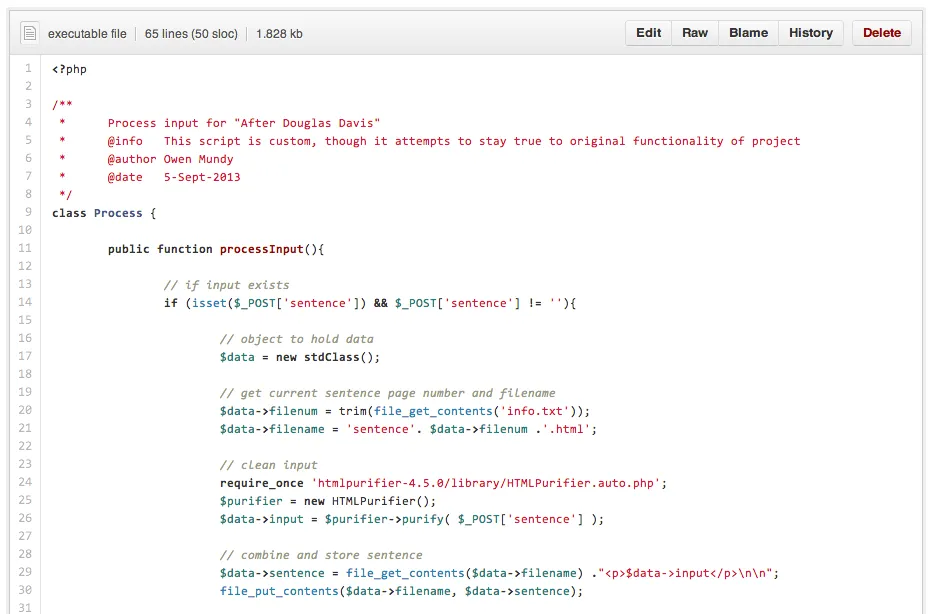
In the spirit of open source software and artists like Duchamp, Levine, runme.org and Mandiberg, on September 5, 2013, I “forked” Douglas Davis’ Collaborative Sentence by downloading all pages and constructing from scratch the functional code which drives the project. I have now placed this work on Github with the following changes:

1. All pages are updated to HTML5 and UTF-8 character encoding
2. The functional code was rewritten from scratch including a script to remove malicious code
3. The addition of this statement

I was originally disappointed the Whitney Museum didn’t place the full source code in the public domain. What better way to make it possible for artists and programmers to extend the life of Davis’ project by learning from, reusing, and improving the original code than to open source this work? Though, possibly like Davis, my motivation is largely in part an interest in constructing a space for dialog, framing distinct questions and new possibilities, and waiting to see what happens from this gesture.

Included software
————–
HTML Purifier http://htmlpurifier.org/

Live version
————–
Enter After Douglas Davis

About the author
————–
Owen Mundy http://owenmundy.com/

CYBER IN SECURITIES, Pepco Edison Place Gallery, Washington, DC

CyberInSecurities_grid

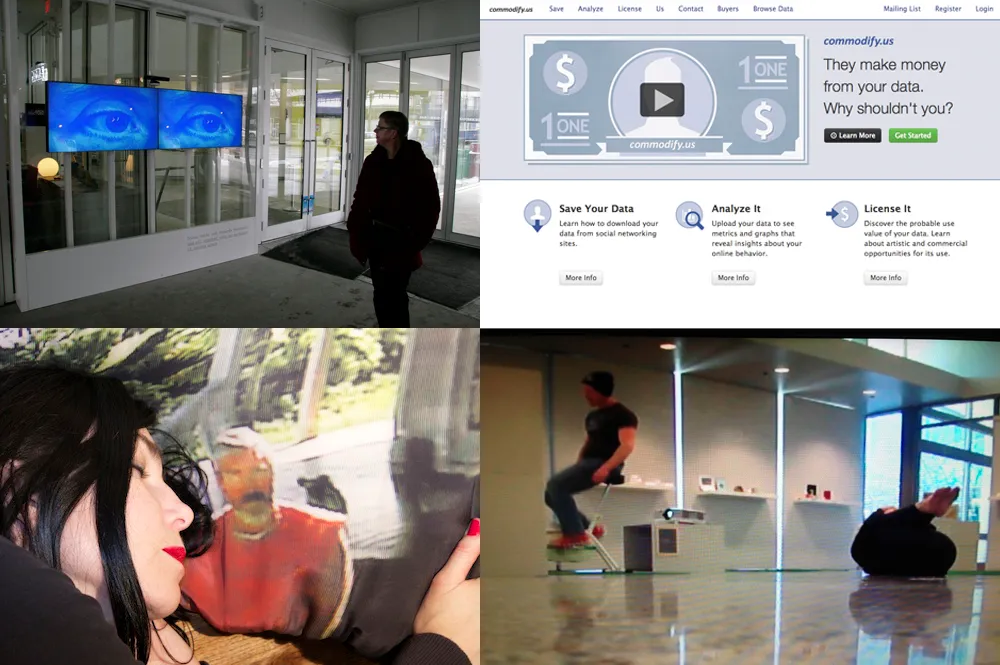
clockwise l to r: Ricarada McDonald and Donna Szoke, and all watched over by machines of loving grace; Birgit Bachler, Walter Langelaar, Owen Mundy, and Tim Schwartz, Commodify.us; Lexie Mountain, Ball Hard; Whitefeather, Parent Folder

CYBER IN SECURITIES
Dates: August 30 – September 27, 2013
Location: Pepco Edison Place Gallery, 702 8th Street, NW, Washington, DC

Curated by: Lisa Moren, Professor, Department of Visual Art, University of Maryland, Baltimore County

Participating Artists: Birgit Bachler, Walter Langelaar, Owen Mundy, and Tim Schwartz; Channel TWo (CH2): Adam Trowbridge and Jessica Westbrook, with Jesus Duran; Heather Dewey-Hagborg; Hasan Elahi; The Force of Freedom with Dave Young; Taylor Hokanson; Ricarda McDonald and Donna Szoke; Lexie Mountain; Preemptive Media; David Rokeby; Julia Kim Smith; and WhiteFeather

Opening Reception: Friday, August 30, 2013, 6-8pm
Exhibition Hours: Tuesday – Friday, 12pm-4pm

Experimental Media Video Screening Series
Juried by Jason Eppink, Associate Curator of Digital Media, Museum of the Moving Image, New York

Experimental Media Video Series Night One: Thursday, September 12, 2013, 6:30pm
Location: The Phillips Collection, 1600 21st Street, NW, Washington, DC

Experimental Media Video Series Night Two: Monday, September 24, 2013, 6:30pm
Location: The Corcoran Gallery of Art and College of Art + Design, 500 17th Street, NW, Washington, DC

Experimental Media Symposium: Saturday, September 21, 2013
Location: Pepco Edison Place Gallery, 702 8th Street, NW, Washington, DC

Experimental Media 2013 will explore security, privacy, and surveillance in the digital age, through a gallery exhibition, video screenings series, and panel discussion.

Give Me My Data visualizations / tutorials

I received two separate emails recently sharing images and sample code for visualization projects produced with the help of Give Me My Data. I’m happy to share them both here:

Give Me My Data

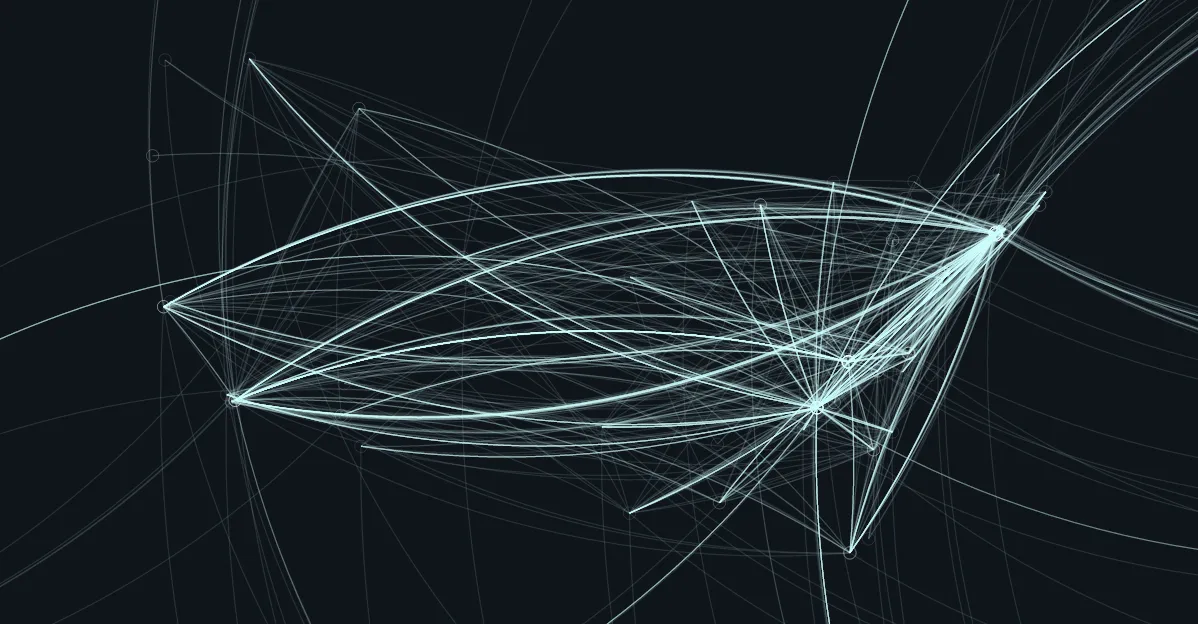
Alex Hornbake posted a visualization mapping Facebook friend locations and connections in D3. You can view it here and there’s a Gist with all the code here. His image shows where his connections are located, or have move to or from. As abstract and beautiful as the image is, one can still make out a rough outline of the United States and even guess at specific cities like Atlanta, New York, Miami, and Los Angeles.

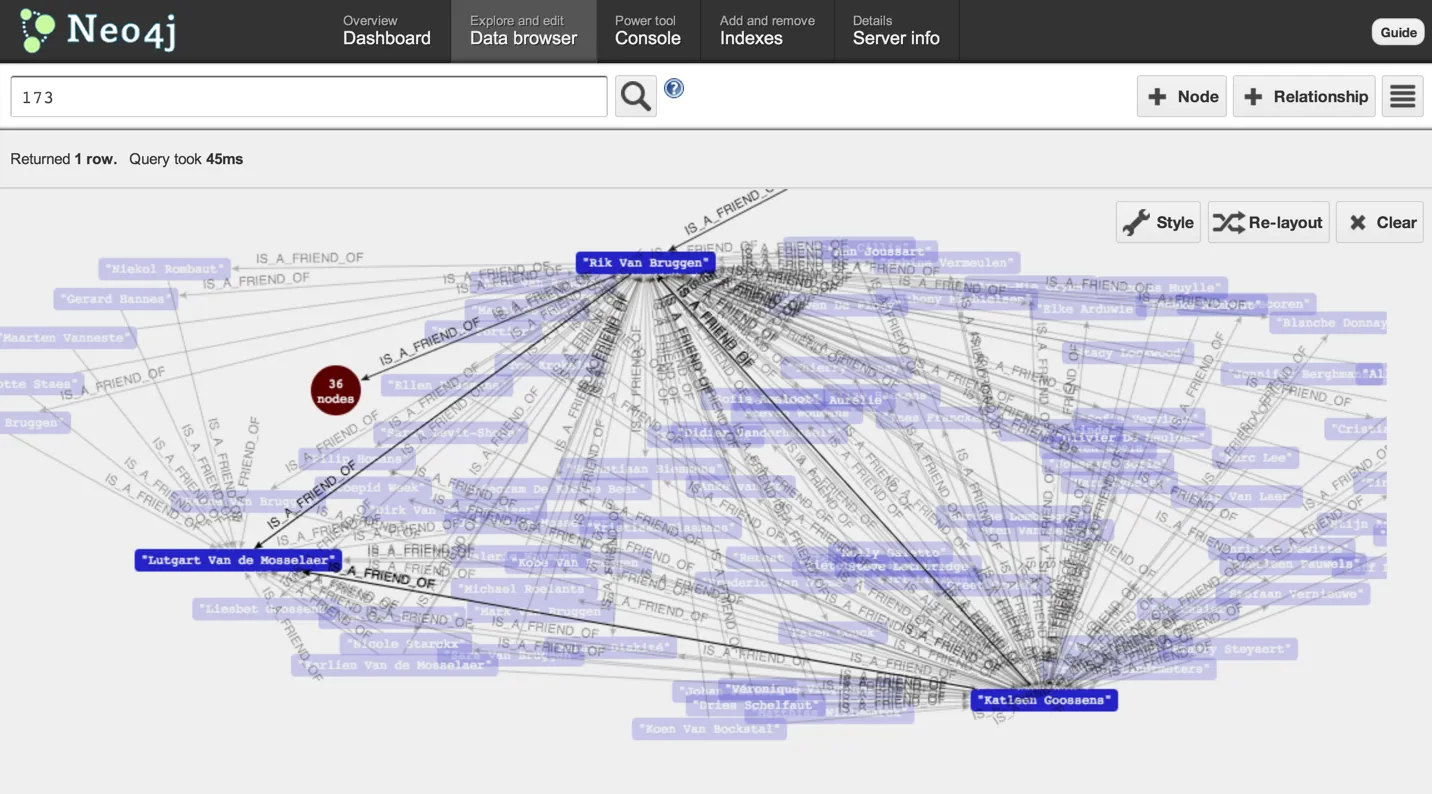
Rik Van Bruggen, of Neo Technology, used the “mutual friends graph” to create an interactive neo4j graph database. Following is more information from the tutorial he produced.

Ever since Facebook promoted its “graph search” methodology, lots of people in our industry have been waking up to the fact that graphs are über-cool. Thanks to the powerful query possibilities, people like Facebook, Twitter, LinkedIn, and let us not forget, Google have been providing us with some of the most amazing technologies. Specifically, the power of the “social network” is tempting many people to get their feet wet, and to start using graph technology. And they should: graphs are fantastic at storing, querying and exploiting social structures, stored in a graph database.

The first step to take was to get access to my own facebook data. Obviously there is the facebook graph api, but I hope that by now you would realise that is just not my cup of tea. Sounded to exhausting :) … So: I found myself a little tool that would allow me to download the data from facebook, in a workable format. Give me my data provides a number of different export options, but I chose the “Mutual Friends Network Graph – as it would give me most info with regards to my actual social network.

png;base64ad8e402bc7ee51e

Terms & Conditions of Use (documentation)

Terms & Conditions of Use, curated by Sarah Higgins and part of the larger Less Like an Object More Like The Weather Graduate Thesis Exhibition at the Center for Curatorial Studies, Bard College/Hessel Museum, closes this Sunday. Here are some images and a video from two of the three commissioned works for the exhibition.

bard_terms_title_1000w

terms_ticker_05_800h

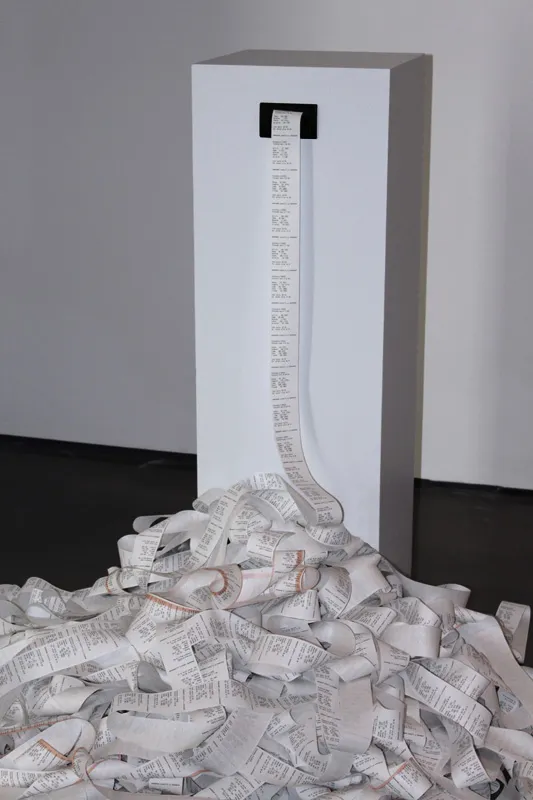
Commodify.us PeopleTicker, computer, thermal printer, paper, 2013

terms_ticker_09_1000w

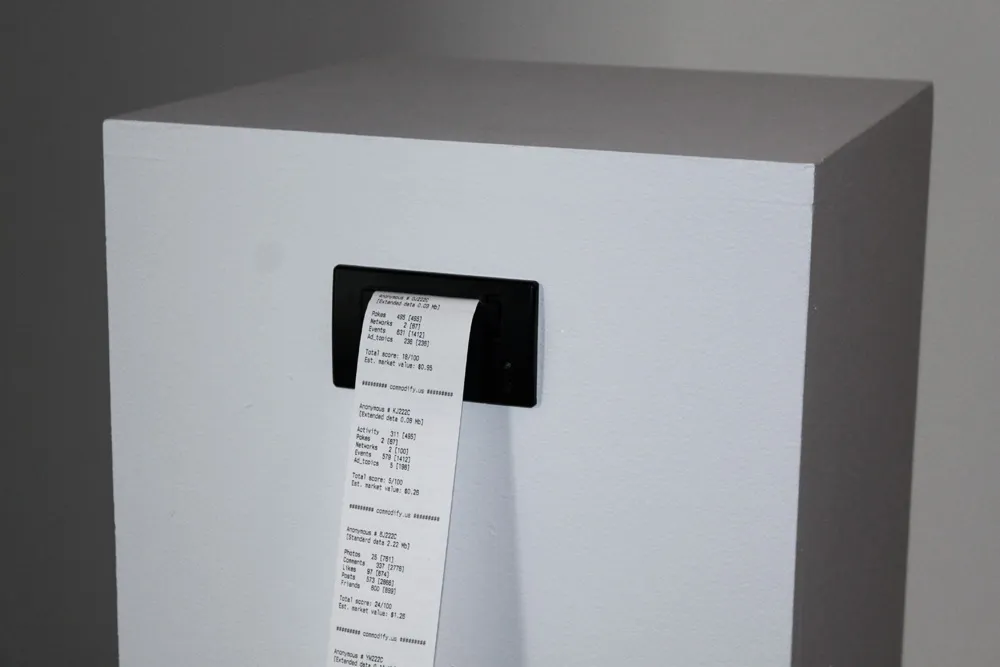
Commodify.us PeopleTicker, computer, thermal printer, paper, 2013

terms_network_05_1000w

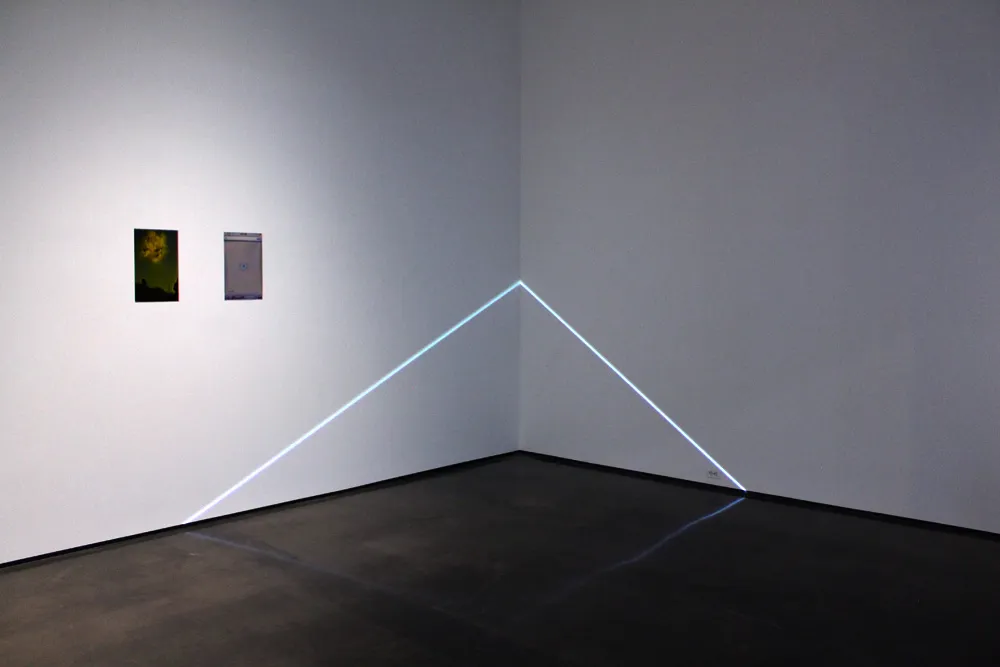
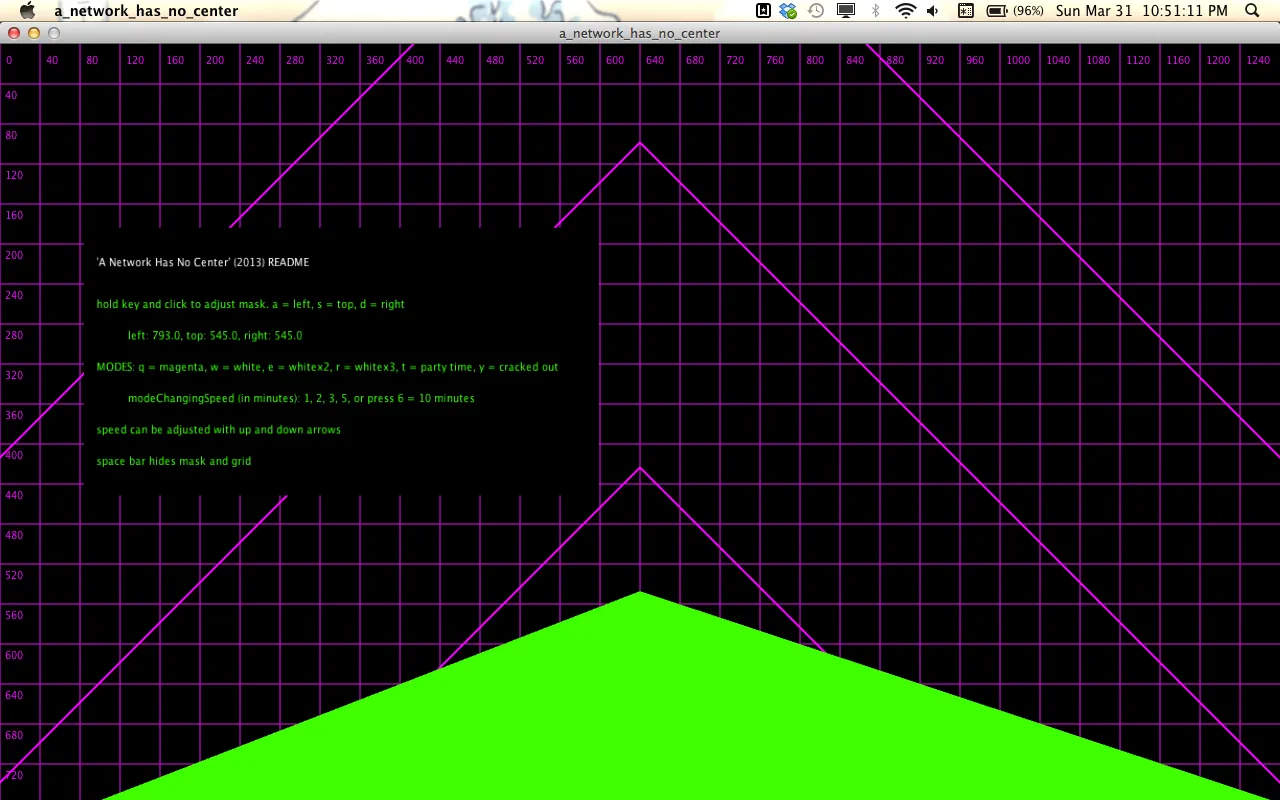
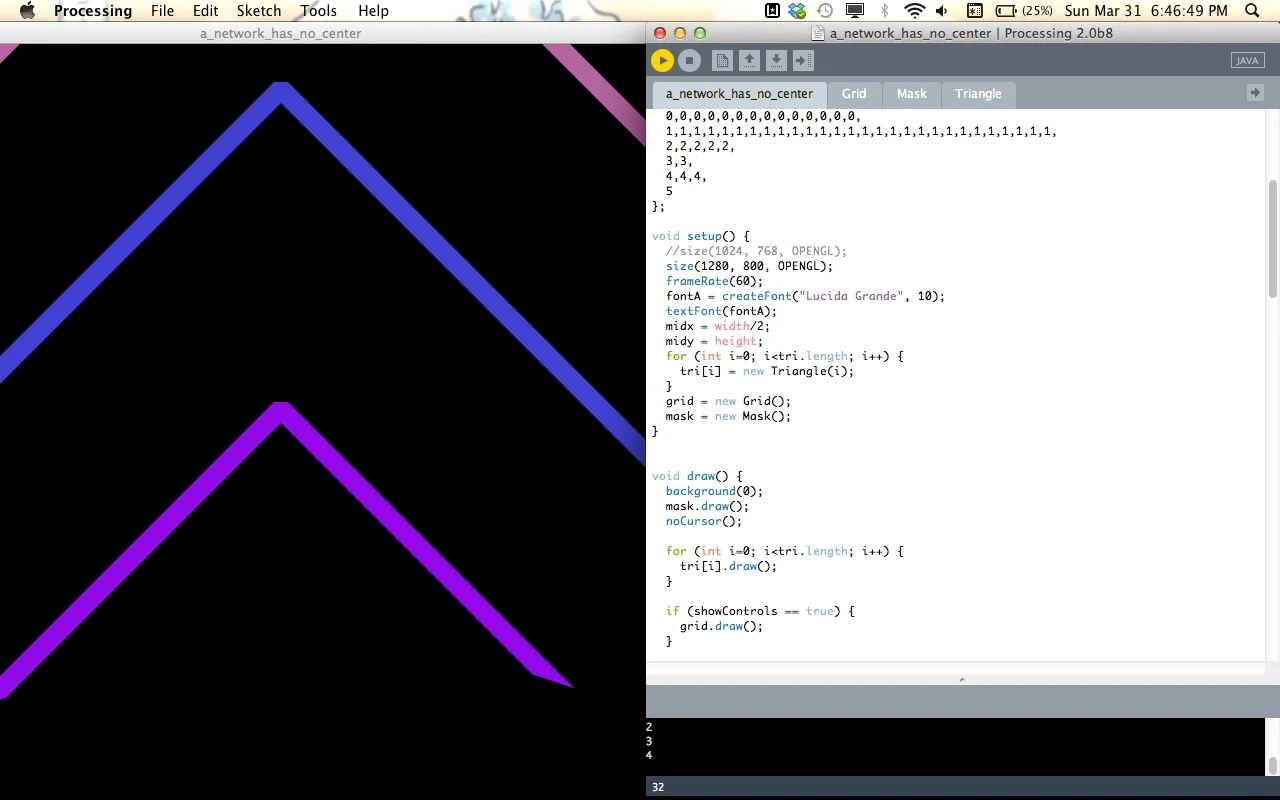
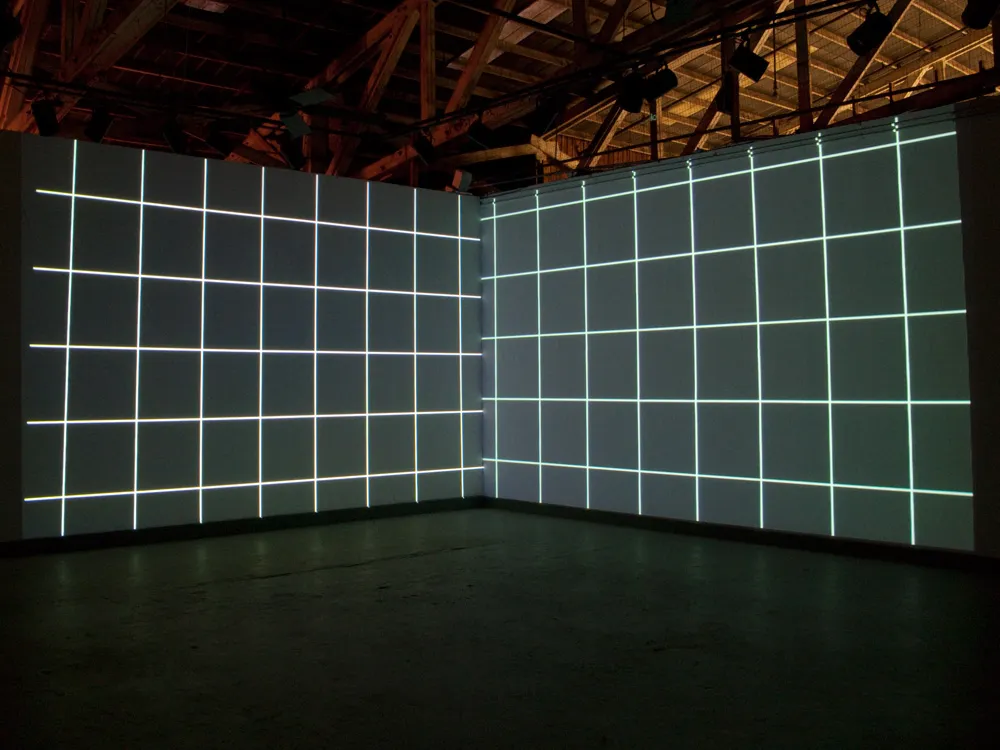
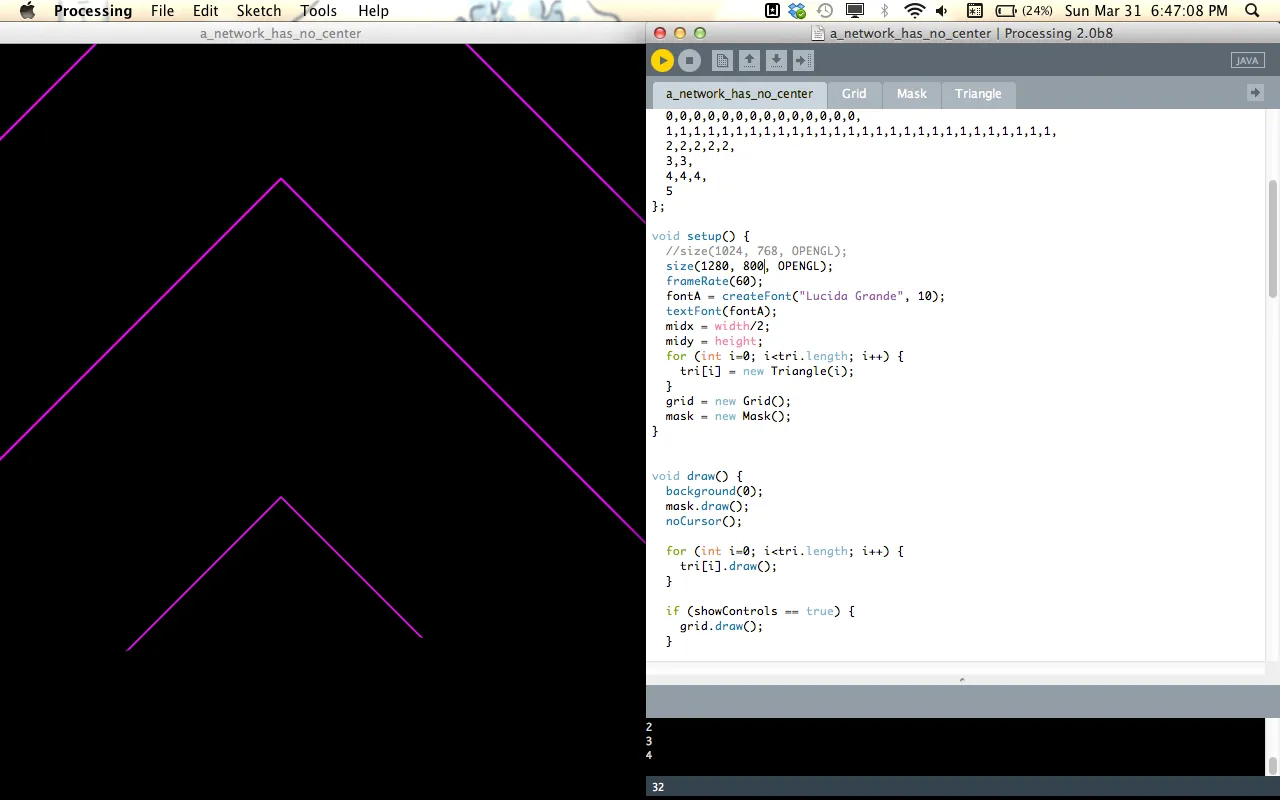
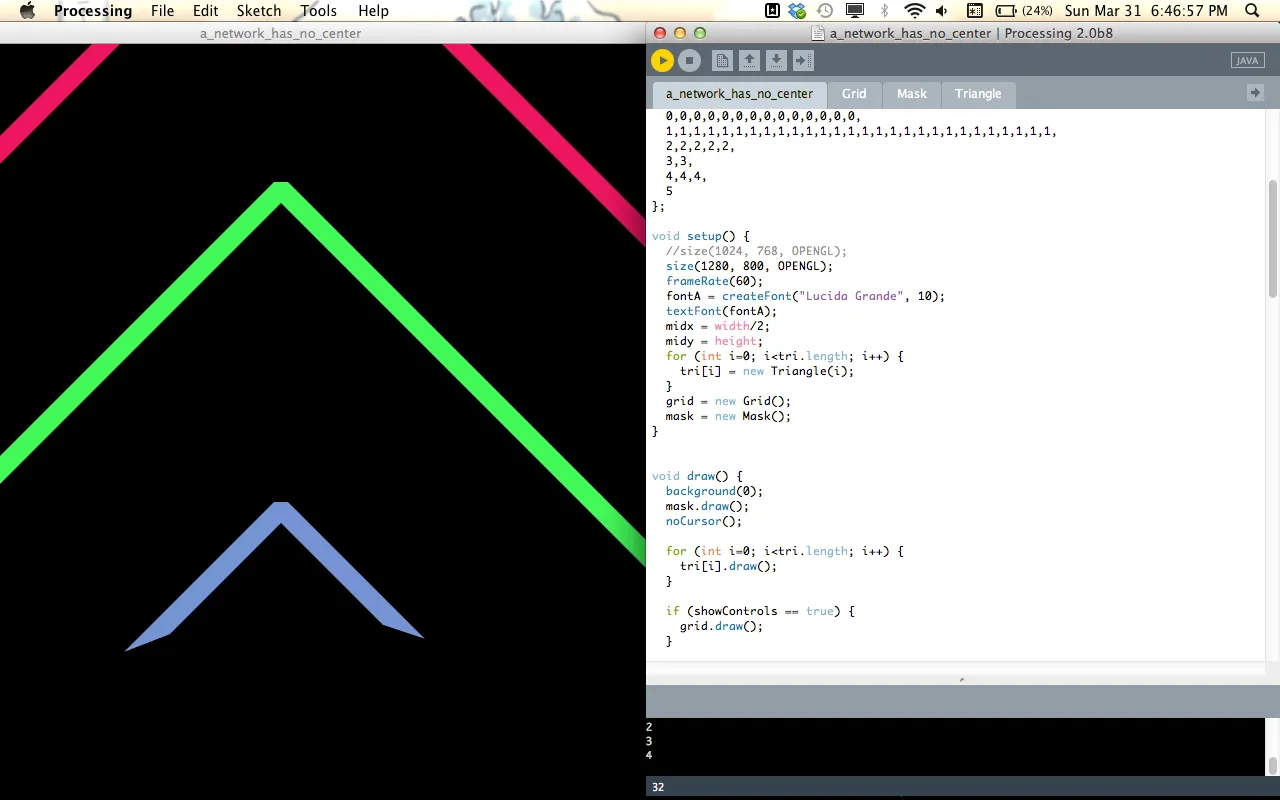
A Network Has No Center (“standard” mode), projector, custom software, ink jet on mylar, 2013

terms_network_07_1000w

A Network Has No Center (“standard” mode), projector, custom software, ink jet on mylar, 2013

terms_network_29_1000w

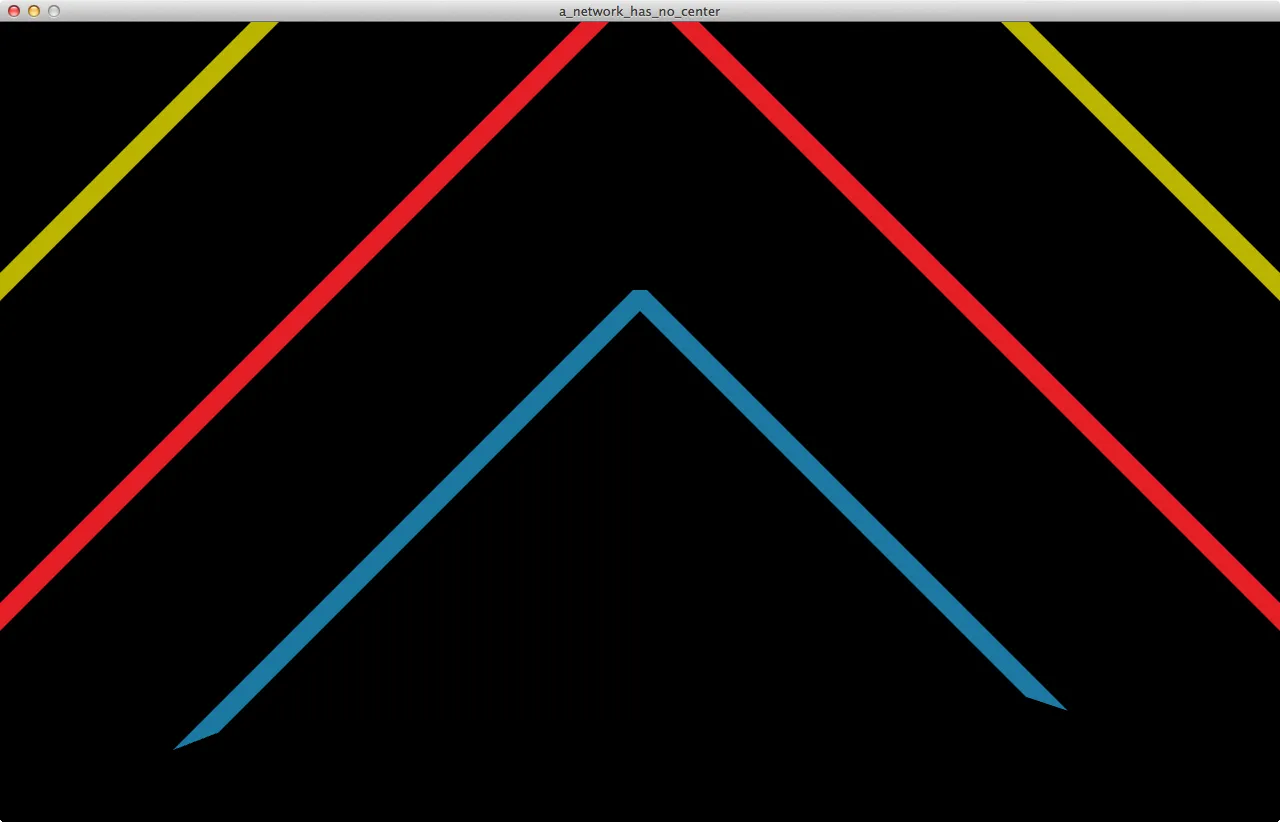
A Network Has No Center (“cracked-out” mode), projector, custom software, ink jet on mylar, 2013

terms_network_22_1000w

A Network Has No Center (“cracked-out” mode), projector, custom software, ink jet on mylar, 2013

terms_network_28_1000w

A Network Has No Center (“cracked-out” mode), projector, custom software, ink jet on mylar, 2013

Packet Switcher @ Herron School of Art and Design (documentation)

Some images from the exhibition…

herron_darkly_29_desert_1000w

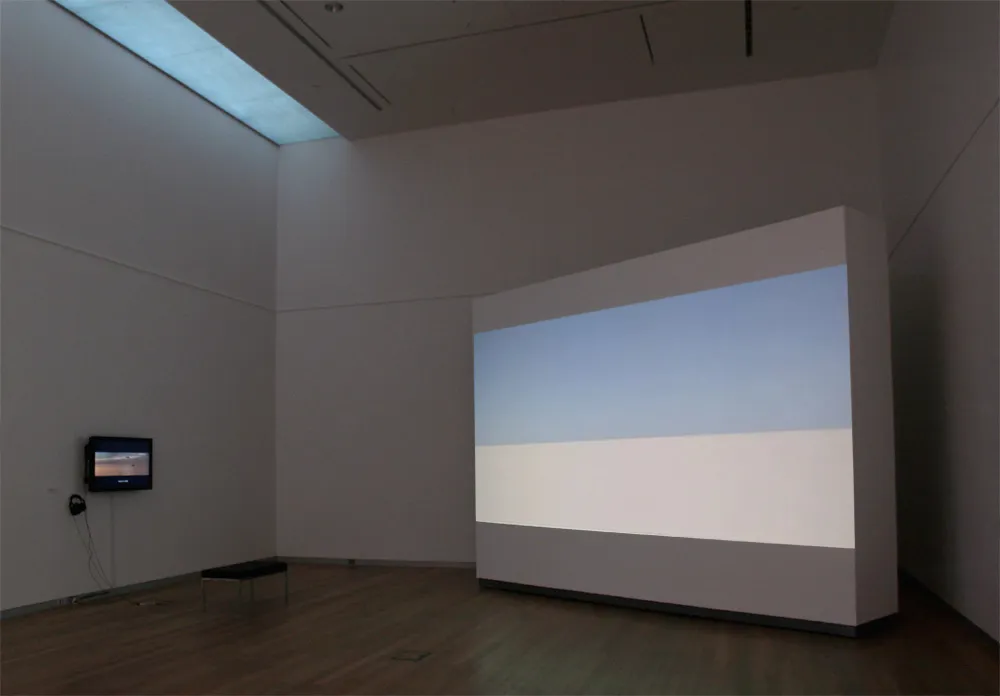
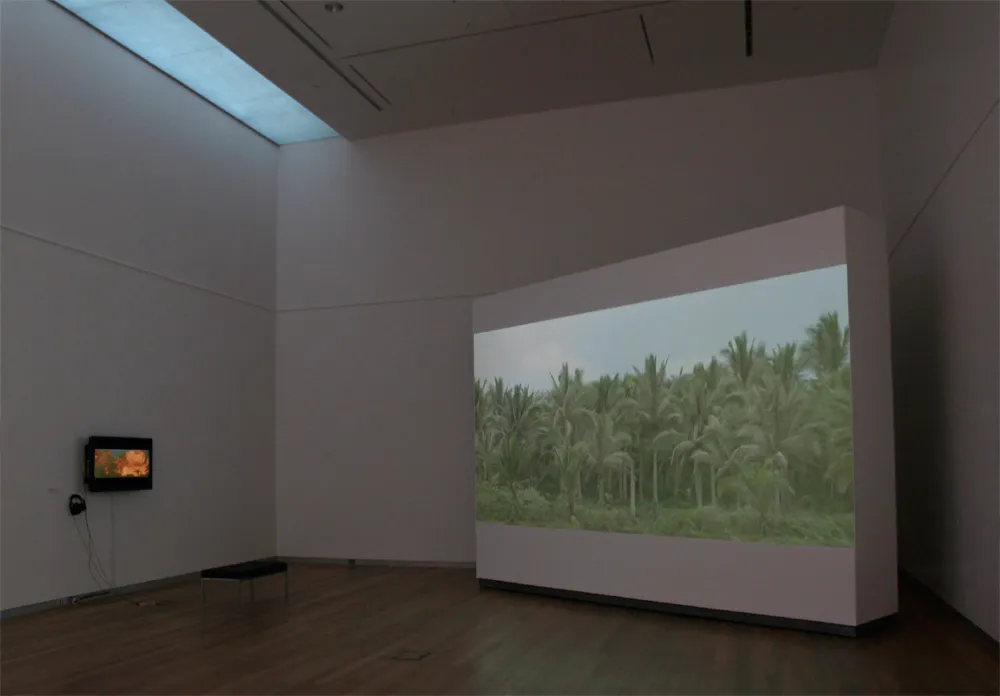
Through A Glass Darkly: Epilogue (7:30), Single-channel video, 2011 (left) and Through A Glass Darkly (12:08), Single-channel video, 2008 (right)

herron_darkly_29_apocalpse_1000w

Through A Glass Darkly: Epilogue (7:30), Single-channel video, 2011 (left) and Through A Glass Darkly (12:08), Single-channel video, 2008 (right)

herron_commodifyticker_03_1000w

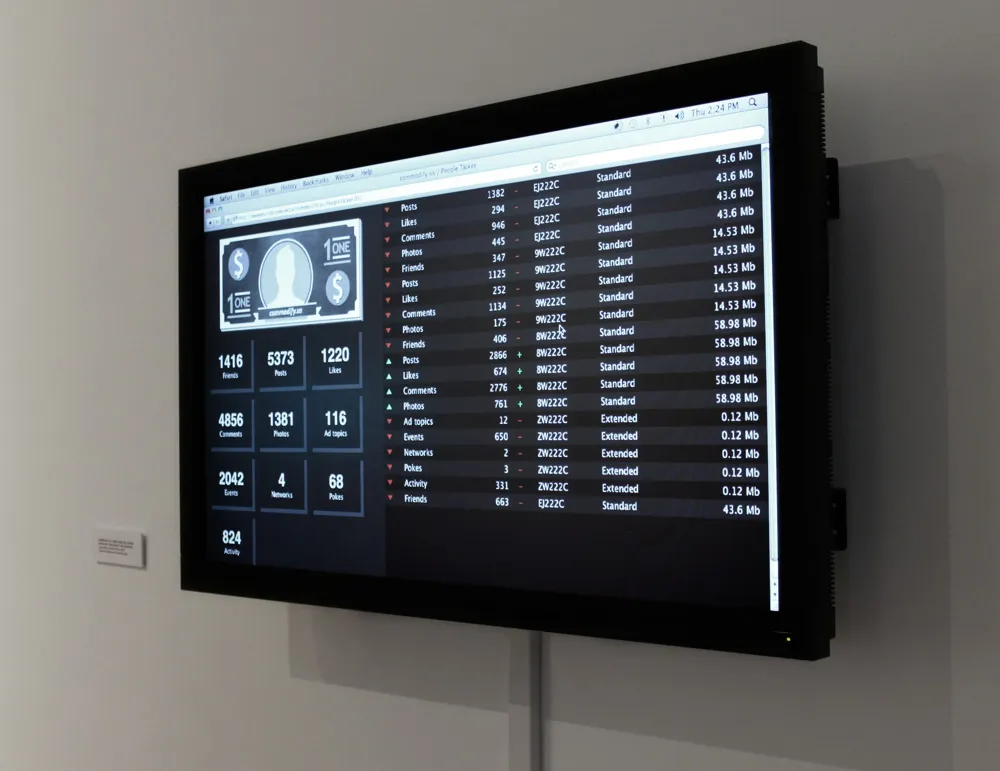
Commodify.us Ticker (with Commodify, Inc.), Live data stream, 2012-13

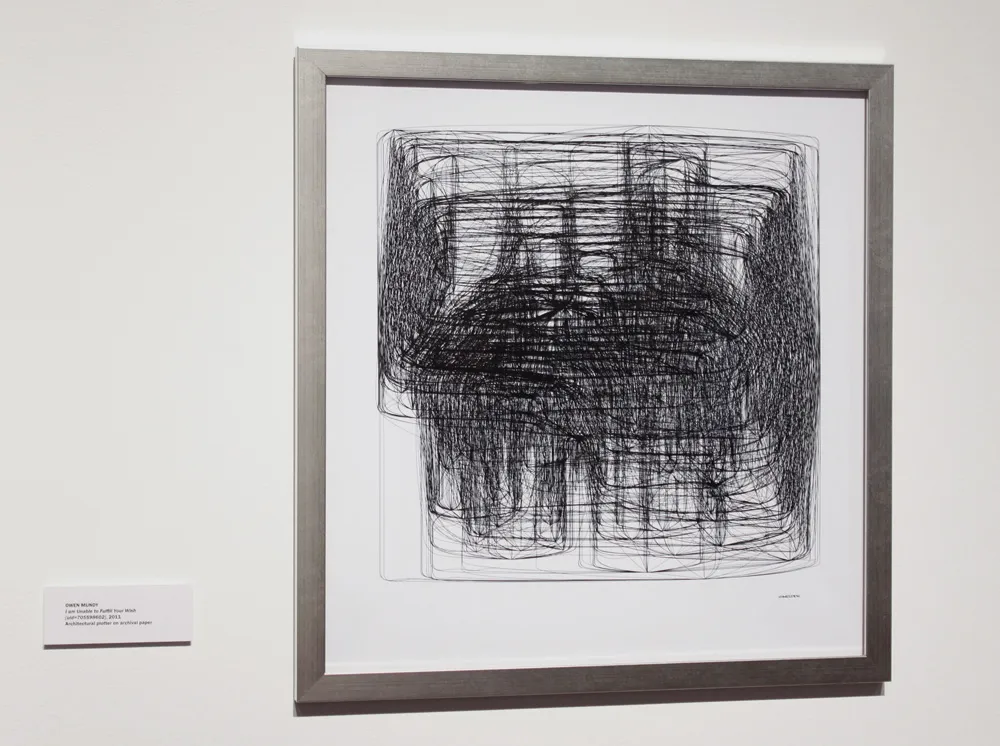
herron_unable_10_1000w

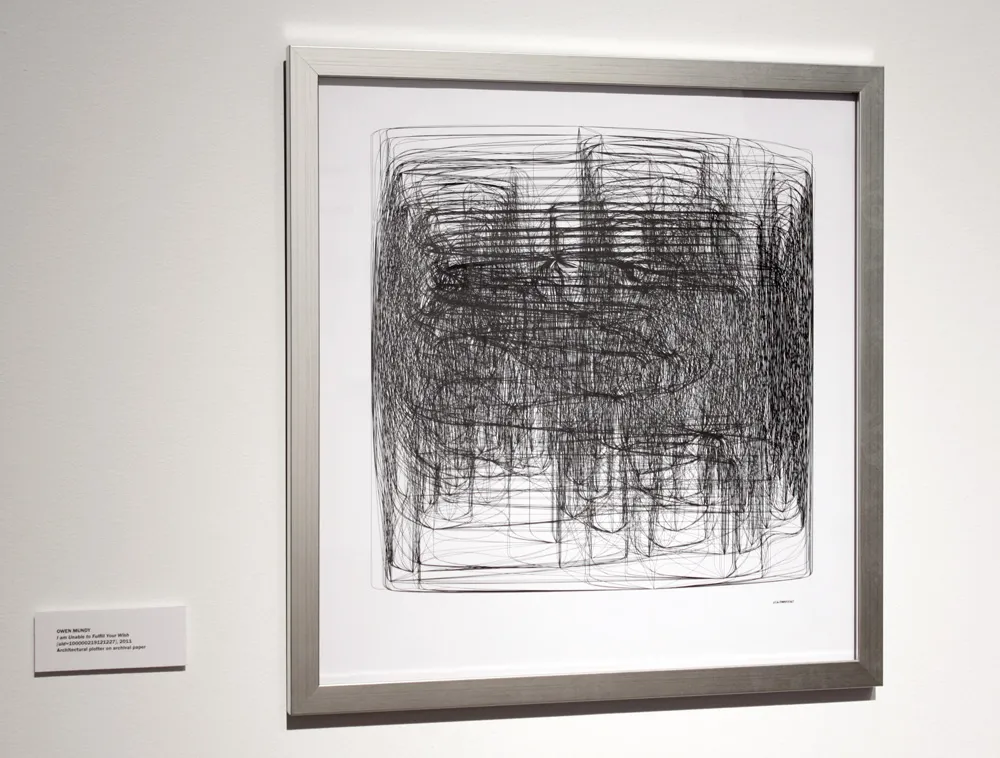
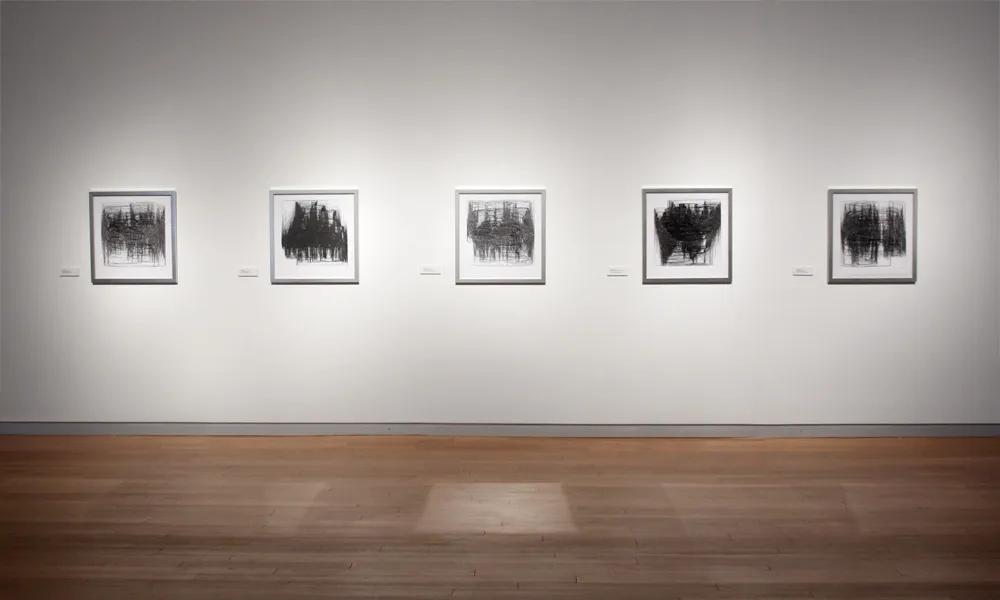
I Am Unable To Fulfill Your Wish, Line-plotter prints w/archival ink

herron_unable_05_1000w

I Am Unable To Fulfill Your Wish, Line-plotter prints w/archival ink

herron_unable_17_1000w

I Am Unable To Fulfill Your Wish, Line-plotter prints w/archival ink

herron_consequence_03_1000w

The Consequence of Scale, Projectors and custom software, 2009

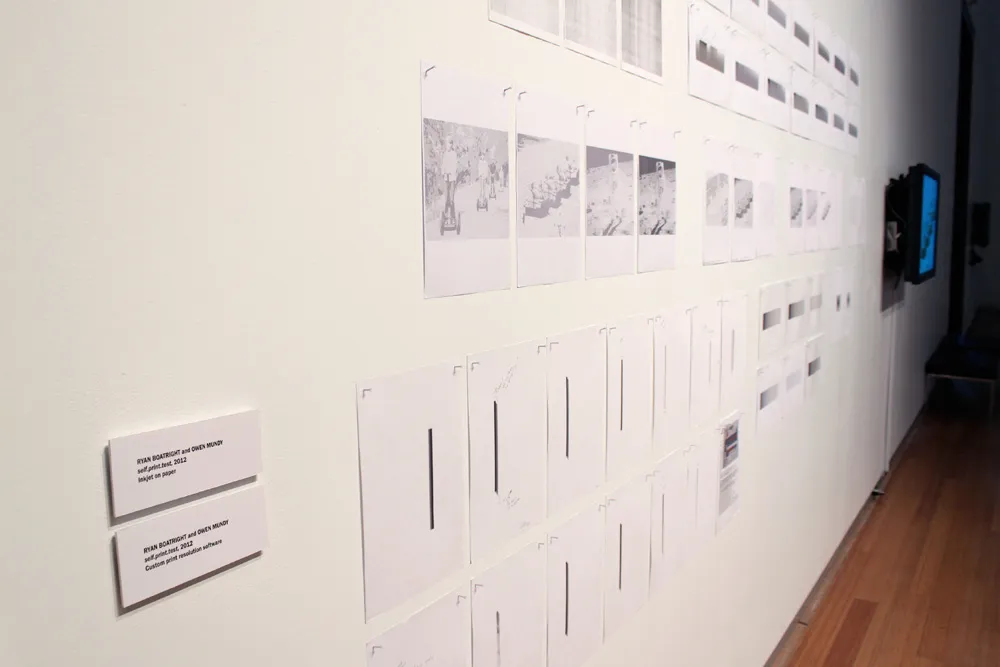
herron_selfprinttest_05_irvine_1000w

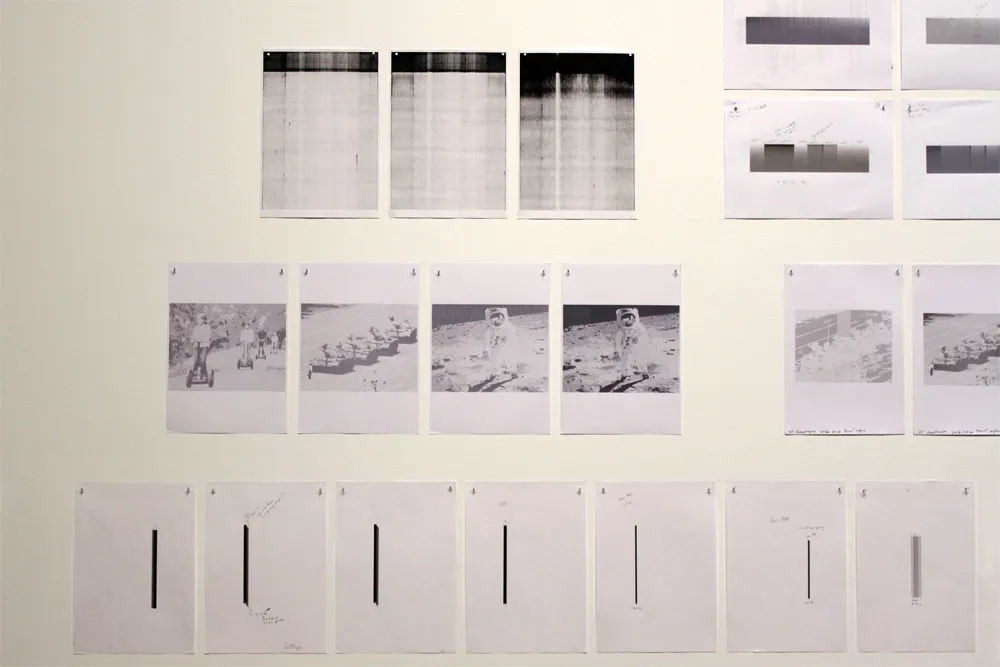
Self.print.test (with Ryan Boatright), Ink jet prints and custom software, 2012-13

herron_selfprinttest_20_sideview_1000w

Self.print.test (with Ryan Boatright), Ink jet prints and custom software, 2012-13

herron_selfprinttest_19_1000w

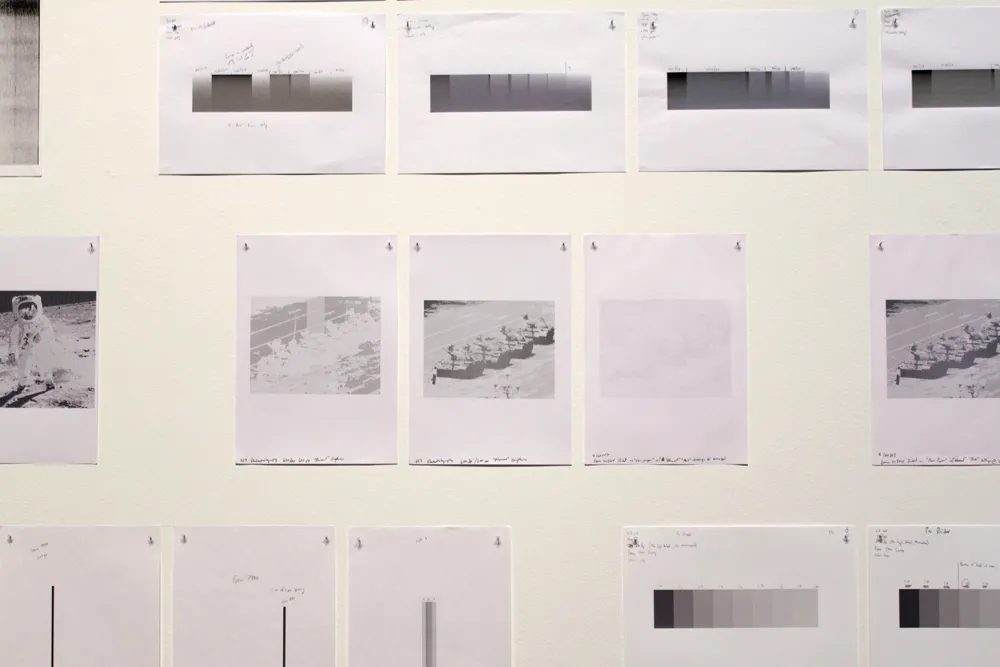
Self.print.test (with Ryan Boatright), Ink jet prints and custom software, 2012-13

herron_selfprinttest_17_1000w

Self.print.test (with Ryan Boatright), Ink jet prints and custom software, 2012-13

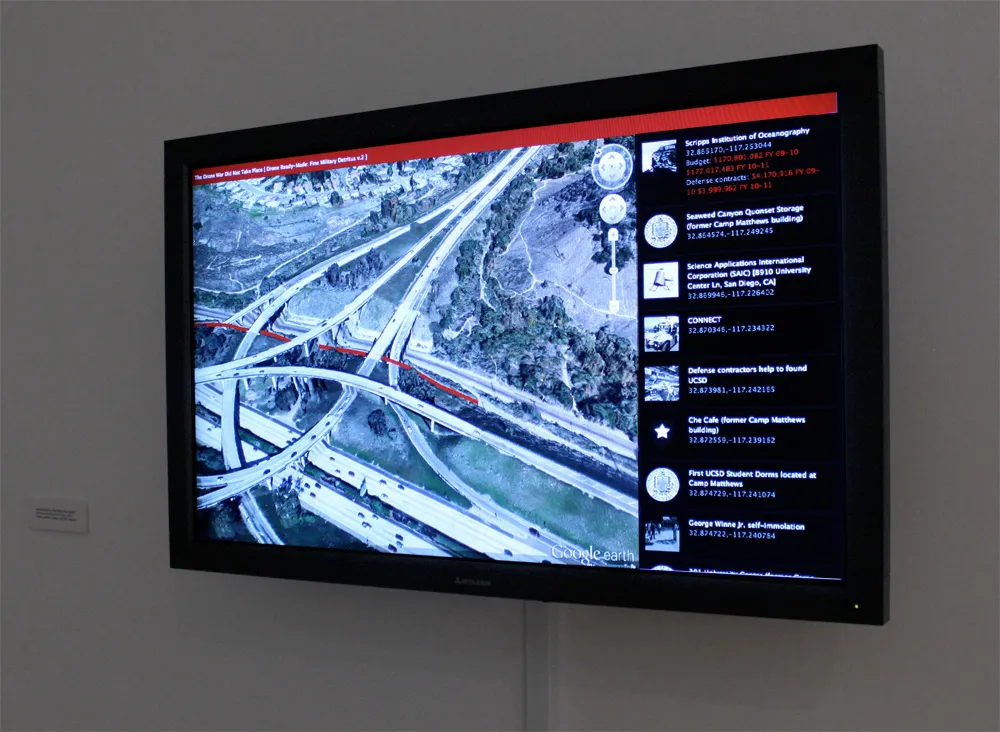
herron_drone_01_1000w

The Drone War Did Not Take Place (with The Periscope Project), Google Earth API and custom software, 2012

Terms & Conditions of Use @ Bard College

SHiggins.HeaderImage

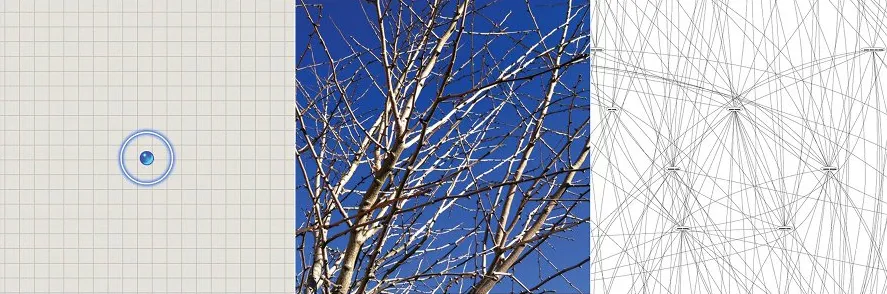
image: L-R: Owen Mundy, visual reference material (grid); gingko branches outside CCS/Hessel Museum; Owen Mundy, (detail) I Am Unable to Fulfill Your Wish: User-100001530701910

Owen Mundy
Deborah Stratman
Brad Troemel & Jon Vingiano
Commodify, Inc.

Curated by Sarah Higgins

Hessel Museum of Art
Annandale-on-Hudson, NY, USA
March 24–May 26, 2013

Exhibition Webpage: CCS Bard
e-flux announcement

Expanding forms of virtual connectivity and networked interaction have given rise to modes of monitoring and control that no longer resemble traditional audio/visual surveillance. Digital interactions, such as social networking or the use of search engines and reference sites, is now contingent on a voyeuristic model of give and take. This reciprocity forces an implicit social contract: the user relinquishes control, not only over their produced content, but over their accumulated history of actions, connections, and behaviors. This is offered in exchange for greater connectivity, social visibility, and an increasingly personalized consumer experience. An industry has rapidly proliferated, driven by advances in information aggregation and predicated on the commodification of the online subject.
Monitoring and control-embedded beneath the architecture of online communities founded on the promise of connectivity-have altered the conditions upon which artists build resistant and critical practices.

Artists working to generate visibility and resistance to this substructure face two primary but limiting positions of refusal: to unplug from networked technologies, or to employ methods evolved from a hacker ethos at the risk of replicating the exploitative operations of the power structure. As an alternative, Terms & Conditions of Use argues for a technologically embedded and ethically effective structural critique. The title references the contractual agreements, implicit and explicit, to which participants in online communities are subject, while pointing to forms of artistic engagement that revise terms and conditions towards resistance.

Owen Mundy is an artist, designer, and programmer who investigates public space and its relationship to data. His artwork highlights inconspicuous trends and offers tools to make hackers out of everyday users. He has an MFA in Visual Art from the University of California, San Diego and is an Assistant Professor of Art at Florida State University.

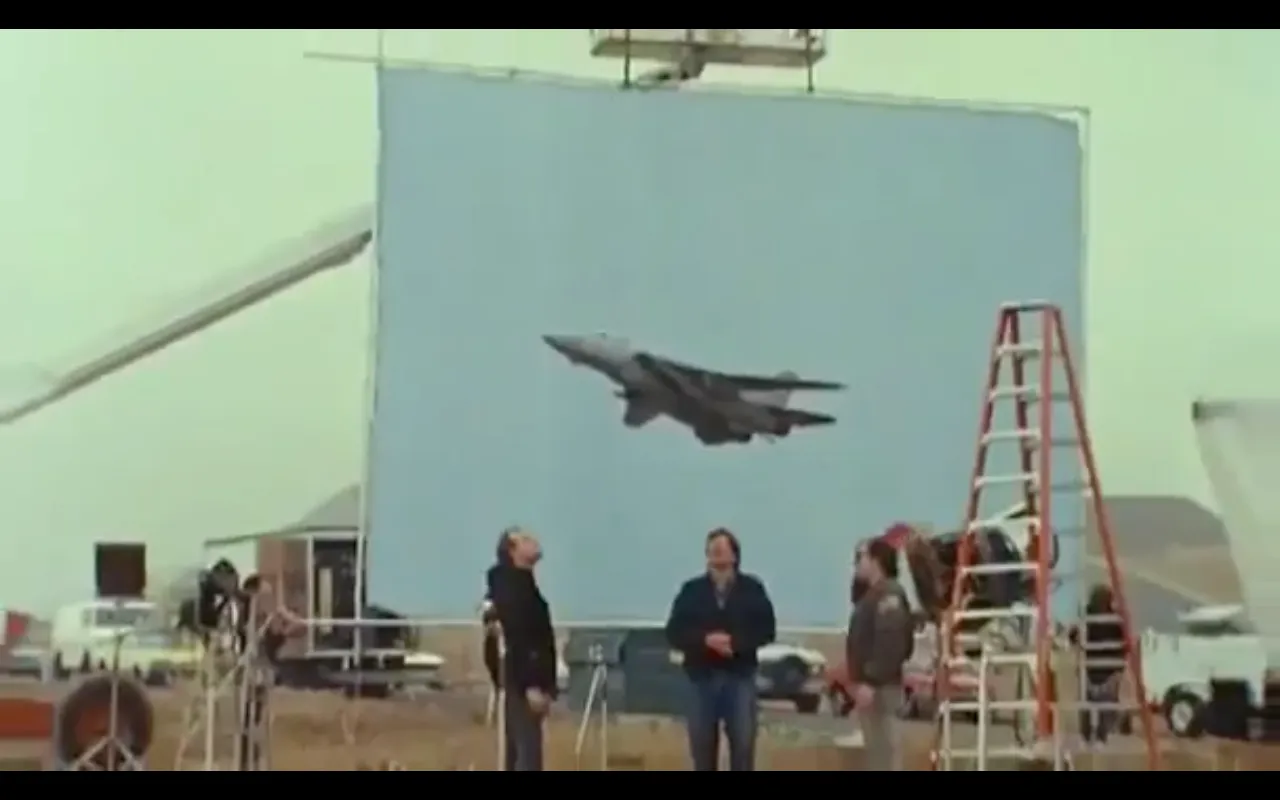
A Network Has No Center, commissioned for this exhibition, addresses a tension between embodied agency and the illusion of agential action within digital space. Control in interactivity is externalized and formally abstracted. The images on Mylar: a special effects explosion from the making of the film Top Gun, and the gridded substructure and geopositioning icon of the Google Maps application point to where site, politics, and representation intersect with digital technologies.

Deborah Stratman is a Chicago-based artist and filmmaker interested in landscapes and systems. Much of her work points to the relationships between physical environments and the very human struggles for power and control that are played out on the land. Stratman works in multiple mediums, including sculpture, photography, drawing and audio. She has exhibited internationally at venues including the Whitney Biennial, MoMA NY, the Pompidou, Hammer Museum, Witte de With, Walker Art Center, Yerba Buena Center, and has done site-specific projects with the Center for Land Use Interpretation, Temporary Services, Mercer Union (Toronto), Blaffer Gallery (Houston), Klondike Institute of Art & Culture (Yukon) and Ballroom Gallery (Marfa). Stratman’s films have been featured at numerous international festivals including Sundance, the Viennale, Full Frame, Ann Arbor, Oberhausen and Rotterdam. She is the recipient of Fulbright and Guggenheim fellowships, a Creative Capital award, and she currently teaches at the University of Illinois at Chicago.

Deborah Stratman’s ongoing work, FEAR consists of publicly distributed business cards soliciting strangers to phone an 800 number that then prompts them to describe their worst fear. The resulting messages are compiled and presented as an audio work, accompanied by a stack of the cards. The decade-long project explores the relationship between real versus imagined cultural fears. The solicitation of fears is neither explained as a work of art, nor is it made clear that the fears may be publicly presented. The work relies on participants’ desires to speak and be heard, even to an anonymous entity with no promise of privacy.

Brad Troemel & Jon Vingiano’s project, Surfcave, is an online image sharing community that allows users to present their browsing habits in realtime. Once the Surfcave Chrome Extension is installed on a device, every image viewed online is fed into the image stream. In order to access the stream, one must first become a member of the community, submitting him/herself to the same conditions of access to personal online behavior that produce the voyeuristic reward. Only by relinquishing online privacy is the user able to access the viewing habits of others.

Commodify, Inc. is an international collective of artists working with digital media platforms. Its members, Birgit Bachler, Walter Langelaar, Owen Mundy, and Tim Schwartz, are responsible for the creation and management of commodify.us. This web based project allows users to access their social media profile data—in this case Facebook—and license that data to intervene in the existing market for their personal information. For Terms & Conditions of Use, the project appears in the form of a series of anonymous visualizations of personal data generated by social media networks. These are printed at the height of the source individual. Accompanying them is a receipt printer connected to a live feed of financial reports: scores that indicate the projected value for each of the personal data packages.

Terms & Conditions of Use is curated by Sarah Higgins as part of the requirements for the Master of Arts degree at the Center for Curatorial Studies.

Terms & Conditions of Use is part of
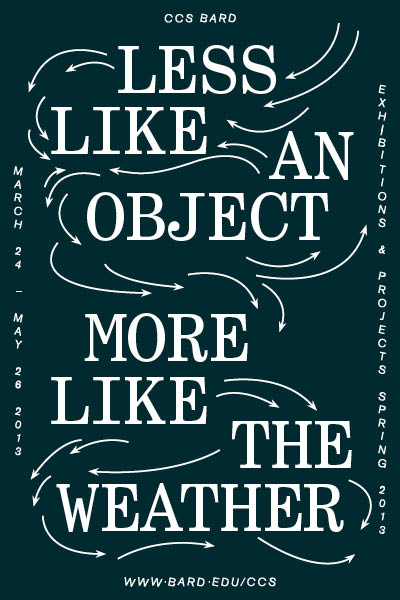
LESS LIKE AN OBJECT MORE LIKE THE WEATHER
2013 Graduate Thesis Exhibitions
Center for Curatorial Studies, Bard College
Packet Switcher @ Herron School of Art and Design, IUPUI

the-consequence-of-scale_01_1000w

I’m leaving soon to install a new show at the Herron School of Art and Design, Indiana University/Purdue University Indianapolis (IUPUI). The exhibition contains lots of new works, many created in collaboration with other artists and collectives. Ryan Boatright, Joelle Dietrick, The Periscope Project, and Commodify, Inc. (Tim Schwartz, Walter Langelaar, Birgit Bachler). Here’s the PR with details about the show and lecture.

Herron School of Art and Design will host Packet Switcher, an exhibition of recent projects by artist, designer and programmer Owen Mundy. The exhibition opens in the Robert B. Berskhire, Eleanor Prest Reese and Dorit and Gerald Paul Galleries on February 27 with a lecture by Mundy at 6:00 p.m. There will be a reception immediately following from 7:00 p.m. to 9:00 p.m. Packet Switcher runs through April 13.

Mundy is an assistant professor of art at Florida State University. He earned an M.F.A. degree in Visual Art from the University of California, San Diego and a B.F.A. degree from Indiana University, Bloomington. He’s a founder of Your Art Here http://yourarthere.org, an art organization that creates venues where art and ideas can be expressed freely through the use of billboards and other public spaces. In 2009 he created Give Me My Data http://givememydata.com, an online application that helps people get their data out of Facebook in reusable formats.

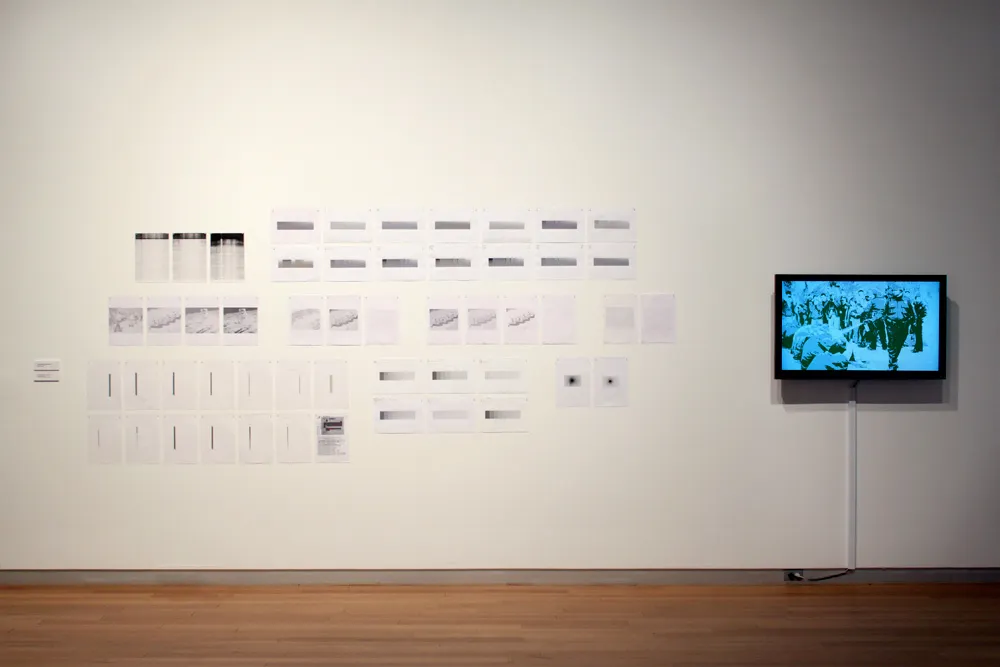
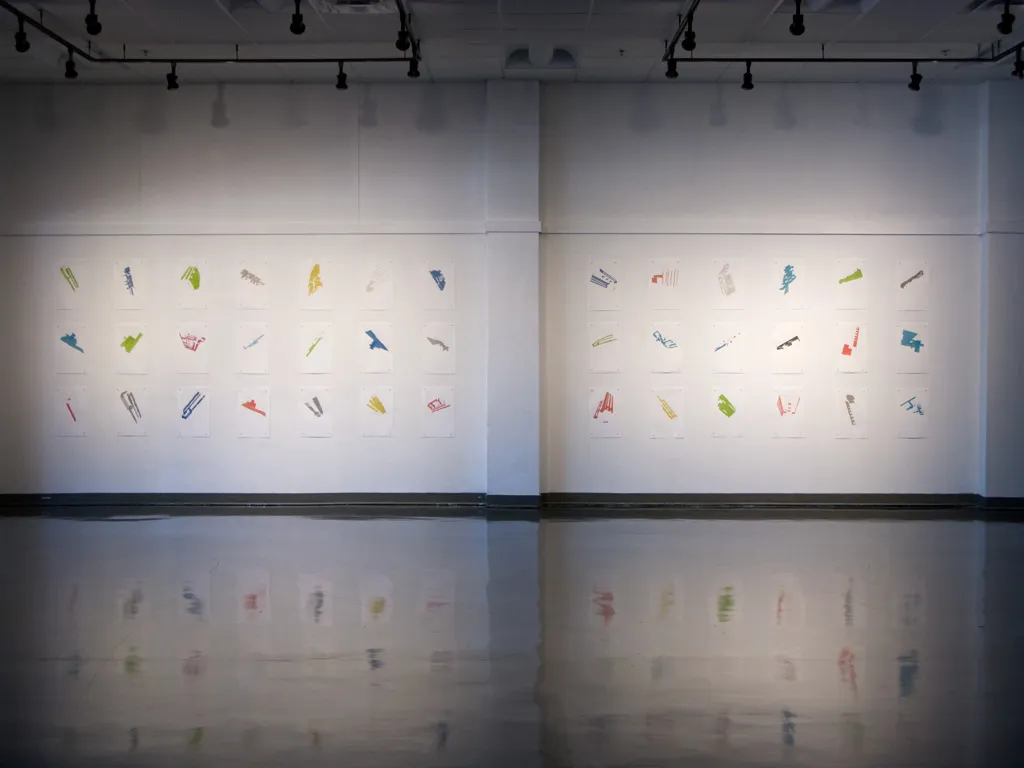
Packet Switcher contains a survey of recent and never before exhibited works. The individual pieces are varied; from dystopian visualizations of anonymous network data, to custom software which generates print resolution tests from news images. Owing to the increasingly decentralized models of artistic and cultural practice, as well as new forms of authorship like crowdsourcing, this exhibition features numerous collaborative projects with Mundy and other artists including Joelle Dietrick, Ryan Boatright, The Periscope Project, and Commodify, Inc.

The exhibition title references the process used to move digital communication by breaking files into smaller, faster blocks, or packets, of data. The packets travel through networks via the quickest available route and are reassembled at their destination. A digital photograph, for example, might be broken into several packets, each of which may travel through a different city before delivery.
Through a similar process, the artists underscore how incidental fragmentation and automation can streamline markets, but also make them vulnerable to systems failure. The use of architectural images points to recent real estate market volatility and considers how the technology-enabled pursuit of profit alters basic needs.

As a U.S. Navy photographer, Mundy observed militarism’s effect on cultures, sites and bodies. These experiences became an important influence on his work.

Also opening on February 27 and continuing through March 19 in the Marsh Gallery will be an exhibition of new works by Herron faculty members Ray Duffey and Marc Jacobson, and in the Basile Gallery, an exhibition of new works by Herron faculty member Stephanie Doty.

Gallery Hours
MON. 10 a.m. – 5 p.m.
TUE. 10 a.m. – 5 p.m.
WED. 10 a.m. – 8 p.m.
THU. 10 a.m. – 5 p.m.
FRI. 10 a.m. – 5 p.m.
SAT. 10 a.m. – 5 p.m.
SUN. Closed

Limited parking is available in the Sports Complex Garage just west of Herron. Park in the visitor side of the garage and bring your ticket to the Herron Galleries for validation. Complimentary parking courtesy of The Great Frame Up. Parking in the surface lot next to Herron School of Art and Design requires a valid IUPUI parking permit at all times.

Rob Bullock
Assistant to the Dean
External Affairs & Development Specialist
Herron School of Art and Design
IUPUI – HR 224
735 West New York Street
Indianapolis, IN 46202
Phone: 317-278-9470
Fax: 317-278-9471

Military and the Landscape: Revealing and Reflecting panel at CAA 2013 NYC

Weather permitting, I’ll be in New York this week to attend the College Art Association conference and present on the Military and the Landscape panel on Saturday, Feb 16.
Military and the Landscape: Revealing and Reflecting panel at CAA 2013 NYC


Top Gun-Behind The Scenes (2001)

Military and the Landscape: Revealing and Reflecting
Saturday, February 16, 9:30 AM-12:00 PM
Madison Suite, 2nd Floor
Chair: Ruth A. Dusseault, independent artist

Play War: Homemade Recreational Battlefields
Ruth A. Dusseault, independent artist

Nuclear Weapons and Shrines: Public Weapons in America
Paul Shambroom, University of Minnesota

Omniscience and Contingency: Landscapes of Military Intelligence and Terror Simulation
Steve Rowell, independent artist

Technologies of Vision: The Radical Cartographies of Harun Farocki and Trevor Paglen
Krisin M. Brockman, The Ohio State University

Miniature War in Iraq and Now in Afghanistan
Brian Conley, California College of the Arts
The Military Industrial Marketing Machine: Leveraging the Media Landscape
Owen Mundy, Florida State University

To My Dearest and Beloved Family documentation

beloved_seal_500w

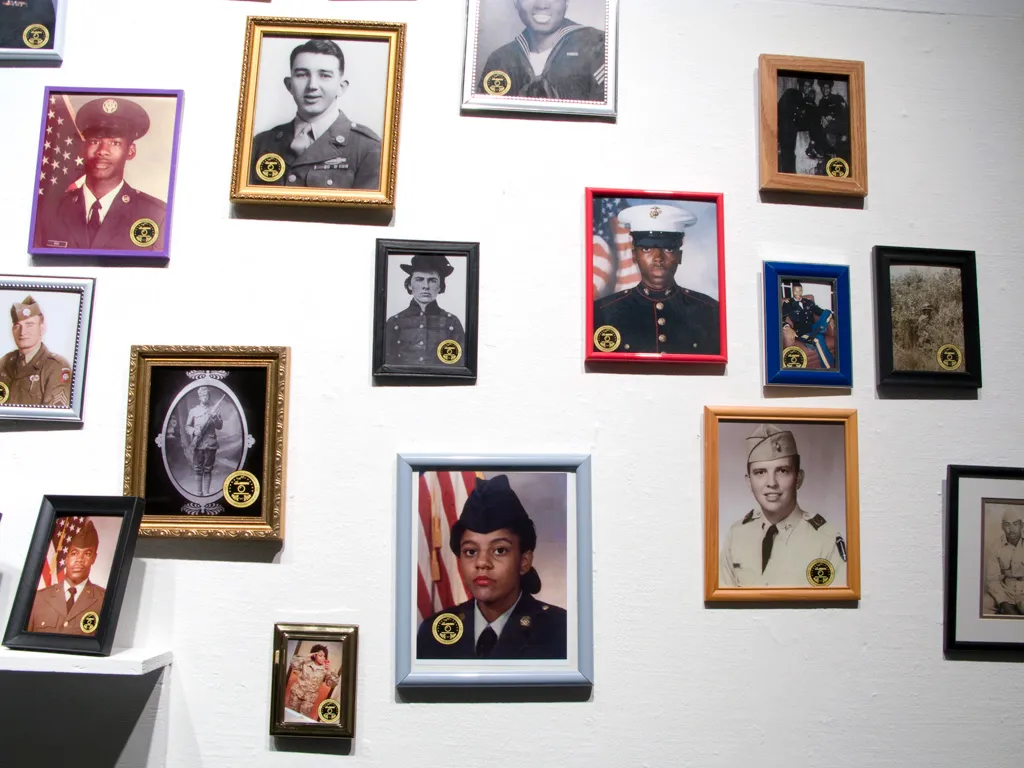
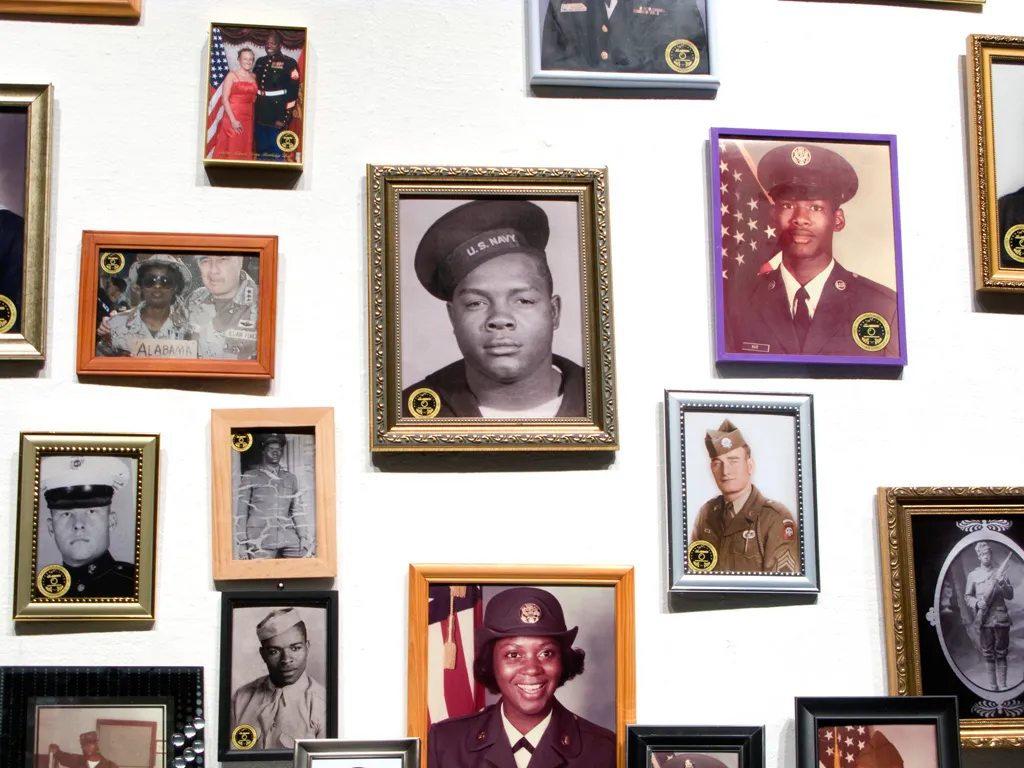
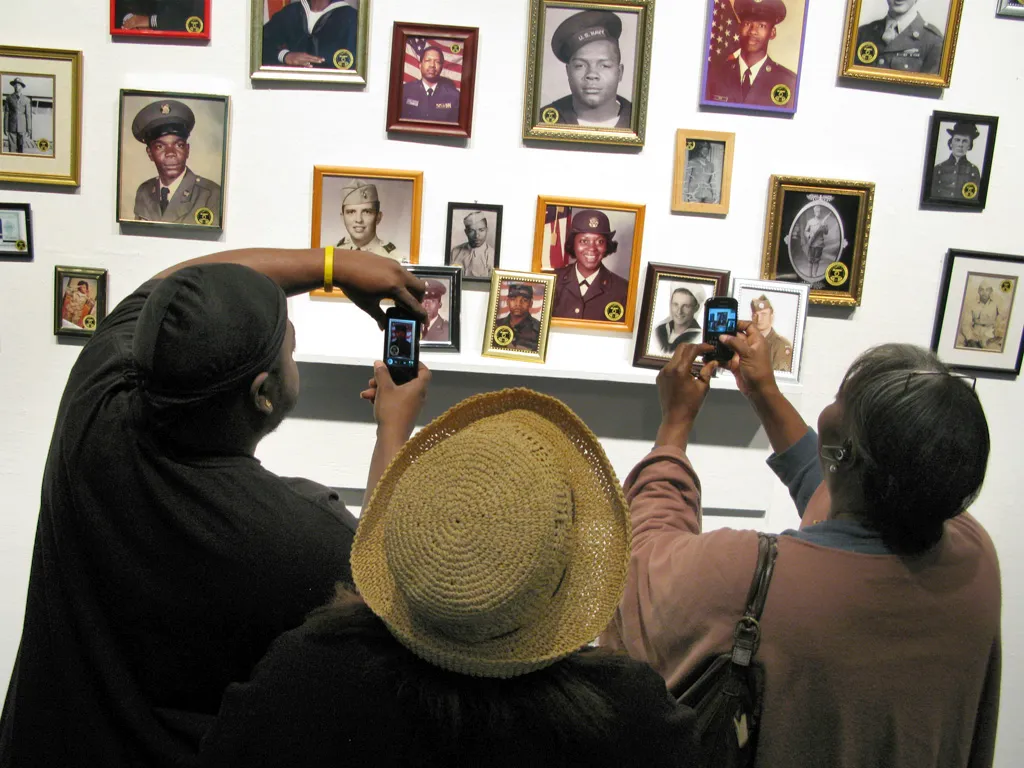
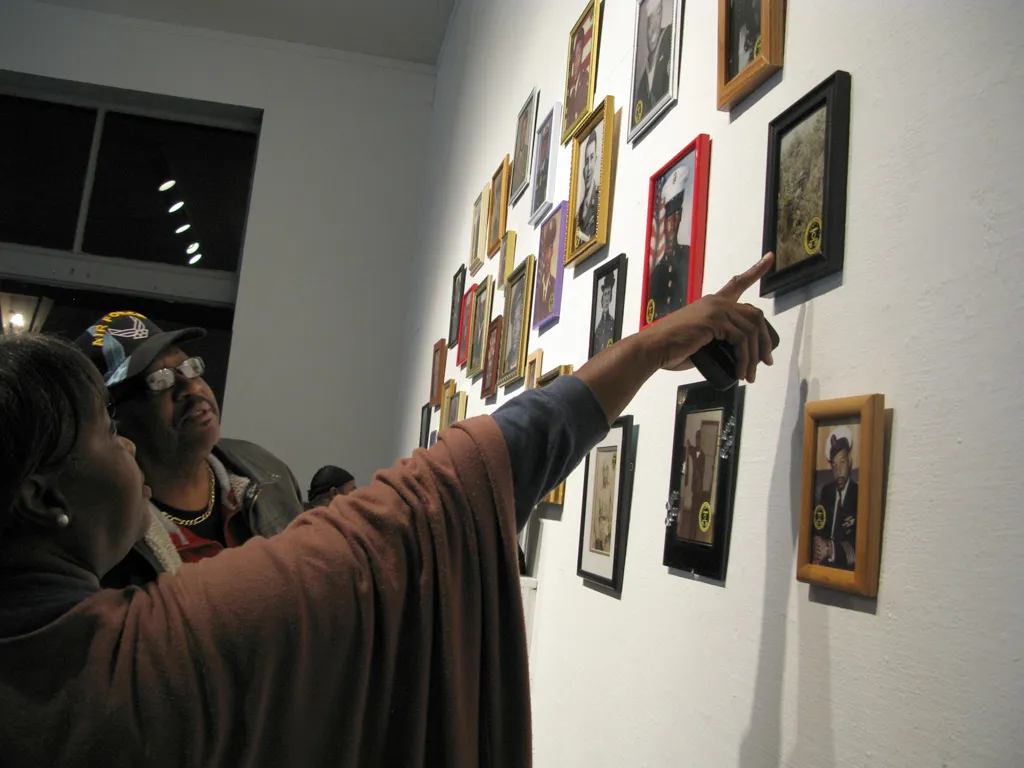
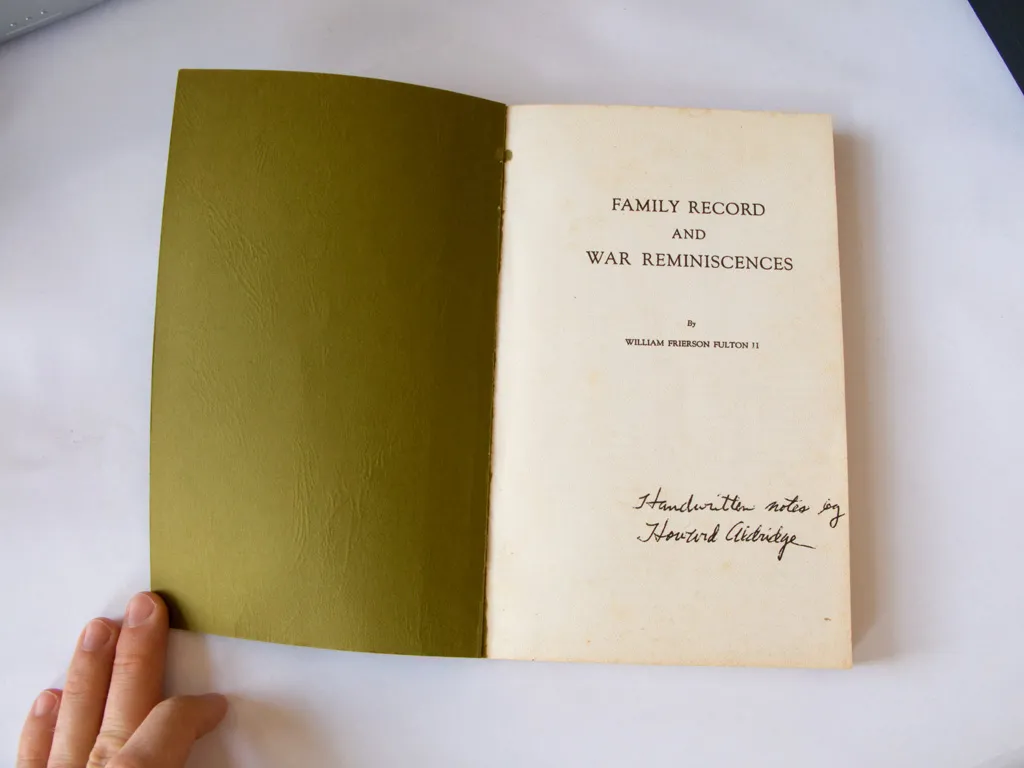
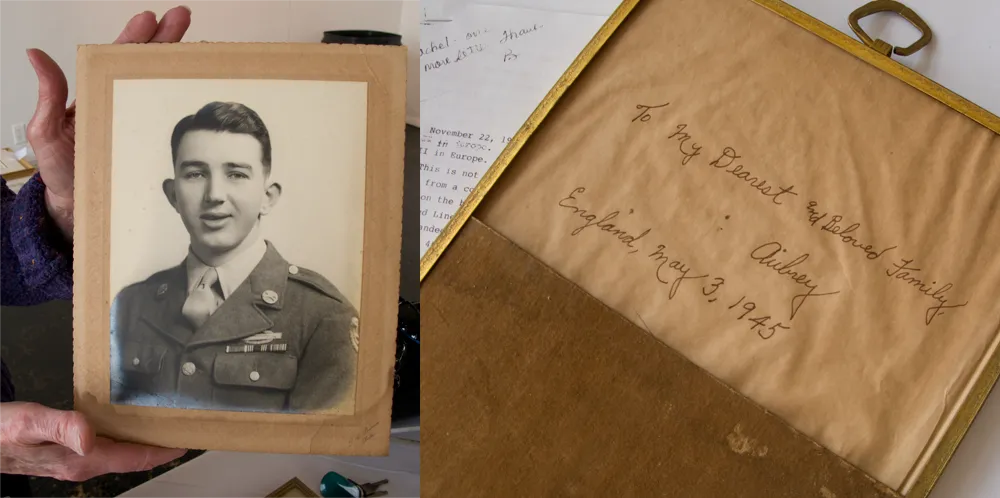
For this project I returned to the Coleman Center for the Arts in York, Alabama, to create a new work in collaboration with the community there. During the residency, six years after my first, I invited people to bring pictures of service members, veterans or those depicted in uniform, images of themselves or people whom they knew, to the center. I also collected stories from veterans and family members while they were dropping the images off. The photos depict individuals throughout history, from a Confederate veteran of the American Civil War to a current JROTC member enrolled at Sumter Central High School.

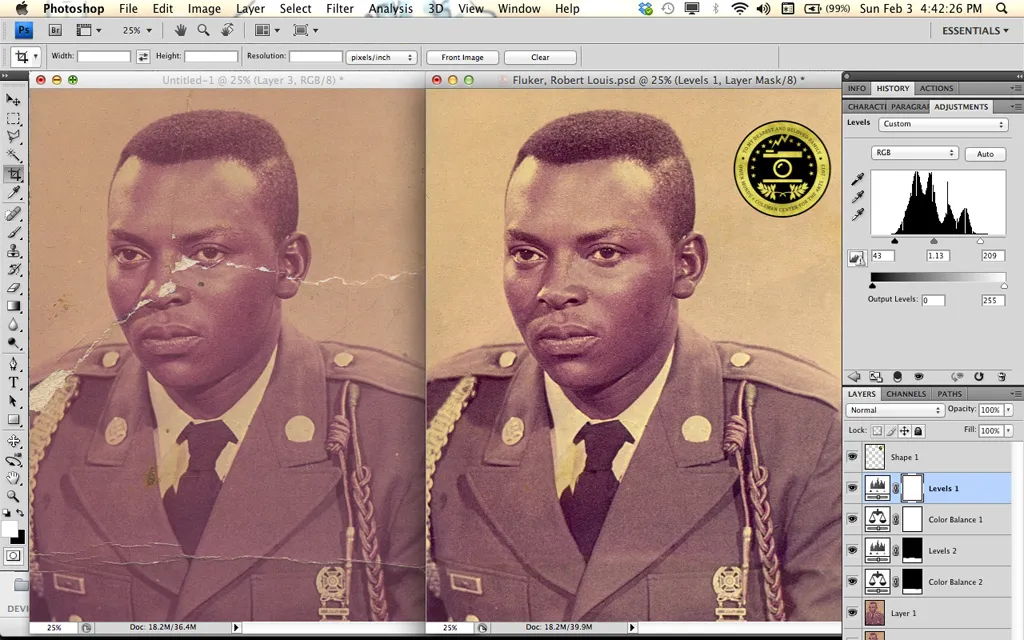
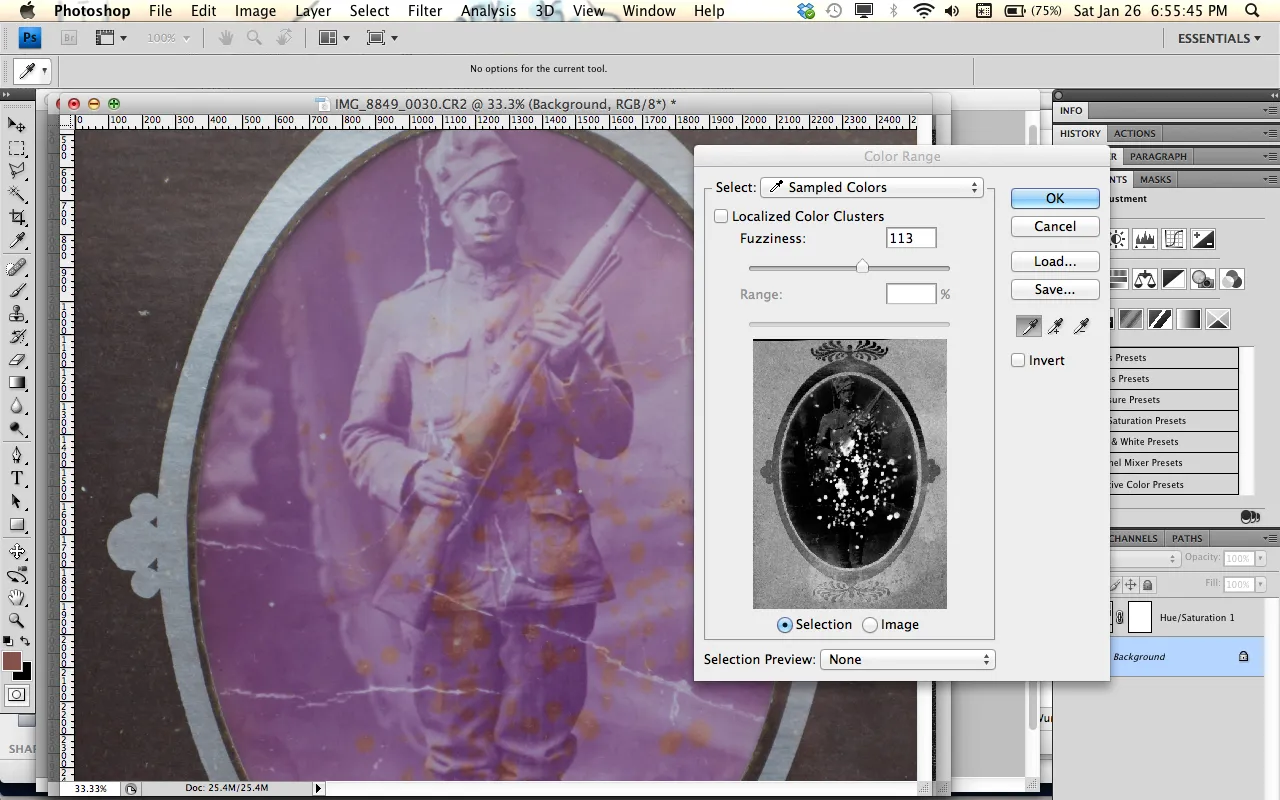
Every image I received was scanned and digitally restored, printed using archival ink and paper, and then sealed in a unique frame. The reproductions are embellished with an artist-designed seal that features the project name and harkens back to both military and government seals as well as gold leaf photo studio adornments. After the exhibition, original and new restored, framed photographs and digital files will be given to the owners. I will also publish a short record of the exchange along with photographs and selected stories, which will be preserved in the York Public Library.
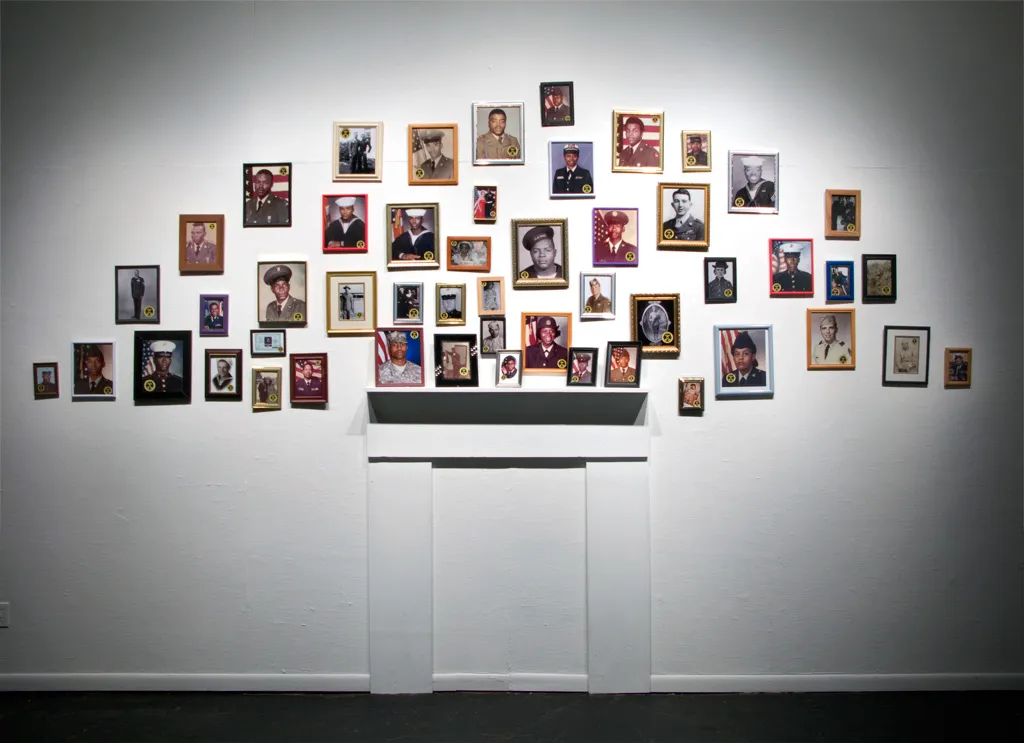
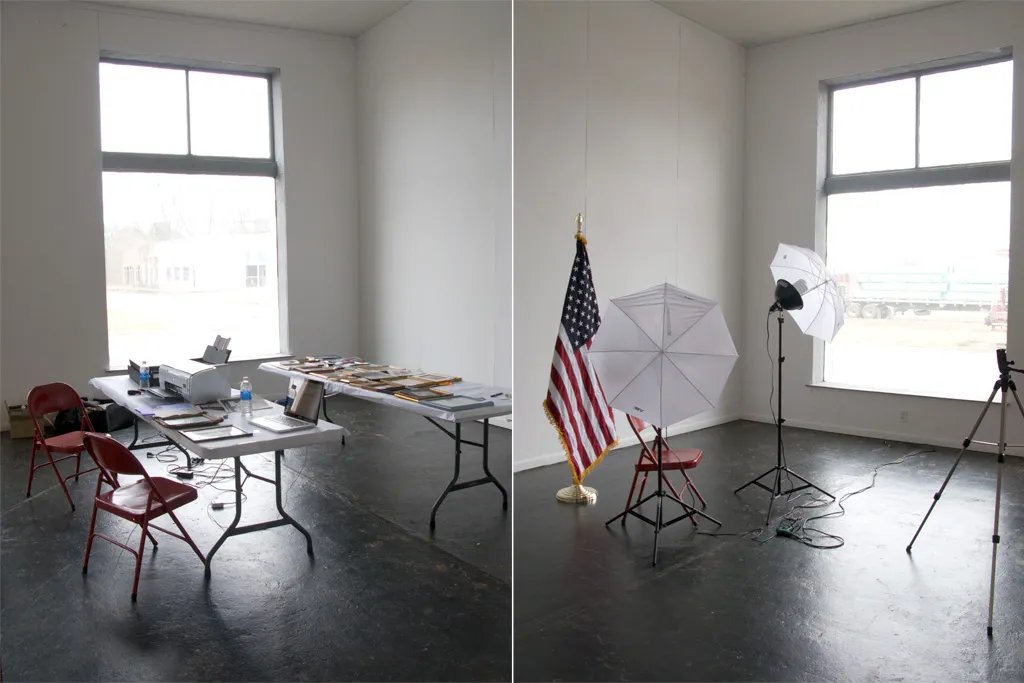
The framed images were installed in a one-person exhibition at the Coleman Center, with The Americans, a reproduction of a military portrait studio, and Through A Glass Darkly, a 12 minute film representing only the landscape scenes from the top 100 Hollywood war films.

beloved_12_1024

beloved_08_1024w

beloved_20_1024w

beloved_reception_12_1024w

beloved_reception_17_1024w

beloved_touchup_03_seal_1024w

beloved_installation_comp_1024w

Green_confed-diary-03_1024w

More images here

Coleman Center residency progress Tues Jan 29

There is much interest in my project here at the Coleman Center. People stop by every hour with photographs and stories of their past experiences and motivations for joining the service.

Green_photo-text_comp

To My Dearest and Beloved Family, Aubrey, England, May 3, 1945

artclub_02

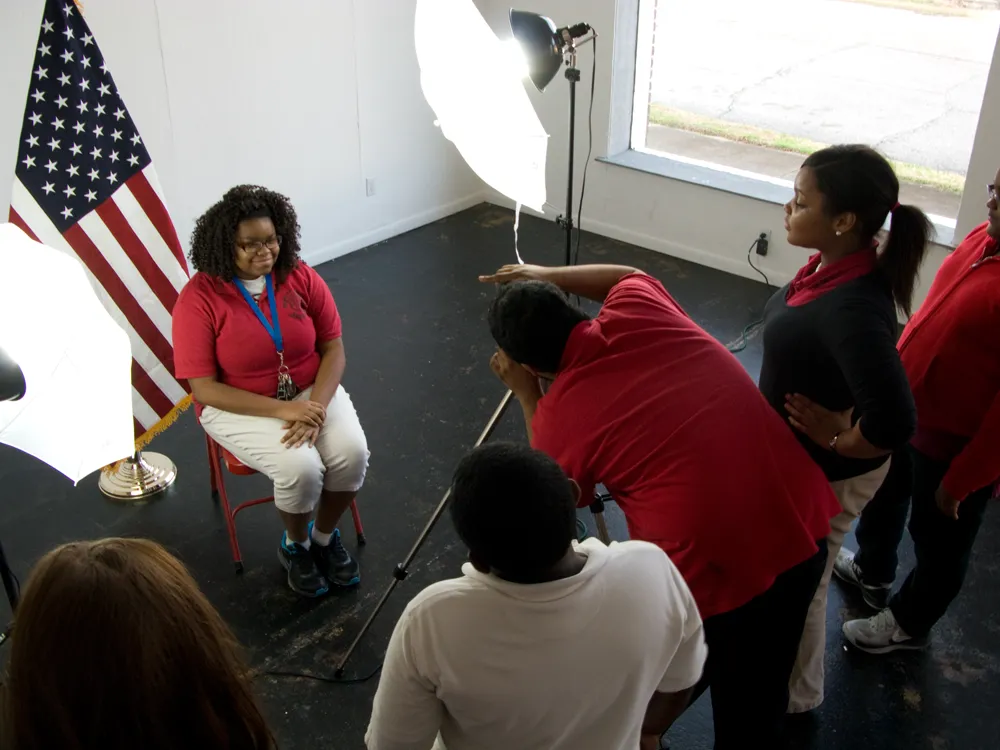
On Monday I worked with the Art Club, showing them how to use the equipment and talking about the many different ways the military is represented through photography and film.

Black,-ww1touchup

Touching up a WWI image

Adams,-Fred

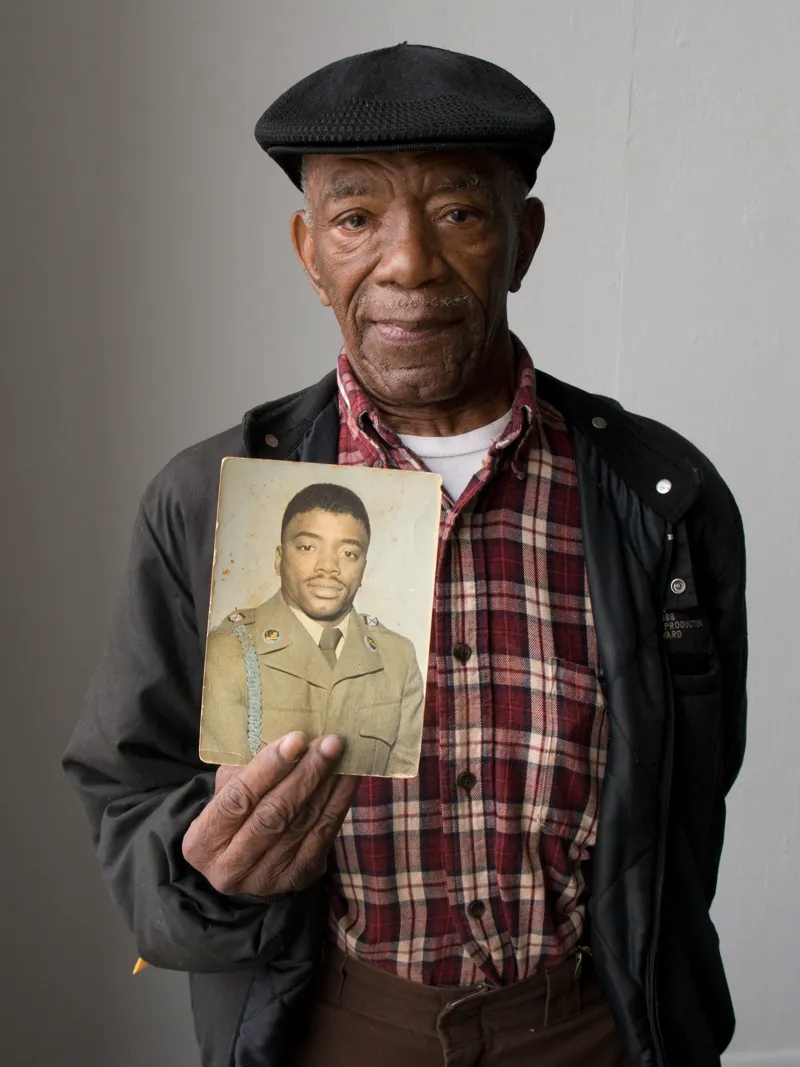
Fred Adams and his portrait

To My Dearest and Beloved Family

I’m writing from the Coleman Center for the Arts in York, Alabama, where I’m currently an Artist in Residence. While here I intend to keep this site updated with news and progress from the projects I’m working on. Below is a “seal” that accompanies the project as well as a letter to the community which was published in various local sources. More soon…

beloved_seal_500w

Dear Residents and Friends of Sumter County, Alabama,

I’m writing to ask for your participation in an art project that will investigate our shared experience of service and its representation in photography. Have you or someone in your family served in uniform?

In order to honor the men and women who served our country and to represent the shared experience of sending our sons and daughters far away from home and safety, I would like to invite anyone who has served, or is related to someone who has worn a uniform, to bring a portrait of the service member in uniform to the Coleman Center for the Arts (CCA) in York.

Digital reproductions of the images will be displayed at the CCA, and participants will receive their own free, high quality, archival reproduction of their portrait. Original photos will not be displayed, and will be returned to their owners with the reproductions.

The original image can be any quality, printed or digital, but must be of the person in uniform (military, police, firefighter, etc..) If you like, you are invited to share the story of this person, which with your permission, will become part of an exhibition at the CCA. Stories may be hand written, typed, or directly shared in conversation with the artist.

To participate please bring your photo to the CCA by Monday January 28th at 5 PM. Original photos and reproductions will be available for pick up at the project reception on Thursday, January 31st at 6 pm, or afterward during normal CCA hours.

For more information, contact the CCA at 205-392-2005 or email colemancenter@gmail.com.

Sincerely,

Owen Mundy
Artist in Residence
Coleman Center for the Arts

Washington Post review of “Grid, Sequence Me” show + documentation

washingtonpost

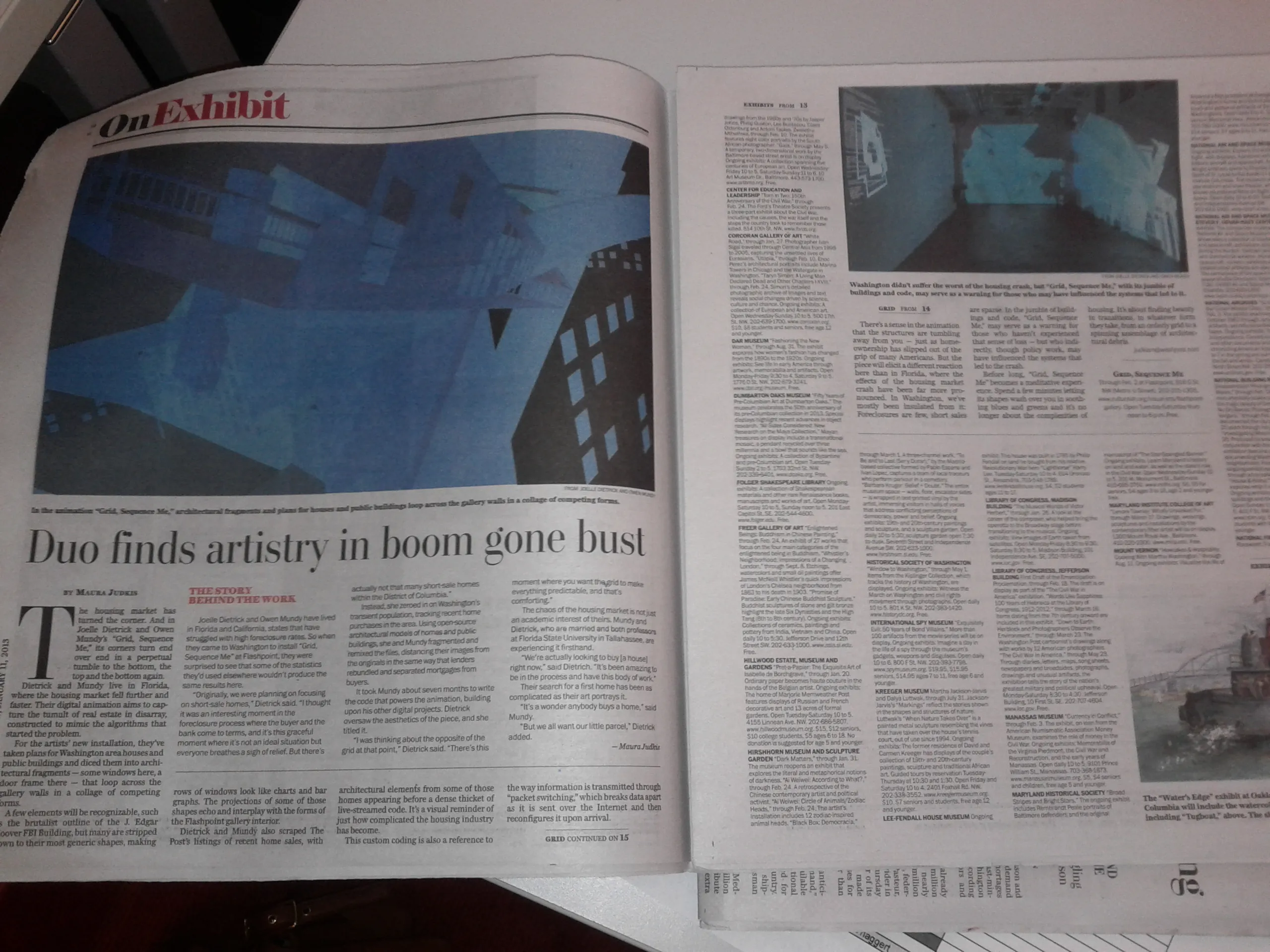
The Washington Post recently published a review recently about my and Joelle’s exhibition at Flashpoint Gallery in D.C. Check it out: Joelle Dietrick & Owen Mundy: Grid, Sequence Me, by Maura Judkis, Jan 11, 2013.

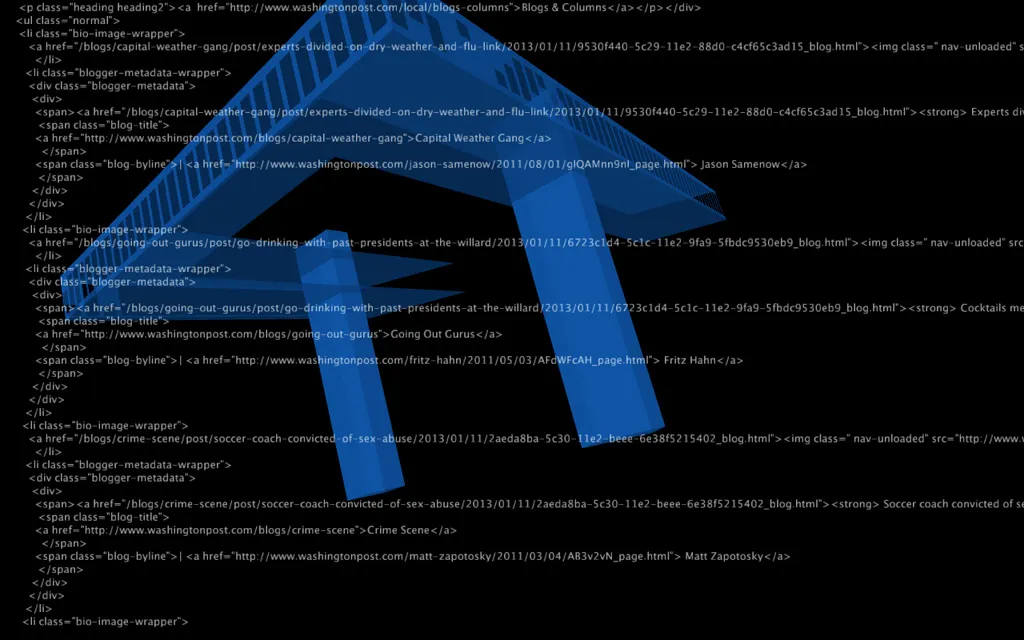
A few elements will be recognizable, such as the brutalist outline of the J. Edgar Hoover FBI Building, but many are stripped down to their most generic shapes, making rows of windows look like charts and bar graphs. The projections of some of those shapes echo and interplay with the forms of the Flashpoint gallery interior.

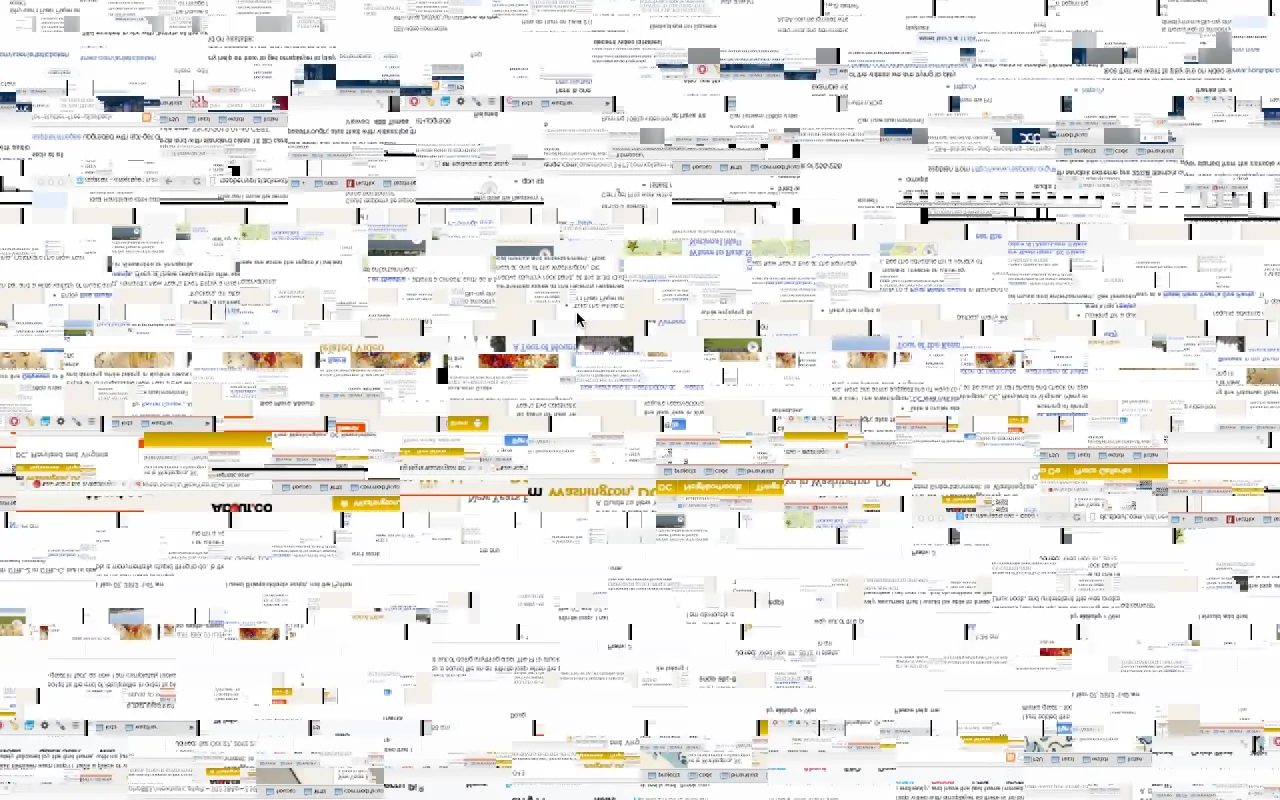
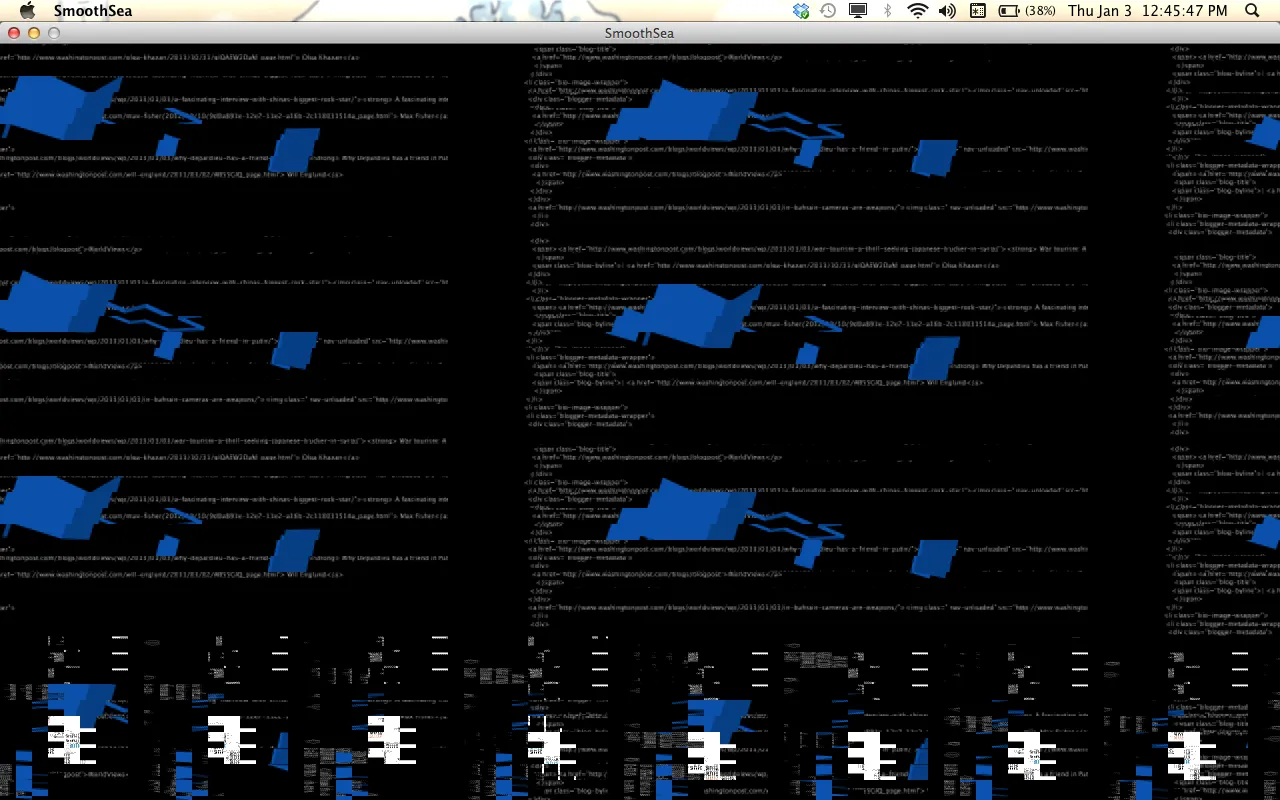
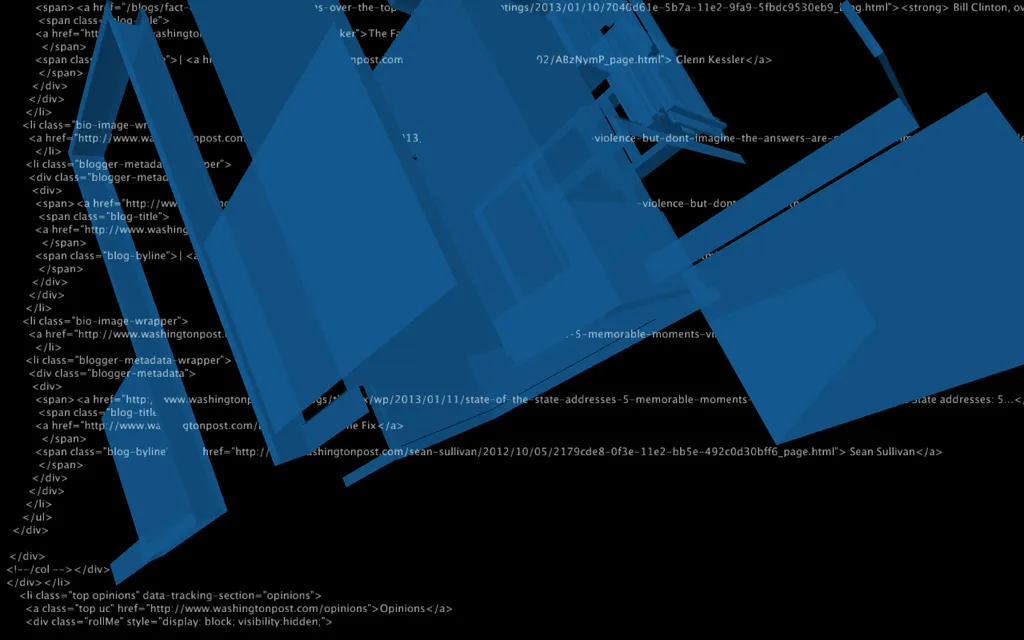
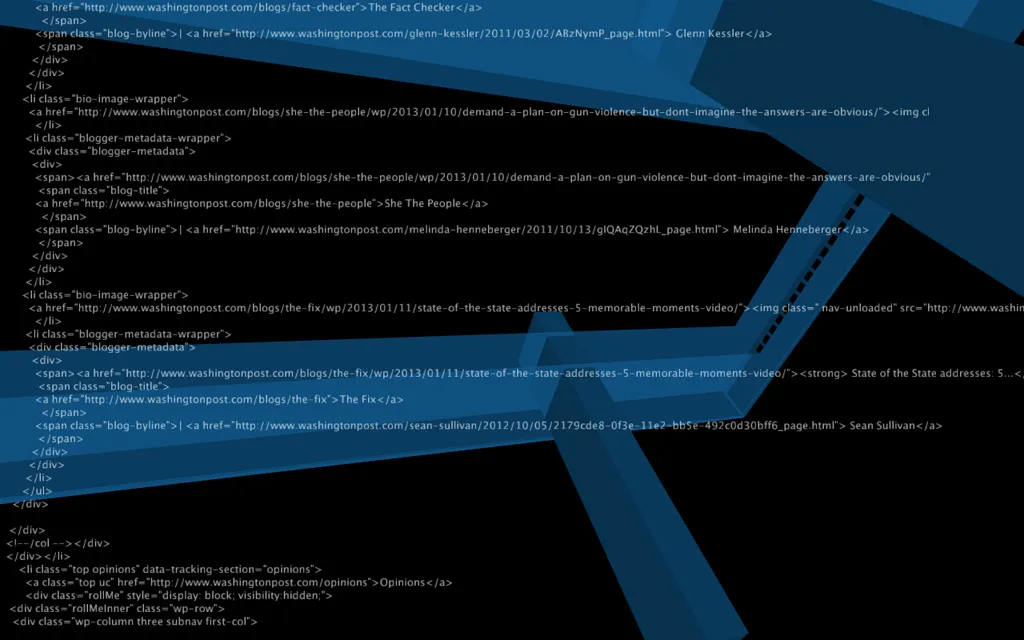
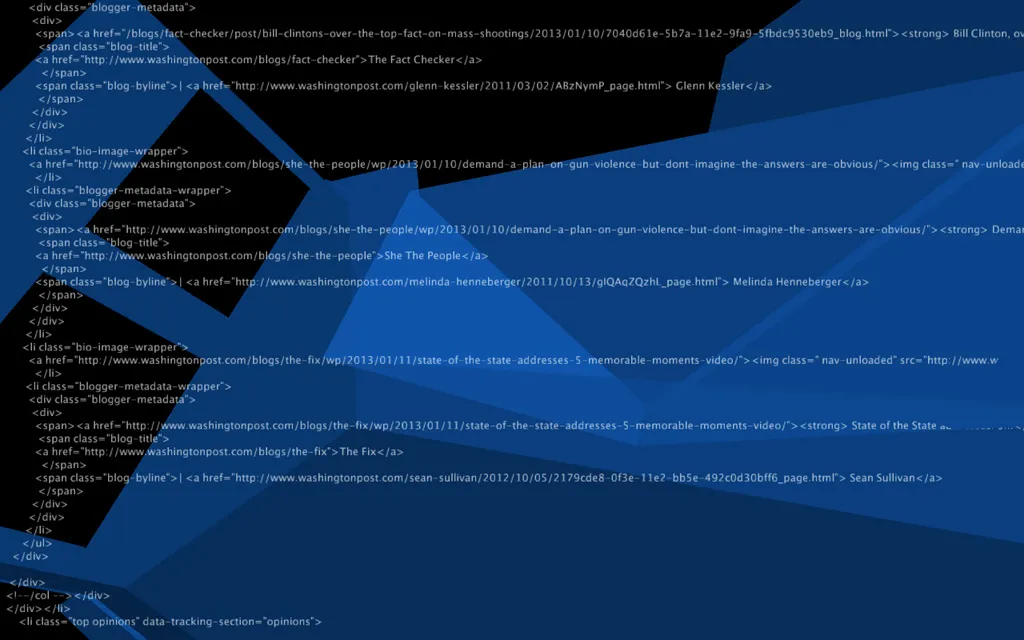
Dietrick and Mundy also scraped The Post’s listings of recent home sales, with architectural elements from some of those homes appearing before a dense thicket of live-streamed code. It’s a visual reminder of just how complicated the housing industry has become.

…

There’s a sense in the animation that the structures are tumbling away from you — just as homeownership has slipped out of the grip of many Americans. But the piece will elicit a different reaction here than in Florida, where the effects of the housing market crash have been far more pronounced. In Washington, we’ve mostly been insulated from it: Foreclosures are few, short sales are sparse. In the jumble of buildings and code, “Grid, Sequence Me,” may serve as a warning for those who haven’t experienced that sense of loss — but who indirectly, though policy work, may have influenced the systems that led to the crash.

I also finished a short piece with video from the installation and screen captures of the Processing visualization.

Use Processing and FFmpeg to export HD video

p_000919

I’ve been trying to find a dependable method for exporting HD video from Processing sketches that contain dynamic data and movement as well as complex 3-dimensional shapes rendered using OpenGL. QuickTime’s screen recording option hogs memory and causes frames to skip, as does does ScreenFlow, my usual go-to for screen recording. The best way I have found so far is to export actual resolution PNG files using “save()” and create an HD video using FFmpeg.

FFmpeg is a very fast video and audio converter that can also grab from a live audio/video sources or create and compress video from multiple still images. It is used from the command line and gives one control of bitrates, codecs, formats, resolution, quality, metadata, and many more options for working with video.

To install FFmpeg with Macports
sudo port install ffmpeg

# view help
ffmpeg -h

# list encoders
ffmpeg -encoders

# list codecs
ffmpeg -codecs

# use format
ffmpeg [global_options] {[input_options] -i ‘input_file’} ... {[output_options] ‘output_file’} ...

# make a movie from matching .png files, write over original, codec = libx264 (H.264), framerate = 30, 1 pass, resolution = 1920×1080, video bitrate = 6Mbits, format = mp4
ffmpeg -y -pattern_type glob -i 'p_*.png' -vcodec libx264 -r 30 -q 100 -pass 1 -s 1920x1080 -vb 6M -threads 0 -f mp4 file.mp4

# convert the video file to Apple ProRes codec for use in Final Cut
ffmpeg -y -i file.mp4 -vcodec prores -vb 6M -r 30 -s 1920x1080 -f mov file.mov

# here’s another example conversion command. this one has a much higher bitrate
ffmpeg -y -i file_01.mp4 -b:v 40M -vcodec libx264 -pass 1 file_02.mp4

For example, using this Processing sketch, you generate the PNG files, and then run the code above on the command line to make this file:

Also see this video for a more detailed example

References

Grid, Sequence Me @ Flashpoint Gallery, Washington D.C.

2013_grid_11_1024w

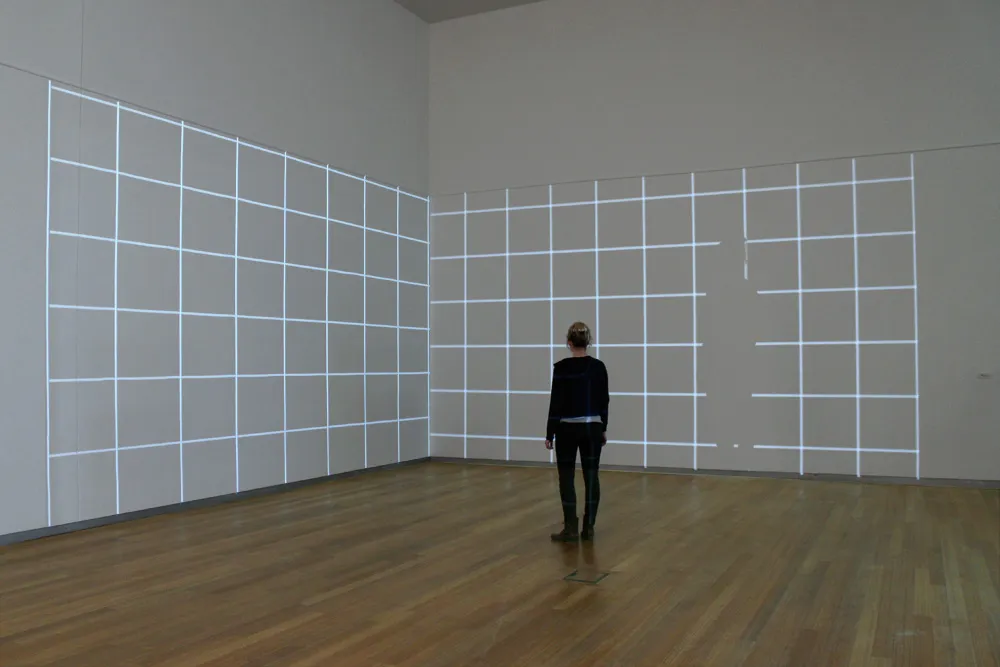
Surrounded by images of cross-sectioned buildings and source code excerpts, gallery visitors encounter fragments of Washington, DC architecture—a vaguely familiar roofline or grid of office windows—remixed with data and source code representing the latest housing sales in the area. Constantly changing, the live data streams into the gallery from both local sources (DC short sale listings) and national (federal policy sites), emphasizing the effects of related micro-macro shifts.

2013_grid_screen_10_1024w

2013_grid_screen_09_1024w

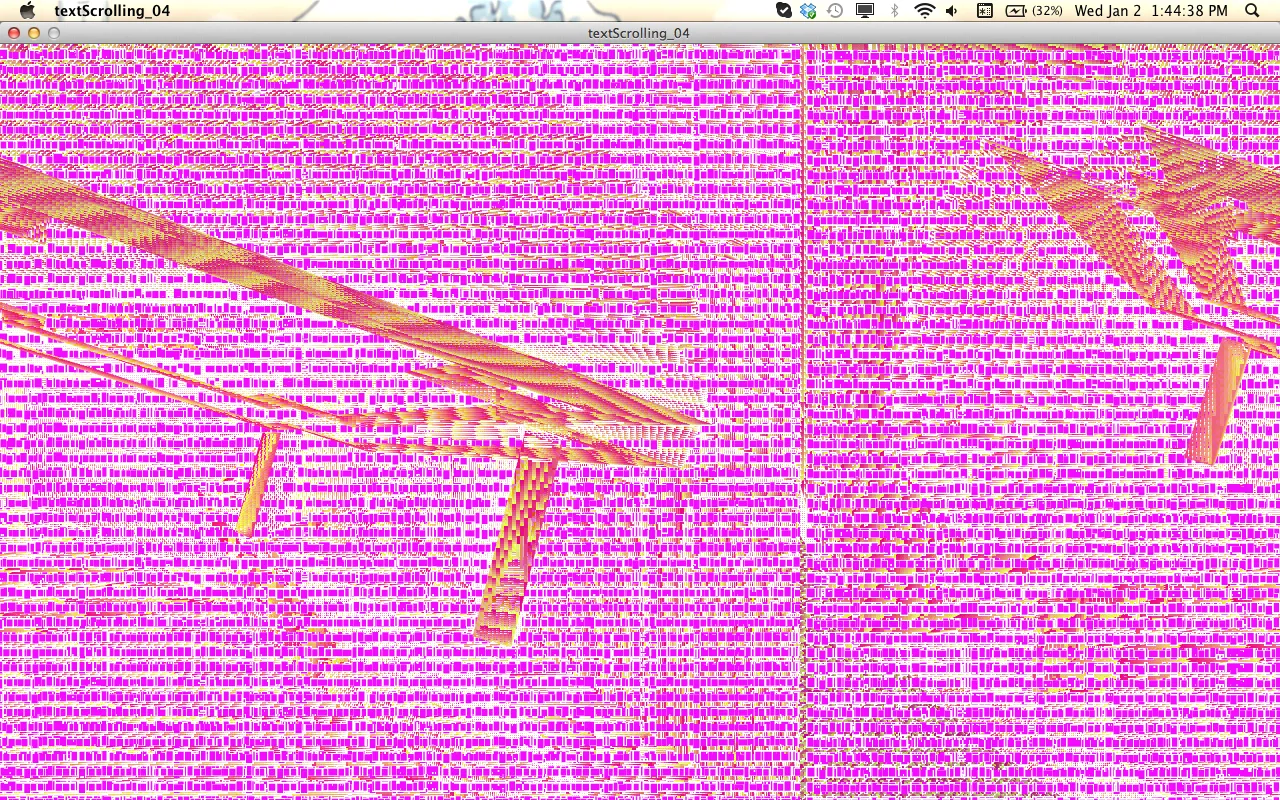
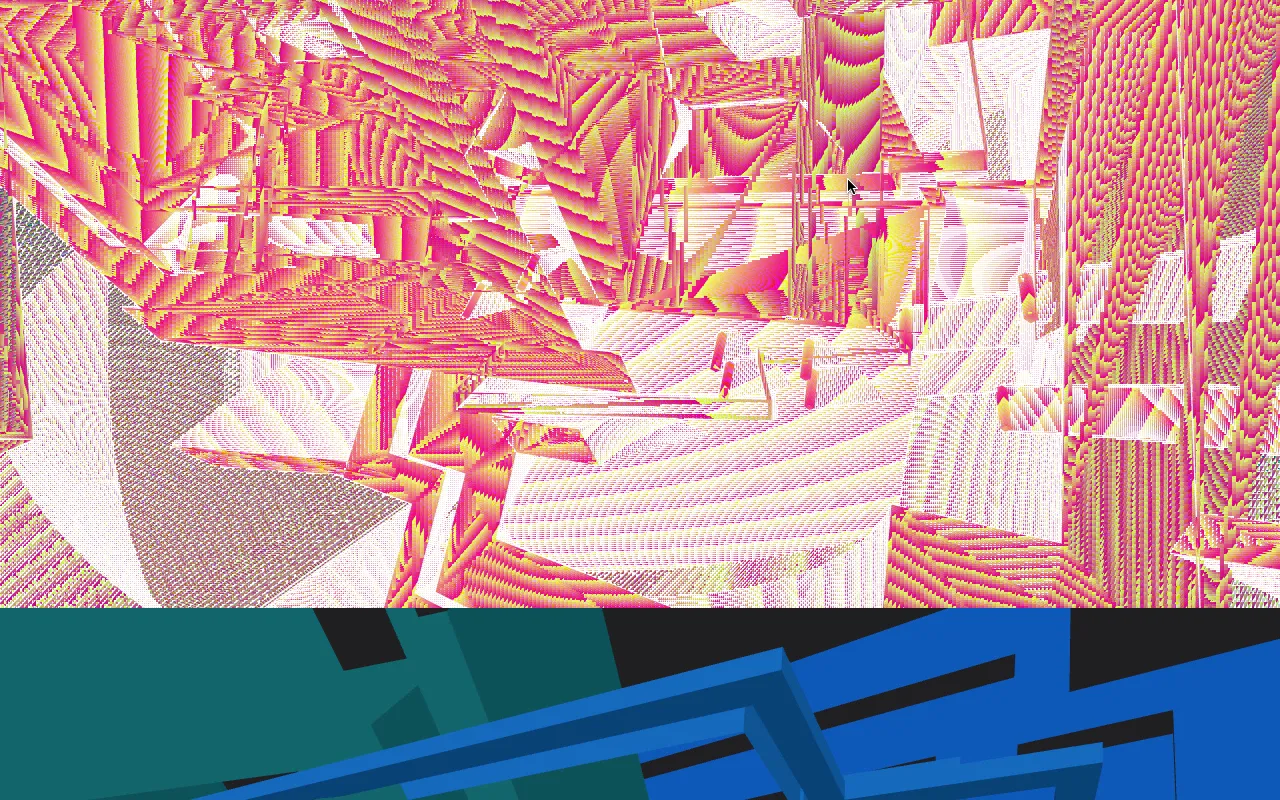
Generated with custom software, these fragments echo financial systems and housing market fluctuations. They mirror mortgages repackaged and sold, titles lost in administrative tape, and dreams confused by legal jargon. Like the complex financial systems of the housing market heyday, the software generates an infinite number of arrangements. The complexity of unique and dynamically-created algorithmic outcomes contrasts with the comforting predictability referenced in the exhibition’s title, “Grid, Sequence Me.”

—Joelle Dietrick and Owen Mundy

2013_grid_01_1024w

2013_sea_screen_23_1024w

2013_sea_screen_20_1024w

2013_sea_screen_13_1024w

2013_sea_screen_06_1024w