Robot self-portrait #1-2
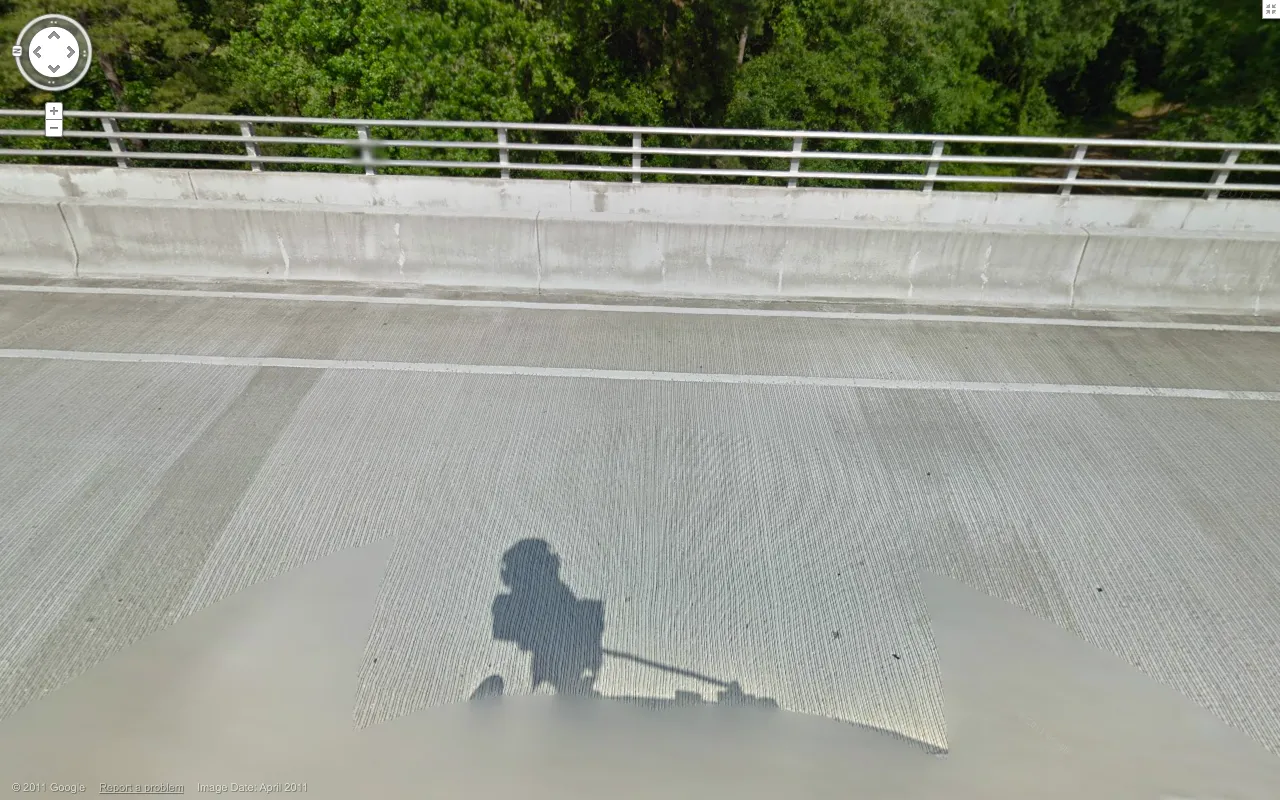
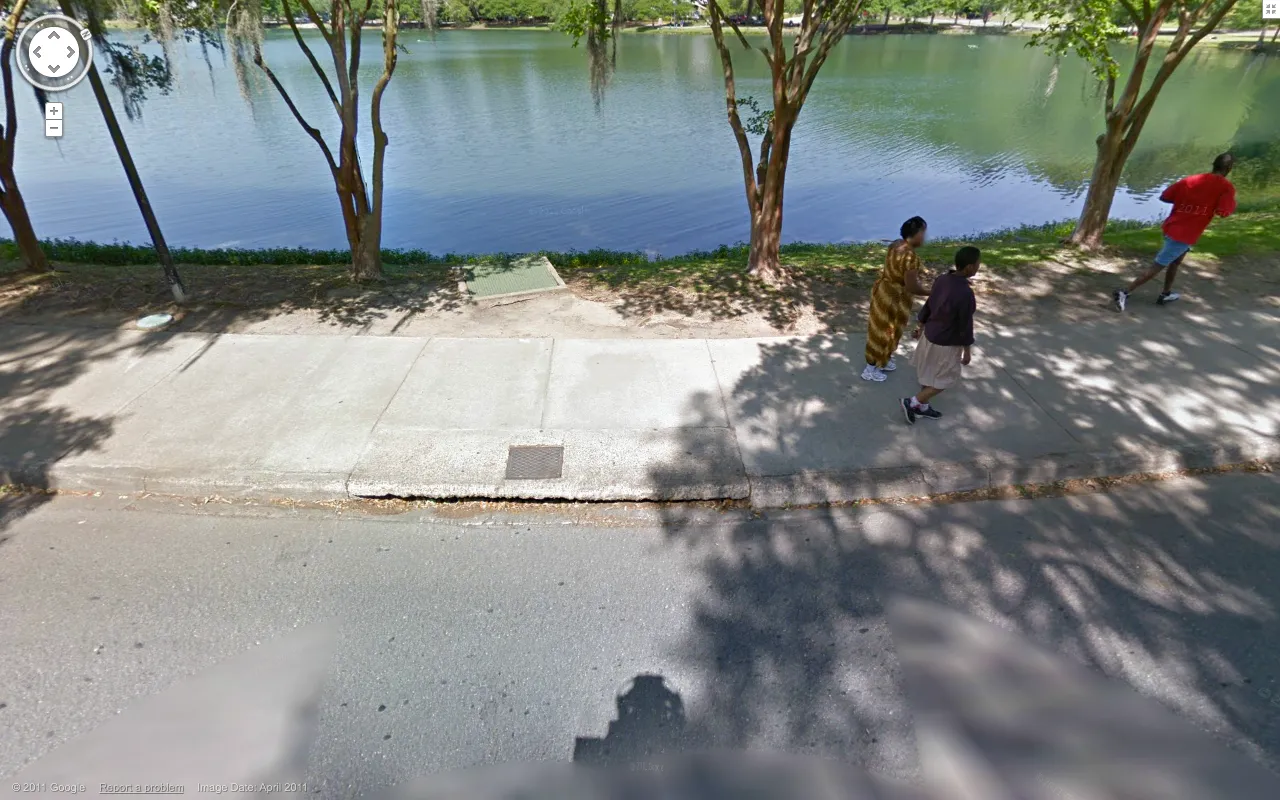
Posted in photography
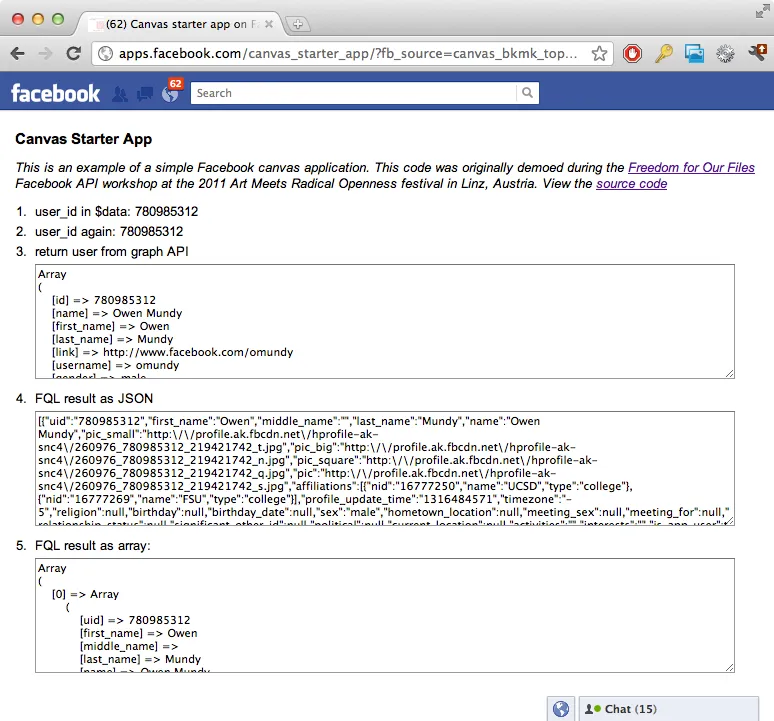
I’m happy to share the code from a Facebook app I created for a workshop earlier this year.
This simple Facebook canvas application was originally demoed during the Freedom for Our Files workshop at the 2011 Art Meets Radical Openness festival in Linz, Austria. You can view and download the source code on github
The application is very simple; it creates a Facebook object, performs calls to get data belonging to the current user, then prints the data exactly as it is returned. It has examples of basic Facebook Graph API calls as well as an example of FQL (Facebook Query Language).
You might notice my site and blog looks a little, well, opaque this week. Here’s a screenshot.
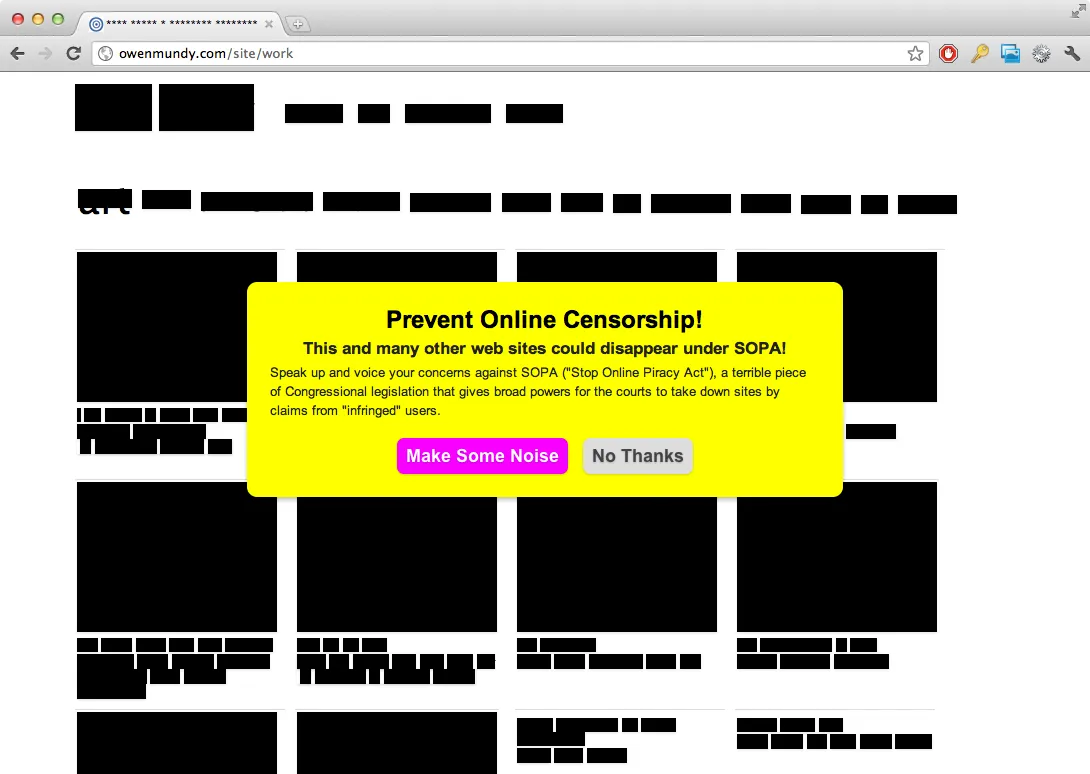
I’m running a script on my site that censors all the content in order to bring attention to a law being pushed through congress right now. The SOPA (“Stop Online Piracy Act”) is a terrible piece of legislation that gives broad powers for the courts to take down sites by claims from “infringed” users. If SOPA passes as-is, it could devastate the artistic expression and livelihood of many artists, hackers, and entrepreneurs.
More information at fightforthefuture.org
You can protest the SOPA bill and install the blackout code on your site to let your visitors know what they could miss out if SOPA does pass.
Paste this code into your Tumblr themes, website, and more…
<script type="text/javascript">
  var FATLAB_Stop_SOPA = {
    color : '#000000',
    promote : true
  };

  document.write('<scr'+'ipt src="http://fffff.at/stop_sopa/blackout.js?v=1&e83a2c"></scr'+'ipt>');
</script>
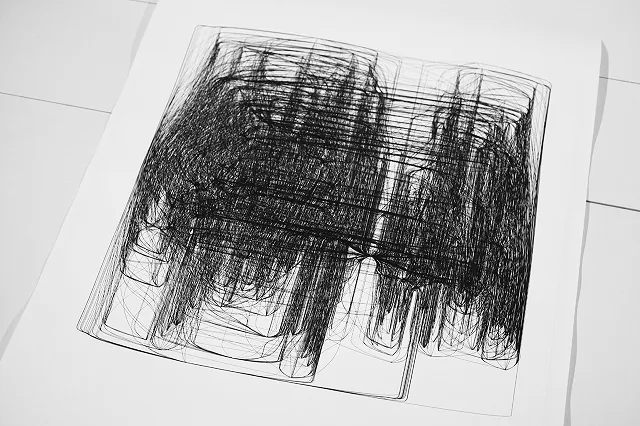
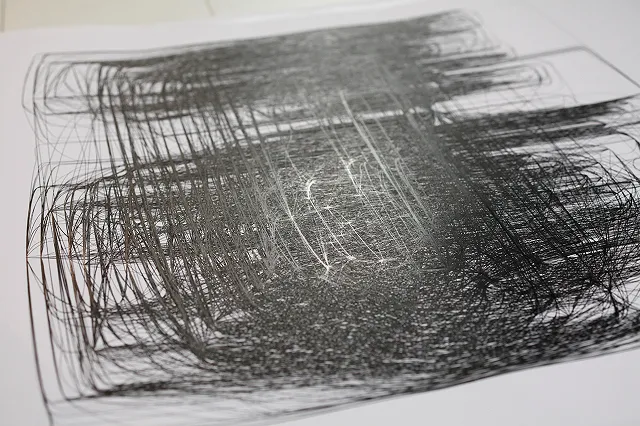
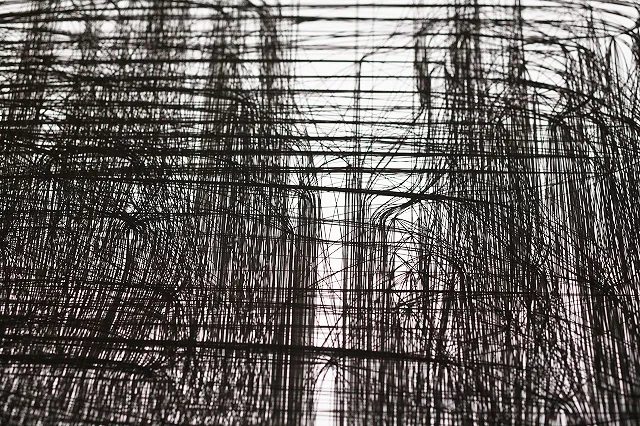
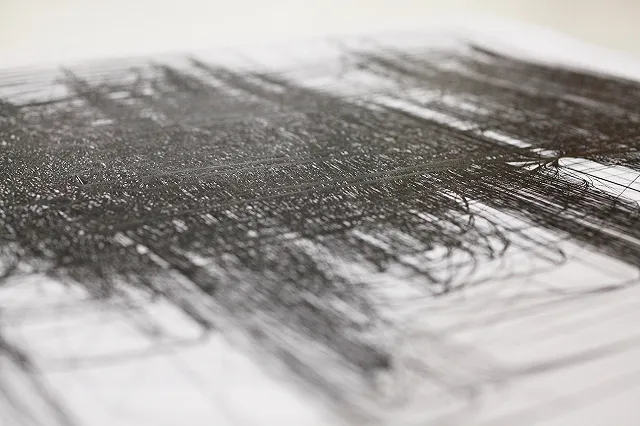
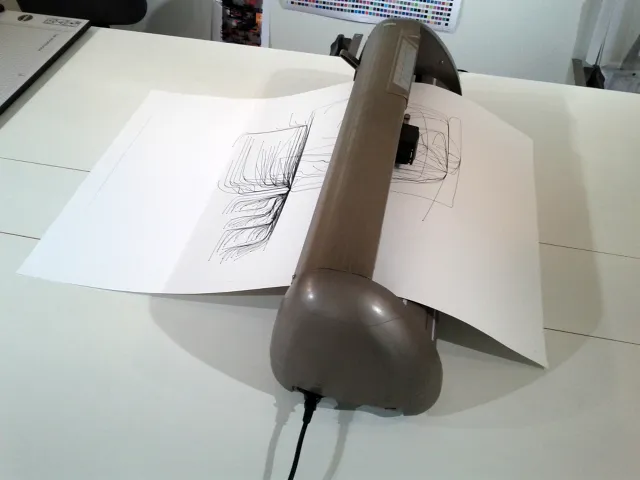
Here are some images Ryan Boatright of Atelier Boba made while he was printing one of my network visualizations from the I Am Unable to Fulfill Your Wish series on their new line plotter. The prints arrived last week from their location in Paris and are great to see in person. The line plotter repeated so many of the lines it actually polished the surface of the paper causing the print to reflect light.
I am speaking about Give Me My Data at Florida State University’s Digital Scholars group, which is coordinated by Paul Fyfe, Assistant Professor of English, History of Text Technologies hott.fsu.edu
Give Me My Data!
Thursday, December 1, 1:00-2:00 pm
Williams Building 013 (bottom floor), aka the English Common Room
*please note different location*Please join us for a presentation by Owen Mundy: artist, software designer, and scholar of surveillance cultures from the Stasi to contemporary social networking platforms. Professor Mundy will quickly tour us through his recent research and related project “Give Me My Data,” an application “that helps users export their data out of Facebook for reuse in visualizations, archives, or any possible method of digital storytelling” (http://givememydata.com/). Join us for a stimulating presentation and discussion to follow!
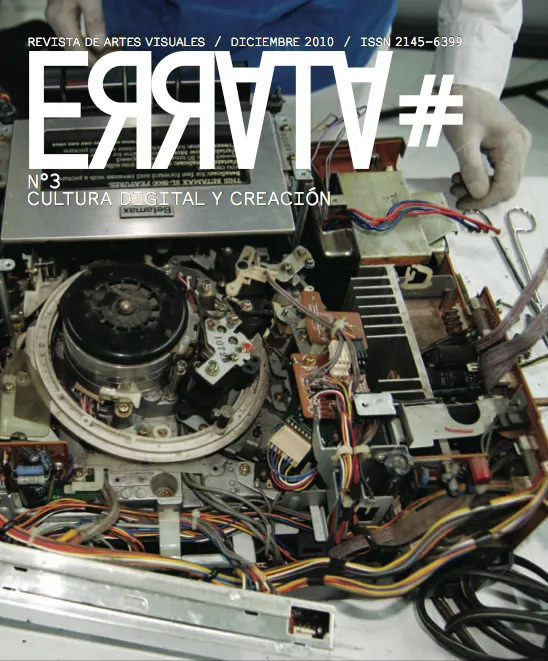
Curator and theorist, Eduardo Navas, has published an essay he wrote to accompany the Transitio_MX 2009 exhibition which included Anemophilous Formula for Computer Art by Joelle Dietrick and myself. The essay, “La Influencia de los No-Lugares en el concepto de America Latina.” (English “The Influence of Non-places in the Concept of Latin America”), was published in Spanish in Errata #3, Cultura digital y creación Dec 2010.
Here’s an excerpt of the essay in English. You can read more about (in English) on Eduardo’s blog or the full text is available in Spanish here.
Airplane travel and airports, which have been a key reference in the theory of non-places by both Augé and Ibelings finds direct commentary in Anemophilous Formula for Computer Art. This time-based work consists of a photograph of the Tallahassee Airport Check-in area, which hosts a wall sized reproduction of McClay Gardens Park. In front of the wallpaper image we find: on the left hand side a plant in a pot and on the right a portable fan, next to three airportline-dividing-poles which are connected with a dividing strip, and a dolly cart at the far end. The photograph of the actual lobby is projected on the wall along with a series of numbers, located at the bottom of the screen’s frame, complemented with an algorithmic simulation of Tree Pollen falling surrealistically, while a sound track of birds plays in a loop. In essence the airport check in lounge is turned into a staged moment where the reproduction of a natural environment is treated as a mere decoration.
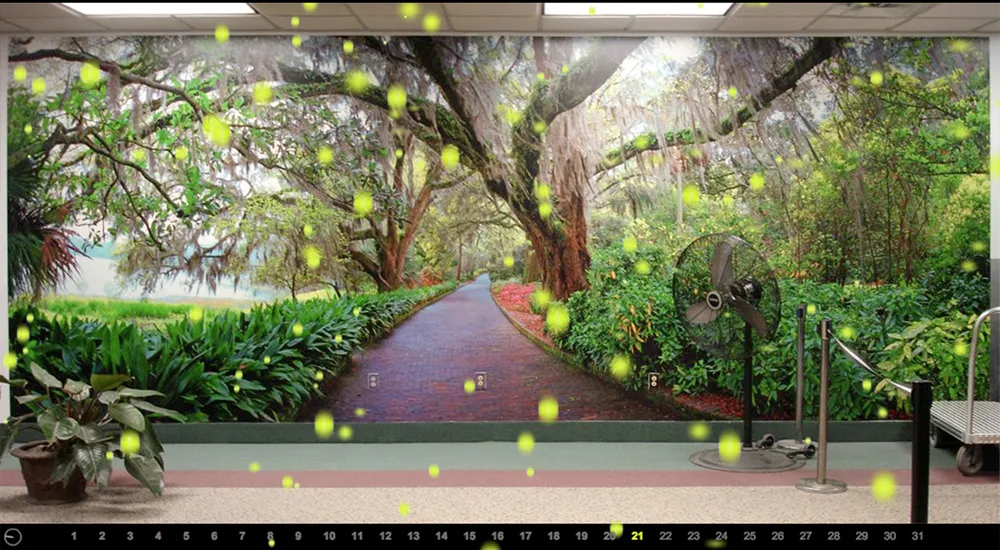
Anemophilous Formula for Computer Art (2007) by Owen Mundy and Joelle Dietrick
In Anemophilous Formula for Computer Art the airport as a non-place is taken apart. The image is not only commenting on how parks are careful orchestrations of nature to fit human ideals, but also exposes how this aesthetic has entered the airport, a space of transition, in order to make people feel comfortable upon their arrival or departure. If one tries to believe that what one is looking at is real nature, or even a meta recording of nature, one only needs to notice that the pollen is falling just a bit too perfectly, executing an algorithm meant to appear naturally, magically. This orderliness, this pristine aesthetic, as in the other four selections has a direct link to the control that is inherent in supermodernism: “This boundless space is no dangerous wilderness or frightening emptiness, but rather a controlled vacuum, for if there is one thing that characterizes this age it is total control. The undefined space is not an emptiness but a safe container, a flexible shell.” Anemophilous Formula for Computer Art exposes the type of activity that more privileged migrants perform—those unlikely to work in maquiladoras or any other blue-collar job. Therefore, the wall projection is a commentary on the growing supermodern aesthetic of glocalization, and thus a critical commentary on a specific activity that is ingrained as much in Latin America as well as other regions. Viewers can project themselves into the computerized image, and feel comfortable in the virtual airport lobby; whether the viewer may potentially be in Japan or Mexico is irrelevant because the language of non-places has transcended space in this sense. And therefore makes the conceptualization of a constant migration an issue of class rather than identity.
—Eduardo Navas
Finally finding time to edit documentation from A Single Composite exhibition this summer in Berlin.
A Single Composite is a series of kinetic installations and projection apparatuses that stretch, twist, and loop film strips containing declassified and other found reconnaissance footage. Using reconstituted digital printer chassis, this cinematic enterprise is projected on walls, ceilings, and floors, to form a series of individual moments of surveillance and implied violence.
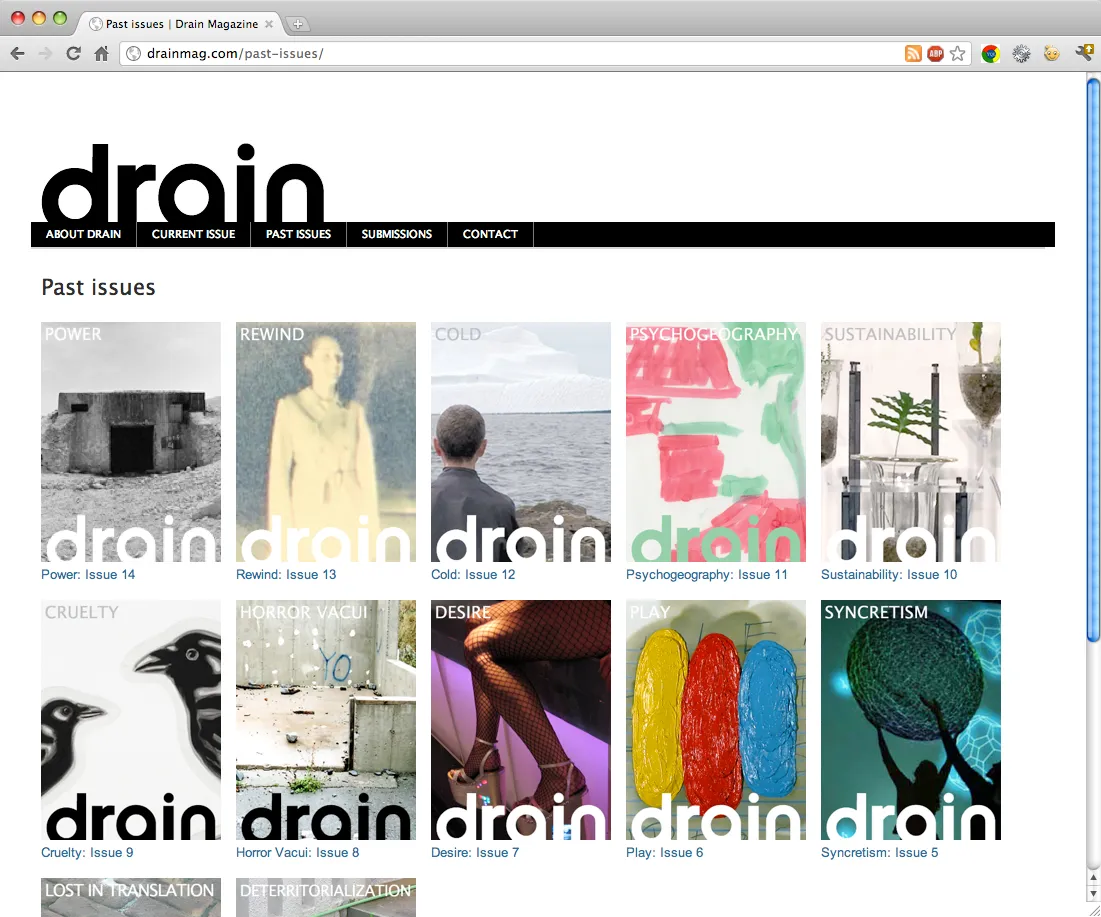
I am happy to announce the launch of the new website for Drain: Journal of Contemporary Art and Culture and the corresponding release of issue #11 POWER, which I co-organized with Avantika Bawa.
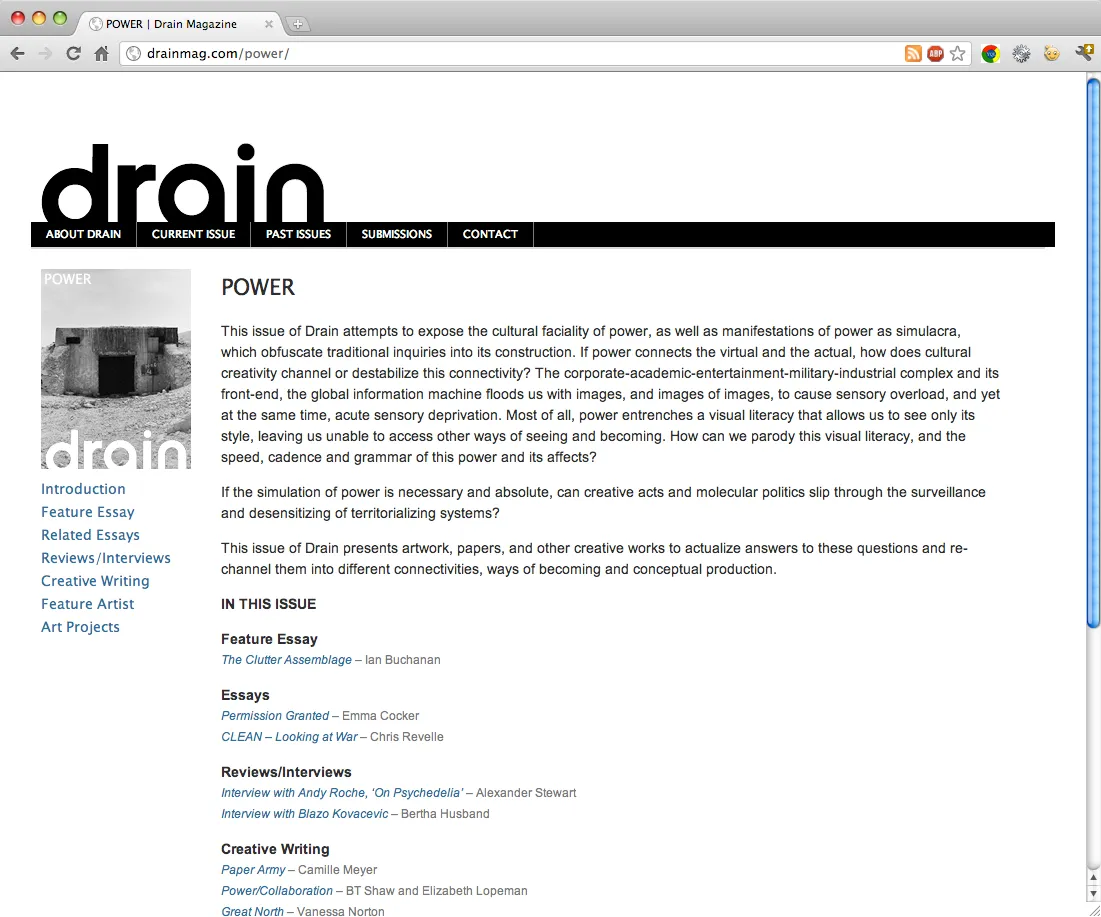
POWER, issue #11
This issue of Drain attempts to expose the cultural faciality of power, as well as manifestations of power as simulacra which obfuscate traditional inquiries into its construction. If power connects the virtual and the actual, how does cultural creativity channel or destabilize this connectivity? The corporate-academic-entertainment-military-industrial complex and its front-end, the global information machine floods us with images and images of images, to cause sensory overload, and yet, at the same time, acute sensory deprivation. Most of all, power entrenches a visual literacy that allows us to see only its style, leaving us unable to access other ways of seeing and becoming. How can we parody this visual literacy, and the speed, cadence and grammar of this power and its affects?
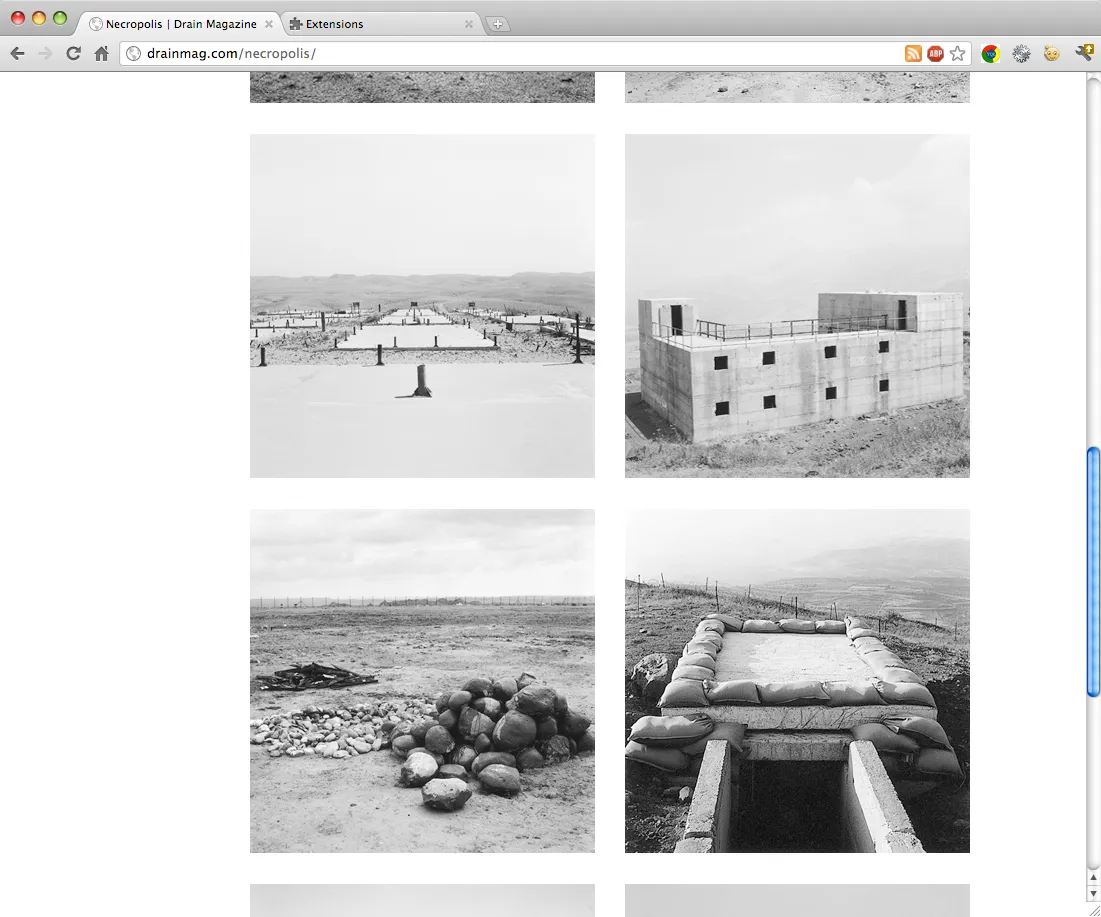
If the simulation of power is necessary and absolute, can creative acts and molecular politics slip through the surveillance and desensitizing of territorializing systems?
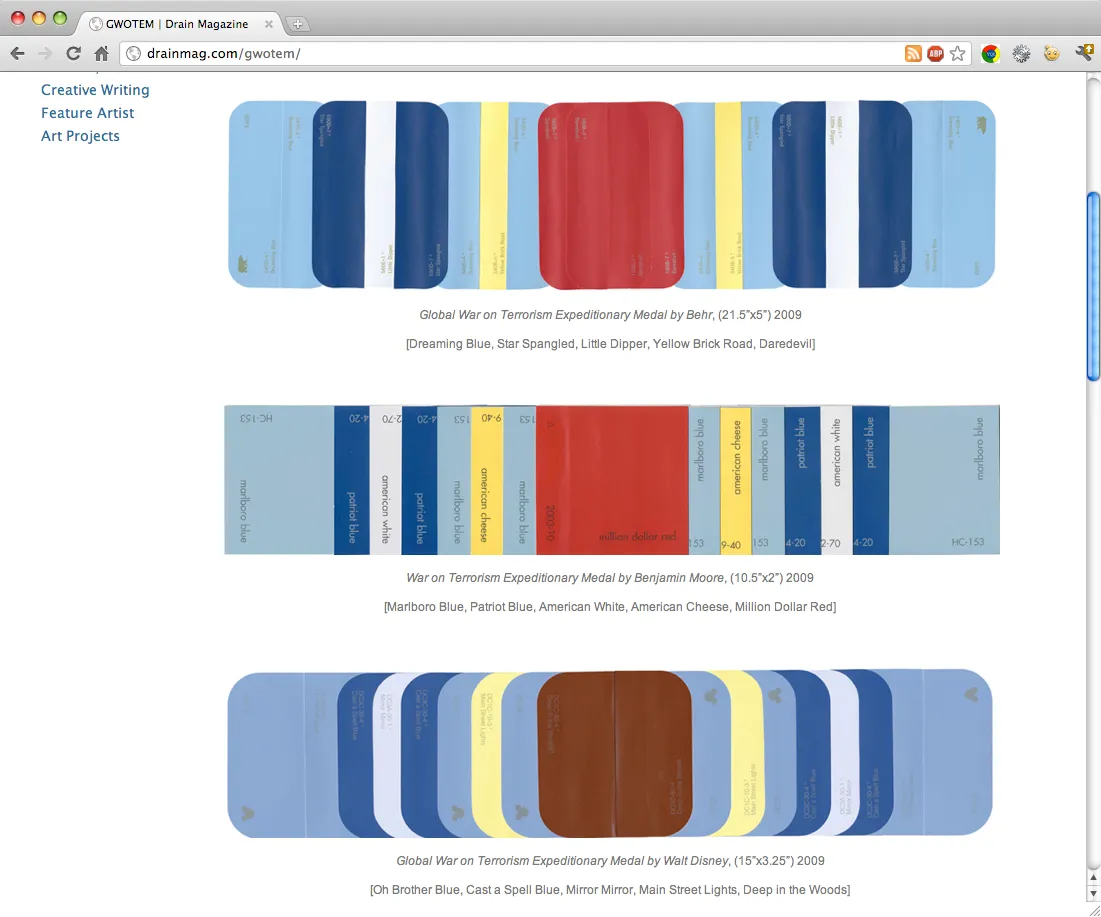
This issue of Drain presents artworks, essays, and other creative works to actualize answers to these questions and re-channel them into different connectivities, ways of becoming and conceptual production.
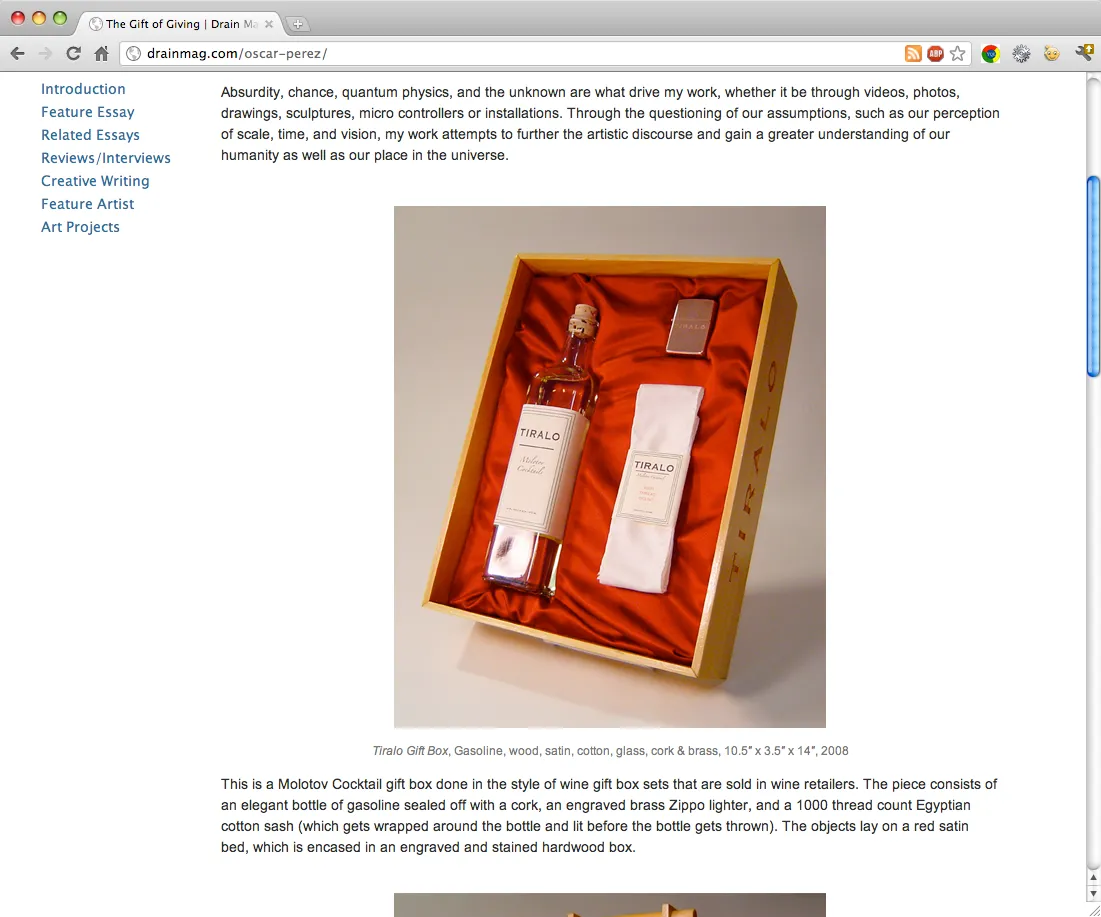
The Gift of Giving by Oscar Perez
We are pleased to present Ian Buchanan and Roi Kuper as our feature writer and featured artist. This issue also includes essays by Emma Cocker and Chris Revelle, as well as interviews by Alexander Stewart with artist Andy Roache and Bertha Husband with Blazo Kovacevic. In our Creative Writing section, we present works by Camille Meyer, BT Shaw & Elizabeth Lopeman, Vanessa Norton, Emma Cocker and Morgan Campbell. Art projects works by Jamie Badoud, Diana Heise, Cyrico Lopes, Bob Paris and Oscar Perez.
The Processing.js project is really cool. It allows you to run Processing .pde files inside (HTML5 compatible) web browsers using Javascript. You can pass data back and forth between the two programs, access the DOM with Processing, and you don’t need any plugins or Java.
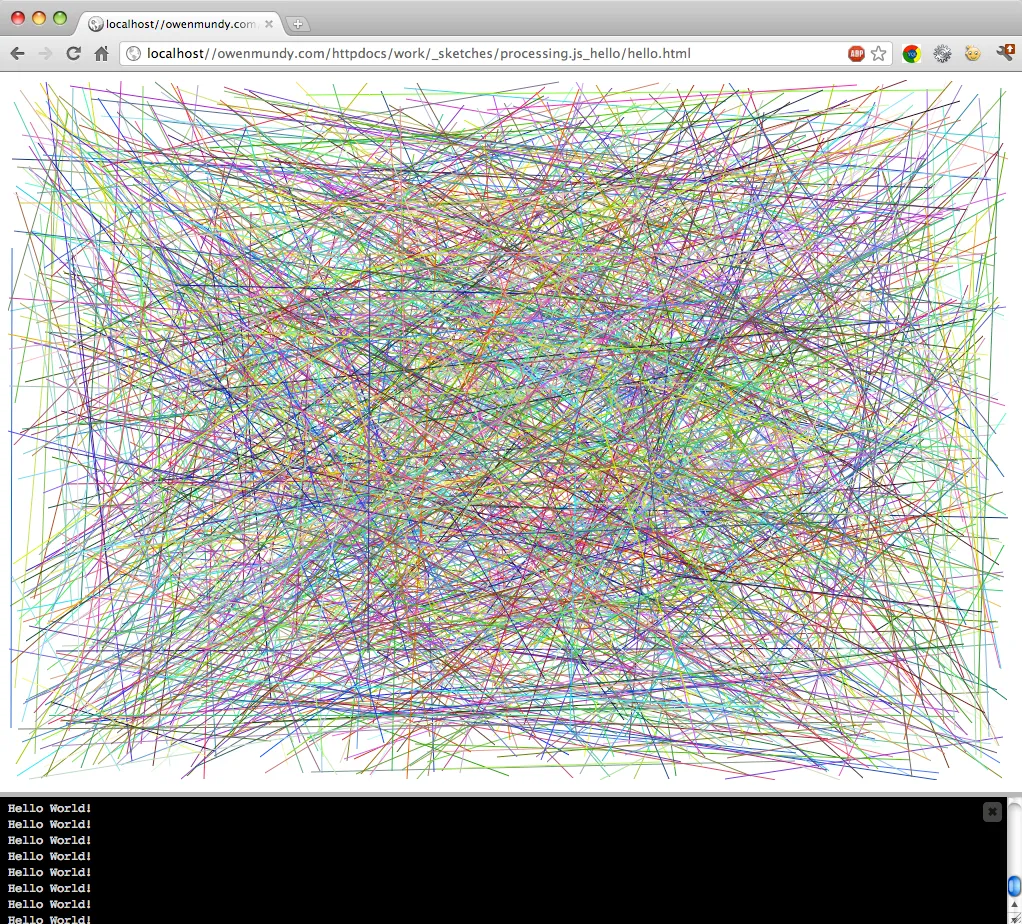
Click here to run this Processing sketch in your browser
One caveat… When importing a Processing .pde file into the HTML5 canvas you must access the files on a web server or by using localhost (a server running on your computer, e.g. MAMP) because most (all modern?) web browsers don’t allow file:/// access for security reasons. Unfortunately this is not intuitive as Javascript should run in the browser regardless of file:/// access. Nor is it mentioned in any of the Processing.js Quick Start documentation. I found it by testing, and then confirmed it in their README. Darn, need to remember to read (all of) the instructions.
UPDATE: A friend pointed out that the problem accessing the .pde file could be due to the same origin policy. Though not explicitly stated on the Github page for Processing.js, they do mention that disabling same origin setting in your browser is a(n undesirable) workaround.
Some web browsers (e.g., Chrome) require secondary files to be loaded from a web server for security reasons. This means loading a web page that references a Processing.js sketch in a file via a file:/// URL vs. http:// will fail. You are particularly likely to run into this problem when you try to view your webpage directly from file, as this makes all relatively links file:/// links.
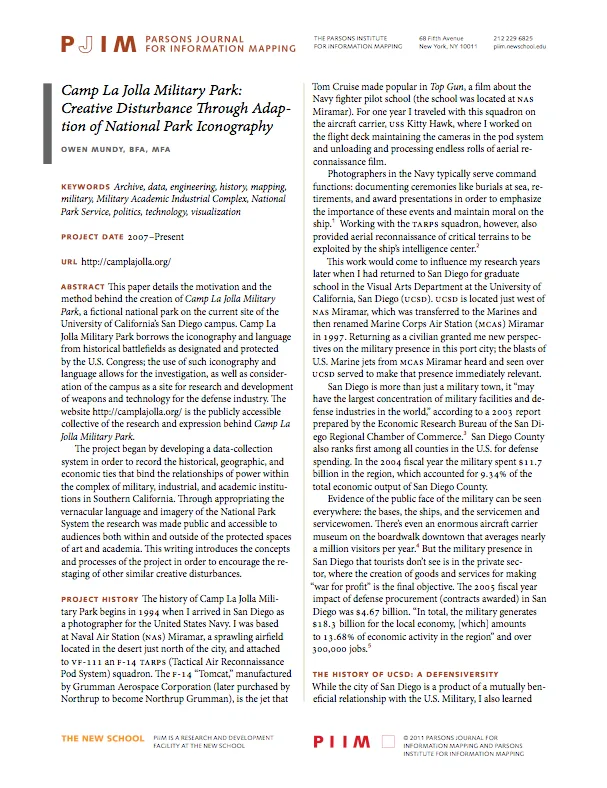
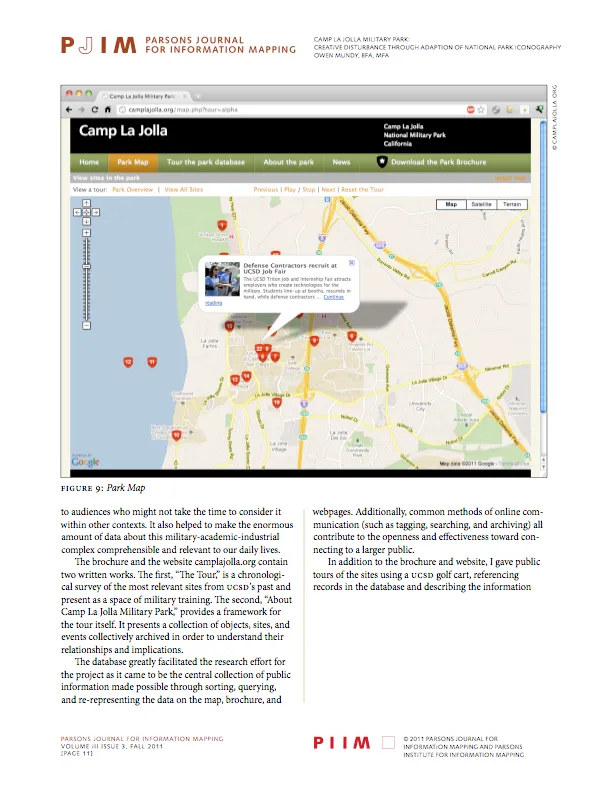
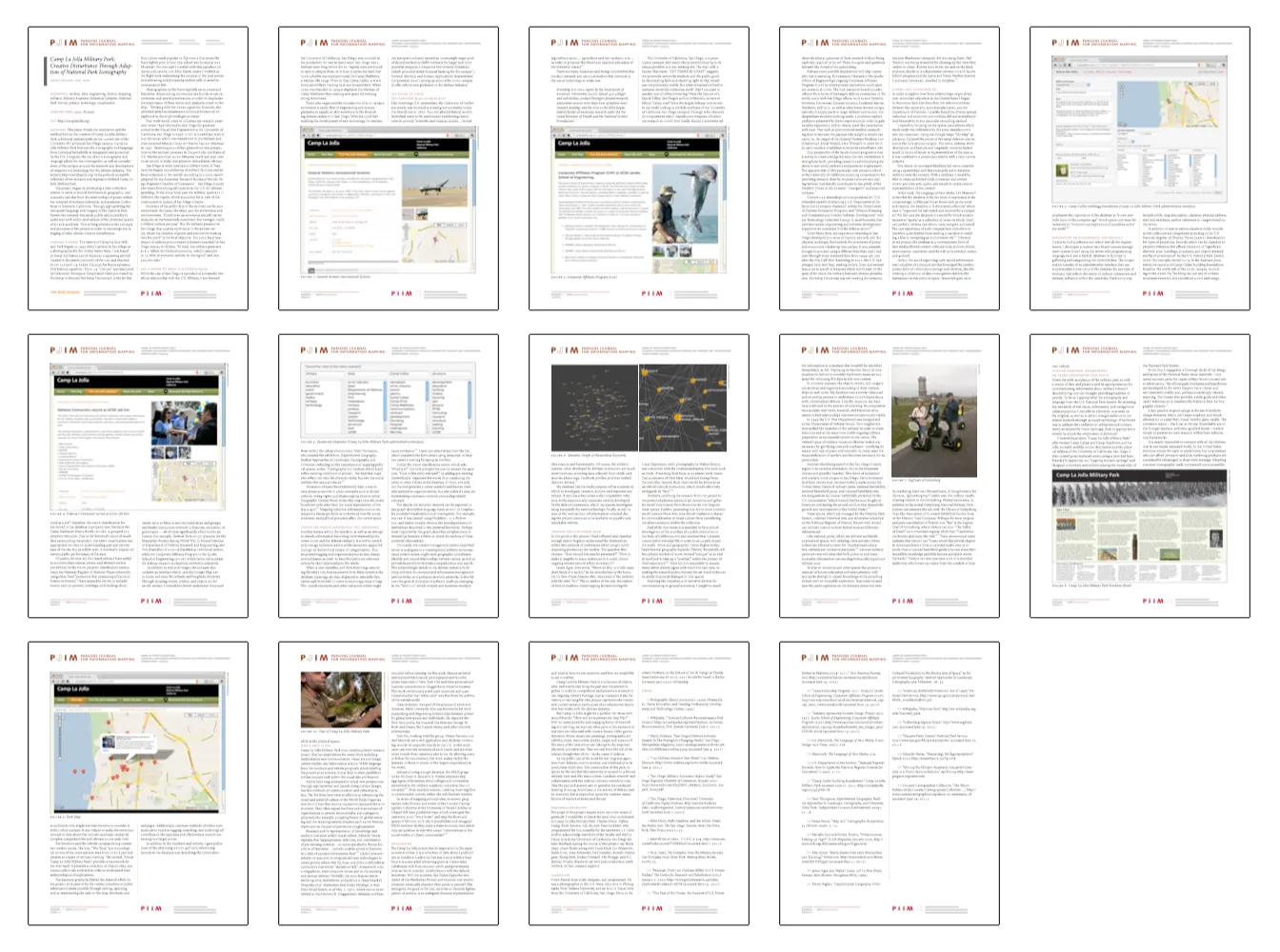
I recently published an essay, “Camp La Jolla Military Park: Creative Disturbance Through Adaption of National Park Iconography,” in the Parsons Journal for Information Mapping (PJIM) documenting my thesis work at the University of California, San Diego. Here is the abstract for the essay:
This paper details the motivation and the method behind the creation of Camp La Jolla Military Park, a fictional national park on the current site of the University of California’s San Diego campus. Camp La Jolla Military Park borrows the iconography and language from historical battlefields as designated and protected by the U.S. Congress; the use of such iconography and language allows for the investigation, as well as consideration of the campus as a site for research and development of weapons and technology for the defense industry. The website http://camplajolla.org/ is the publicly accessible collective of the research and expression behind Camp La Jolla Military Park.
The project began by developing a data-collection system in order to record the historical, geographic, and economic ties that bind the relationships of power within the complex of military, industrial, and academic institutions in Southern California. Through appropriating the vernacular language and imagery of the National Park System the research was made public and accessible to audiences both within and outside of the protected spaces of art and academia. This writing introduces the concepts and processes of the project in order to encourage the restaging of other similar creative disturbances.
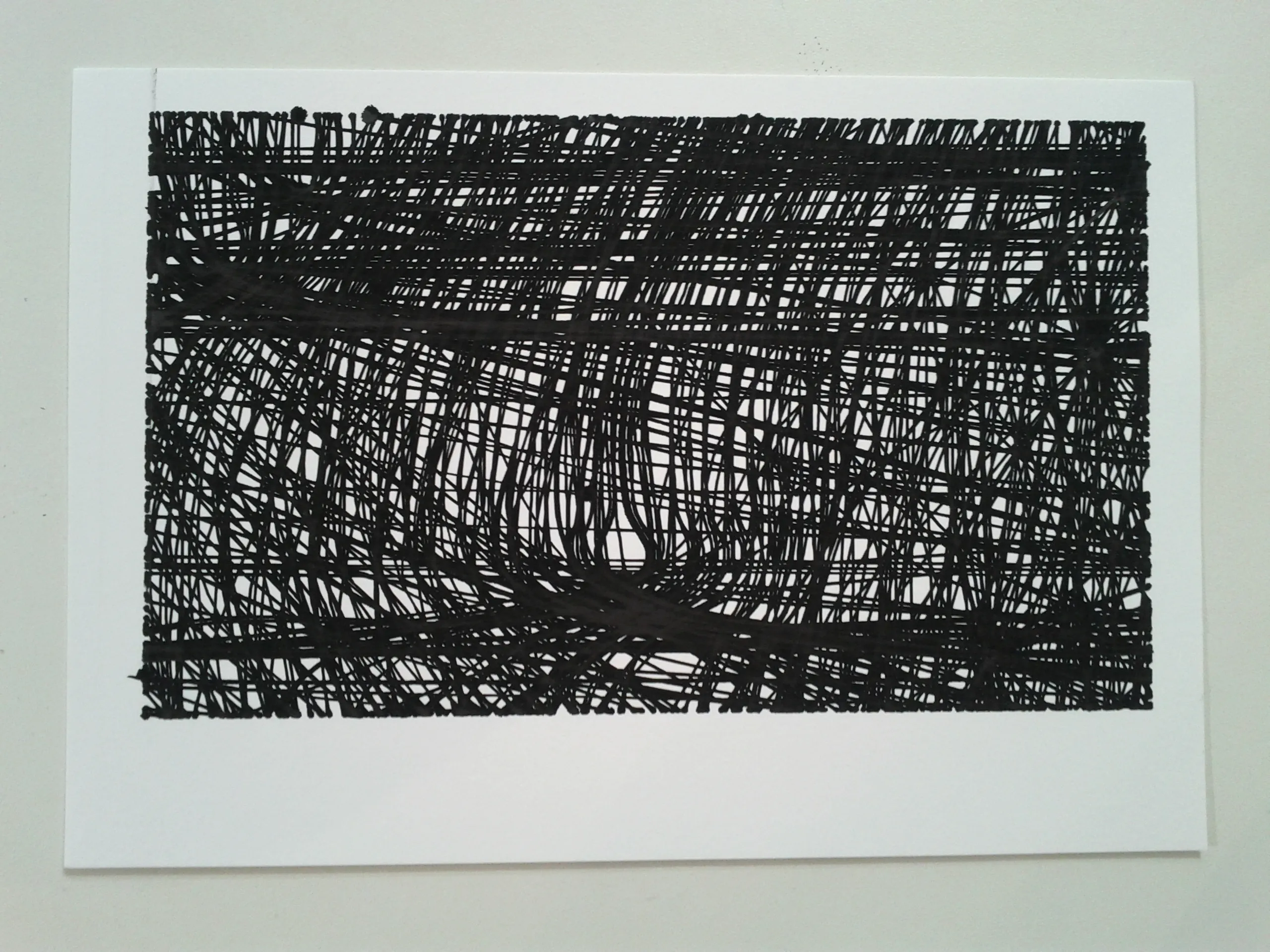
Ryan Boatright at Atelier Boba in Paris running one of my I am Unable to Fulfill Your Wish images through their new line plotter.
Through A Glass Darkly will be included in an international exhibition next month in Berlin, Germany.

Keine Z E I T / No TIME
Time phenomena. Phenomena of time.
The fourth international, interdisciplinary and topic centered exhibition of G.A.S-station.
48 Positiones out of science, art and literature.
Erik Andersen (Ger), video – Ewelina Aleksandrowicz, Andrzej Wojtas (UK), video – Elisa Asenbaum (A), video/installation – Thomas Bedürftig (Ger), science – Axel H. Bertram (Ger), video – Hubert Blanz (Ger), video – Thomas Born (Ger), fine art – Udo R. Bruening (Ger), performance – Amandine Crozat (FR), fotografie – Franz Embacher (A), science – Oliver Feigl (Ger), video – Volker Frechen (Ger), audio installation – Peter Funken (Ger), publicist – Bruno Goosse (BE), video – John Greiner (US), literature – Stephan Groß (Ger), video – Marion Habringer, E. Asenbaum (A), installation – Heiko Hecht (Ger), science – Anna Elisa Heine (Ger), literature, lecture – Batya Horn, Edition Splitter (A), literature – Helen Acosta Iglesias (ES), installation, – IMAGO e.V., Anne-Katrein Maschke, Ina Krauß (Ger), fashion, performance – Britta M. Ischka (A), video – Grace Kim (US), video – Ina Krauß (Ger), audio-collage – Renate Krätschmer, Elli Schnitzer (A), installation – Till Kreutzer (Ger), science – Verena Kuni (Ger), webproject, lecture – Anna Maria Kursawe (Ger), painting – Team K.U.SCH. (A), video – Wolfgang Marktl (A), science – Owen Mundy (US), video – Wolfgang Neipl (A), video – Julia Nuss (Ger), fine art – Jerzy Olek (PL), fine art, video – Herbert Pietschmann (A), science – Arnold Reinthaler (A), fine art – Hartmut Rosa (Ger), science – Miriam Schwedt (Ger), fotografie – Christiane Spatt (A), fotoinstallation – Renée Stieger (A), installation – Ralf Tekaat (Ger), drawing – Guichard Thibaud (FR), performance – Tomax (A), installation – Mirko Tzotschew (Ger), fotografie – Burchard Vossmann (Ger), fine art – Gisela Weimann (Ger), literature, reading – Peter Whittenberger (US), video
Vernissage: October 7th 2011 – 7 pm
Exhibition: October 8th 2011 until Februar 4th 2012
+++
Berlin: Thomas STUCK, Fon: 030 221 609 312 Mov: 0160 995 78 158
mail: info@2gas-station.net
Vienna: Elisa ASENBAUM, Fon: 0043 1 533 56 77
mail: elisa@2gas-station.net
Supernature is more than nature as science, or nature as art – it exceeds the boundaries of these classificatory systems and opens up a space where the species of things conjure wonder and curiosity, as well as fear and repugnance.
This issue of Drain calls for a rigorous exploration of the habitual ways by which nature is known to us, a questioning that unfolds the limits of the subsensible imagination.
How does supernature allow us to read the unwieldly connections between nature, art and science? Is it possible to open up to a supernature which creates and lives through us?
Please send submissions to: Celina Jeffery or Avantika Bawa
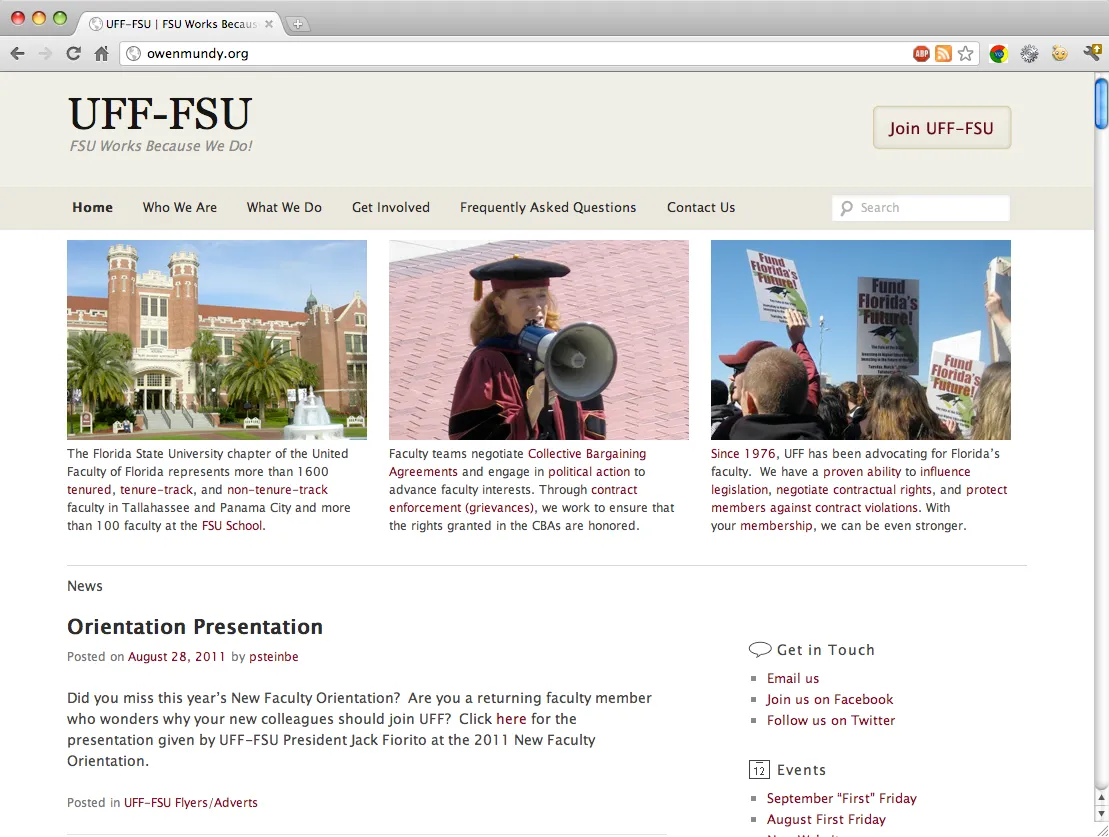
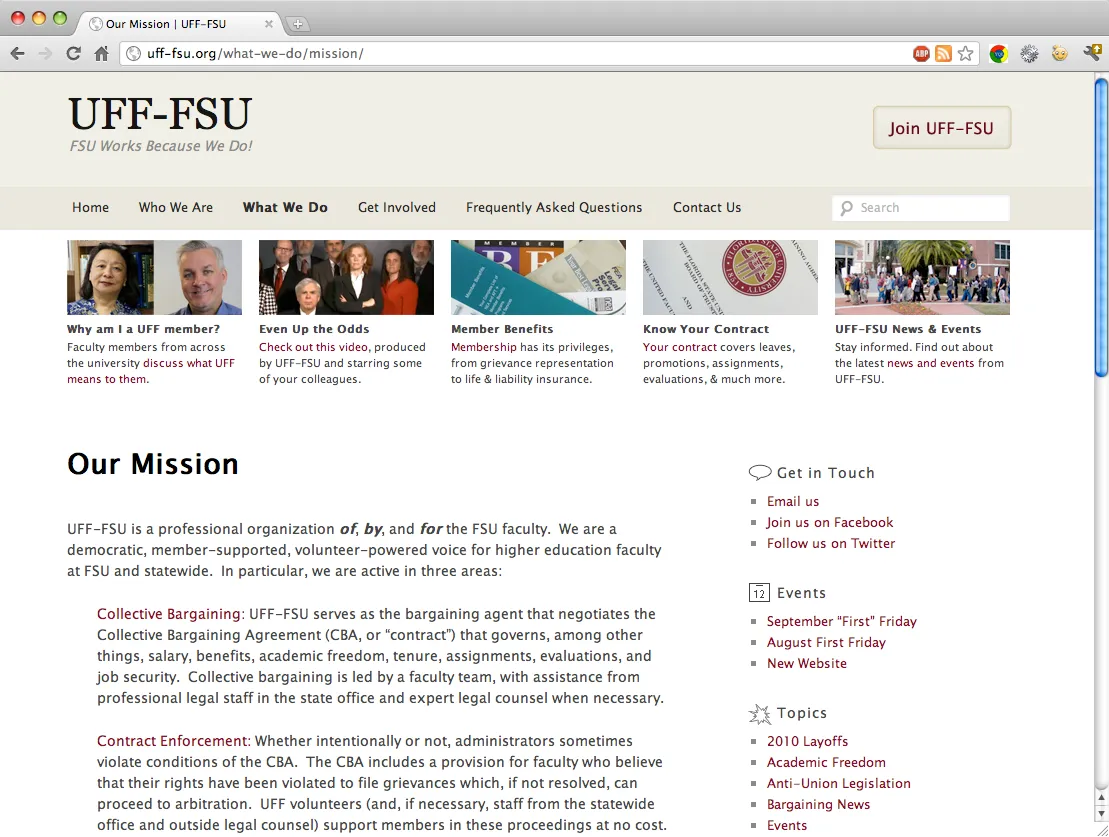
I recently completed a redesign of United Faculty of Florida – Florida State University (UFF-FSU) union website at uff-fsu.org with colleague, Phil Steinberg. This site runs on WordPress CMS with an altered Twenty Eleven theme. Here are some screenshots:
I just moved back to Florida after a one year research project in Berlin and have subscribed to Comcast broadband service. The whole experience left a bad taste in my mouth, though not because the tech showed-up 2 hours after the installation appointment window. Nor was it because he held loud personal conversations on his cell phone while he was setting up the service. No, the icky feeling is more corporate and selfish, and impedes much more into my private space than “Joe the cable guy” ever could.
Comcast made me install software on my computer in order to use their broadband.
Upon his arrival, “Joe” announced he would need access to my computer to setup broadband service. Understanding that most of the people Joe deals with might not be IT whizzes, and could manage to not be able to connect their machines without his help, I decided to let him use it rather than attempt to prove I was not a member of the usual group. After half an hour of complaining about previous customers to his friend on his cellphone, waiting for an other Comcast person to flip a switch allowing him to do his job, and multiple trips to his truck, he showed me that the internet was indeed accessible on my computer.
At this point the laptop was directly connected to the cable modem via an ethernet cable. He announced I was to follow the steps on the screen and he was out the door. The web page he had left up required me to agree to some terms, create a username and then… install software? Really? I tried to access the net without the final step but nothing doing. Unless I installed this software I was stuck. So I did it, still not believing that a company had really initiated this final invasion onto every customer’s computer. After it was done I had new bookmarks everywhere, for Comcast email, security, and some branding nonsense called “XFINITY” (I thought “X” was out with the ’90’s and “X”games?)

So I thought, “OK, Comcast, you got me, hit me with your best marketing slime. Whatever, I can delete the bookmarklets you installed in my browser, just let me access the service I paid for, wirelessly, on whichever device I want.”
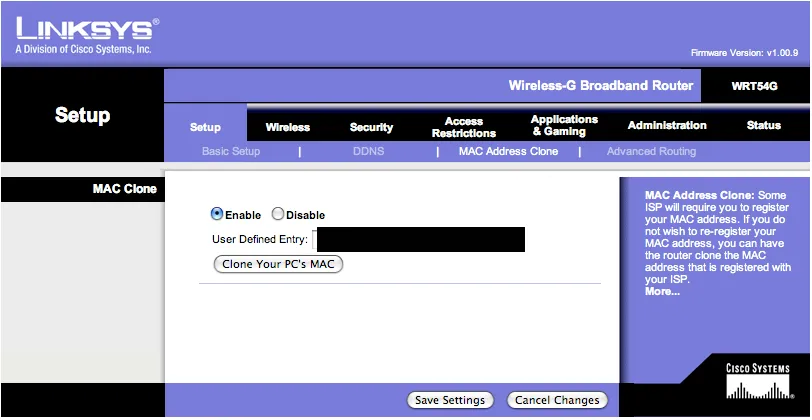
But this is where the relationship got really creepy. Apparently when I installed the Comcast (spyware?) on my machine, it made note of my MAC address, a unique identifier of networked machines, so that it would only allow my machine (or another machine with that MAC address) to connect to the internet. This means when I attached a wireless router to the cable modem I could connect to the wifi, but there was no internet.

So it turns-out that Comcast is not only forcing their adware on customers, it’s also making it difficult (though not impossible) for them use more than one device. Presumably Comcast is doing this in order to circumvent sharing of services among neighbors, but the end result is that you can’t share the service between more than one device, or between roommates or spouses for that matter.
An example (albeit a geeky one): between my wife and I we have 2 laptops, 2 smartphones, and a desktop computer that all might be talking to each other or accessing the net. Comcast’s so-called internet service didn’t allow for any such geekery because it only allows one device, with the correct MAC address, to connect.
So, here’s what I did, on my Mac, with some help from my sister’s boyfriend, Tom, and a lot from Google, to get my linksys wireless router to work with Comcast internet.
I was quoted recently in a TechCrunch article about the ongoing battle between Google and Facebook to draw users to their respective social networking services. In the article, The Only Backdoor Left To Sneak Your Facebook Friends Into Google+ Is Yahoo, Erick Schonfeld writes:
‘Over the weekend, Facebook blocked a Google Chrome extension called the Facebook Friend Exporter. And in fact, Facebook changed its OAuth 2.0 API in such a way that it “suddenly removed email addresses from the queries without warning,” says Owen Mundy, creator of Give Me My Data. Other data can still be exported, just not your friends’ email addresses.’ [1]
I wanted to clarify something about the above because my contribution is slightly vague. I also wanted to elaborate for other developers and people interested in how to get their data, specifically the email addresses *out* of Facebook.
Getting your data our of Facebook is a hot issue right now with the emergence of Google+. It’s important to be able to preserve your data, especially in the event you want to exit Facebook, or prepare for its possible demise. I think most people don’t care which social networking software they use, as long as they can stay in touch with their friends. Many depend on Facebook to keep their friends’ contact information up to date. Their friends’ phone numbers, emails, and physical addresses may have changed, but they can still be found on Facebook.
This is one great benefit of Facebook, but I think they’ve come to take a higher-than-thou approach to user data. For example, if I use a single software on my computer to manage contact data for my friends, send them messages with pictures, etc., I am not locked-into a contract with the machine nor the software. I physically have the device that stores this data in my possession, and therefore can do whatever I like with it—assuming I can wrangle my data out of it.

One of the great benefits of the cloud is access, right? Wrong. Facebook has a god’s eye view regarding the matter of our data. The view from on high is that they can do whatever benefits Facebook, not necessarily the user. So they continue profiting from our activity while protecting it’s evidence from any company/person/software which could compromise their lead in social networking. Unfortunately this includes us, so we are ultimately at their mercy.
But Facebook is not a merciless God. They don’t charge to use their service or store my data. This is the tradeoff. We sacrifice privacy—our right to not be tracked, advertised to, or sniffed by governments—in order to play games, have stupid political debates, and post pictures of our kids. So, they have the right to allow or prevent access to this information, regardless of whether it is right.
Regarding getting email addresses of your contacts, as far as I know, there are three ways to mass export your friends’ contact data, only one of which is currently allowed by Facebook.
The Facebook Friend Exporter, created by Mohamed Mansour, is a browser extension that works independent of the Facebook API. It scrapes your friends’ contact data from the Facebook pages you visit and exports them as CSV. First, Facebook’s rules here for reusing this type of data are not exactly clear. While they don’t explicitly ban saving the contact info of your friends, the have a catch-all statement that tries to set guidelines for doing so. One could argue by accepting your friend request a user has already consented to sharing with you.
“If you collect information from users, you will: obtain their consent, make it clear you (and not Facebook) are the one collecting their information, and post a privacy policy explaining what information you collect and how you will use it.” [2]
One thing that is clear is the method the Facebook Friend Exporter extension uses is banned according to Facebook’s Statement of Rights and Responsibilities:
“You will not collect users’ content or information, or otherwise access Facebook, using automated means (such as harvesting bots, robots, spiders, or scrapers) without our permission.” [2]
And as expected, Facebook has taken measures to prevent Mansour’s app from working.
“Mansour says that Facebook removed emails from their mobile site, which were critical to the original design of his extension. He told me that the company had implemented a throttling mechanism: if you visit any friend page five times in a short period of time, the email field is removed.” [3]
This is not the first time Facebook has referenced their Statement of Rights and Responsibilities to take measures to keep user data from hackers, artists, or competitors. In 2010 they served moddr and other makers of the Web 2.0 Suicide Machine with a cease and desist letter to prevent them from providing a service for Facebook users to delete their accounts. The letter, which claimed the project was guilty of “Soliciting users’ Facebook login information; Accessing a Facebook account belonging to someone else; Collecting Facebook users’ content or information using automated means such as scripts or scrapers without Facebook’s permission” was possibly effective. Currently only users of MySpace, LinkedIn and Twitter can commit “virtual suicide.”
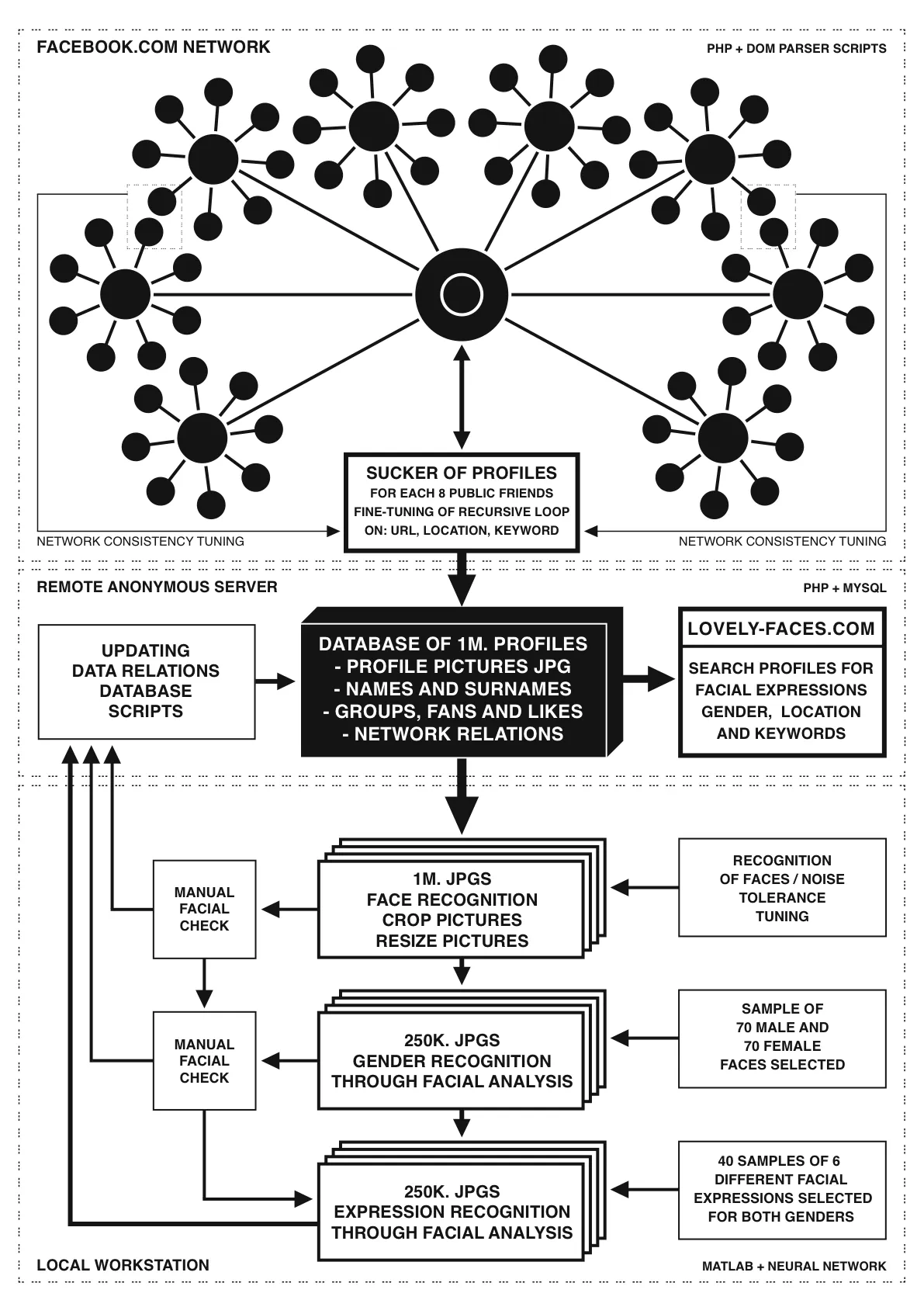
The Face to Facebook (see image on left) project by Paolo Cirio and Alessandro Ludovico stole one-million Facebook profiles, filtered them with face-recognition software, and then posted them on a fake dating website sorted by facial characteristics. From a statement by the makers:
“Everybody can steal personal data and re-contextualize it in a completely unexpected context. And that shows, once more, how fragile and potentially manipulable the online environment actually is.”
I agree, and I like the project. But in a public work such as this it’s hard to argue, in my opinion, that this project will help the average web user. While many may reconsider the type of information they post, more than likely they will think this project is another example of the “bad guys” (a.k.a. hackers) doing bad things. While it critiques, in a very amusing and relevant way, the issue of online privacy, it leaves the user feeling violated, not necessarily thoughtful. As a work of protest it encounters the same problem that holding a giant sign in someone’s face that says “go to hell”—It makes it hard for the other person to see your perspective when you do that.
While I appreciated the fun jab and reference to FaceMash, Facebook did not see the humor in the project. The creators received cease and desist letters and were threatened with multiple lawsuits from Facebook’s lawyers. And in a final spiteful measure, Facebook deleted their profiles [4]. Apparently the rule is, what happens on Facebook, stays on Facebook.
While I was sure that in the past my app, Give Me My Data, was able to retrieve a user’s friend’s email address, when I tested it after the Facebook Friend Exporter news broke I found no emails. Looking around the web I can’t find any evidence that Facebook ever allowed this data to be accessed. While you can still export all other data from your Facebook profile using Give Me My Data, this tiny and important string of characters with an ‘@’ is one essential component Facebook won’t allow. Likely, the policy was spurred by spam prevention, but given the above, it has the added bonus of blocking an exodus of users from Facebook.
In any case when you run the following FQL (Facebook Query Language) against their API it doesn’t error. This means the field exists, but they have written a custom script to remove it from the results.
SELECT first_name, middle_name, last_name, email
 FROM user
 WHERE uid IN (SELECT uid2 FROM friend WHERE uid1 = me())
In the article above, Schonfeld also explains how users can access their Facebook friend’s contact info by first importing it into a Yahoo! account and then exporting a CSV which can be imported into Google+ (or anything for that matter). I believe that Yahoo! belongs to the Facebook Preferred Developer Consultant Program which gives them access above and beyond regular developers:
“Facebook provides PDCs with increased access to its employees and training. PDCs are expected to abide by program expectations around policy compliance, integration quality, and high-level cooperation with Facebook.” [6]
Whatever kind of cooperation it is that Facebook is giving these preferred developers, one can be sure it includes access to data Facebook considers sensitive, like email addresses. While Yahoo! is not listed as a preferred developer on the Facebook page above, they have access to the emails so they clearly have some kind of arrangement.
Google, on the other hand, most definitely does not. This is not the first time Google and Facebook have gotten into a scuffle over sharing (or lack of) data. Late in 2010 Google stated they would no longer allow Facebook and other services access to their users’ data unless Facebook or the other service allowed data to be accessed by Google. [7]
In closing, we already know everyone wants our data. All the clicks, likes, comments, photos, and video we incur or upload are tracked, analyzed, and ultimately compiled and sold to advertisers or others in the business of molding consumer (or political) behavior. We’ve come a long way since Gutenberg, but just like when he was alive, it seems there will always be powerful groups in control of the media of the day. And, even with the utopian promise of a democratic internet, information continues to be manipulated or hidden in order to keep them powerful.
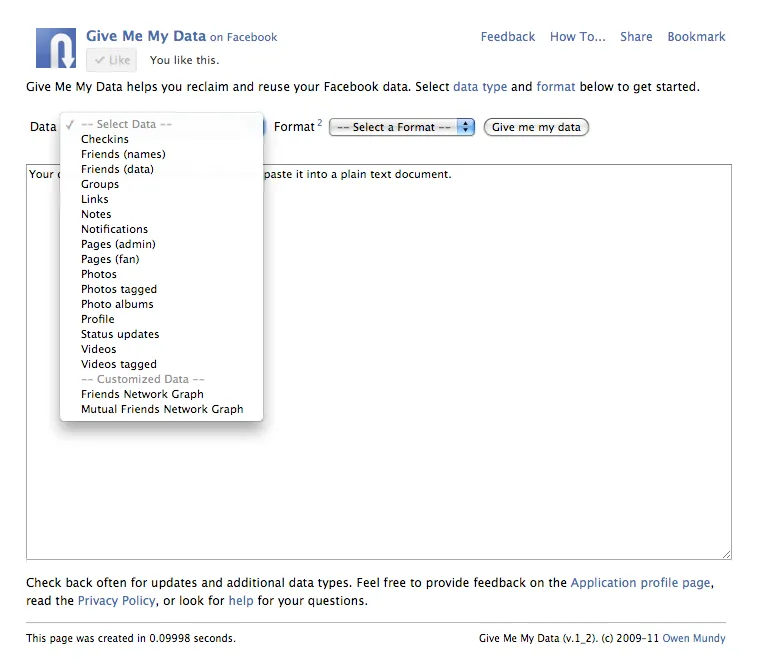
No one would be surprised to learn that almost all of the user-generated content websites use our personal data to sell advertisements. In fact 97% of Google’s revenue comes from advertising.[1] That’s why it’s important these sites provide as much access as possible to the real owners of our data‐us. After all, we put it there and allow them to use it in exchange for the use of their software. Seems like a fair trade if you ask me.
A year and a half ago Facebook didn’t provide any access. That’s why I created Give Me My Data, to help users reclaim and reuse their personal data they put on Facebook.
By giving more agency to users of online systems, Give Me My Data may have already impacted the nature of online application development. In November 2010, almost a year after I launched Give Me My Data, Facebook created their own service for users to export their profile from Facebook as a series of HTML pages. Unlike Give Me My Data, the Facebook service doesn’t allow you to select which data you want or to choose custom formats to export. It also doesn’t give you options for visualization like the custom network graphs that Give Me My Data offers.
I believe their motivation originates in part with my application, likely due to the popularity of Give Me My Data, and points to the potential usefulness of similar apps. While years down the road may reveal many other online systems giving users control over their data, I see this as a positive effect where the content we create, as well as the means to share and manage it, are democratized.
Meanwhile, the above also keeps me hard at work developing the Give Me My Data project. This week I rewrote the program to use Facebook’s new OAuth authorization, which also required rewriting all of the code that fetches the data. Previously it used the REST API which is being deprecated (sometime?) in the future. I also added new data types, fixed the CSV format (which had the rows and columns mixed-up), and added the possibility to export in the JSON data format.
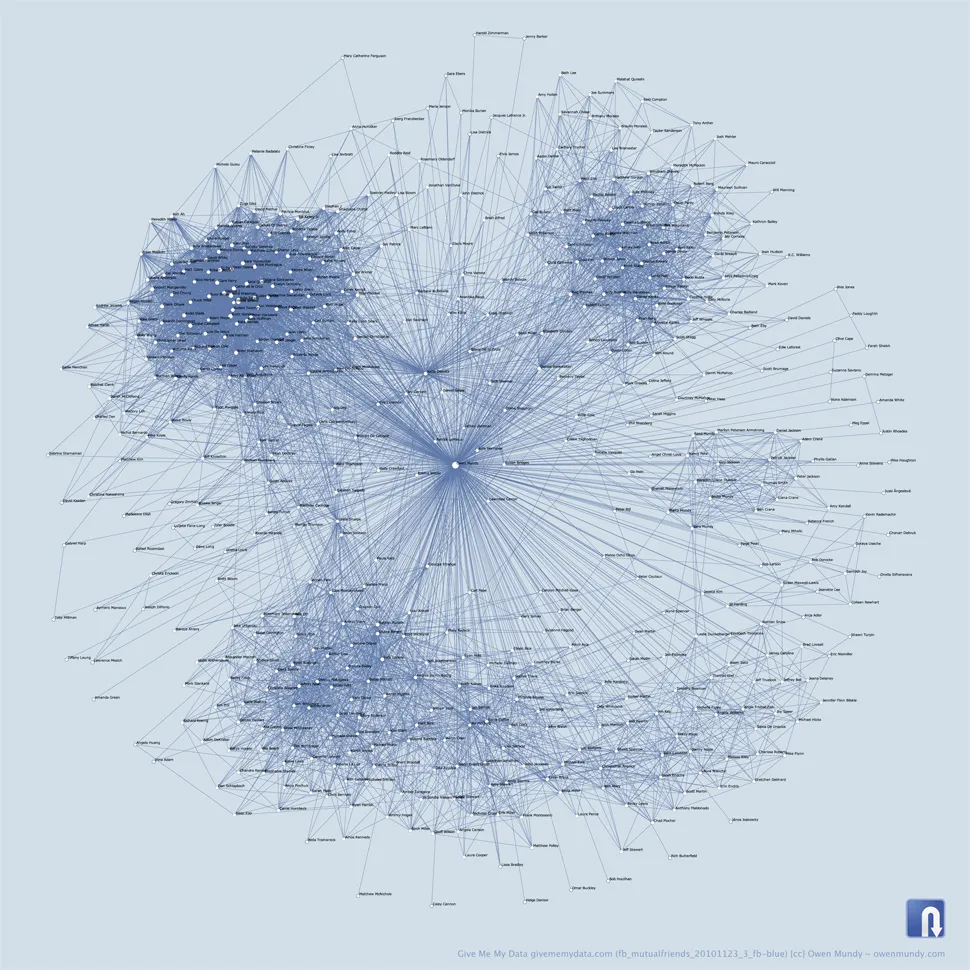
Finally, in the data selector, I distinguished standard data and customized data types. When I say customized, I mean that I’ve written code that mashes together more than one data table and/or addresses a specific question. For example, right now users can select from two types of network graphs and corresponding formats. One describes the user’s relationship to their friends, and the other describes the user’s relationship to their friends, as well as all their friends’ relationships to each other in various graph description languages. This is how I made the network graph image below. I’m also interested in hearing other suggestions for custom queries I might add. The project will be open source on Github soon, so even code contributions will be welcome.
Anyway, please try out the new version. You may have to delete the app from your allowed applications and then re-authorize it if you’ve used it before. As usual, you can provide feedback on the application page, and you can also contact me on Twitter via @givememydata.
[1] “Google Financial Tables for Quarter ending June 30, 2009” Retrieved October 13, 2010
When it comes to personal data everyone’s first concern is usually privacy. But a lot of us want to share our data too, with friends, colleagues, and even complete strangers. While numbers have been used for centuries to improve the way we manufacture and do business, using them to quantify our personal lives is a recent phenomenon.
I’ve been thinking about this because one of my goals in creating Give Me My Data was to inspire others to reuse their data, and respond with images and objects they created. But I’m learning if you don’t know a programming language your choices are somewhat scattered and intimidating.
In a recent email exchange with Nicholas Felton, creator of daytum.com and other quality data products, I asked him what other user data sharing and/or visualization web applications he might have encountered while working on daytum.
Included in this article are the three apps he mentioned with my research plus nine additions of my own. All of the apps I mention help users access their own data to track, share, and/or visualize it either by recording it themselves or exporting it from another software. There’s a table at the end of the article to summarize and compare each.
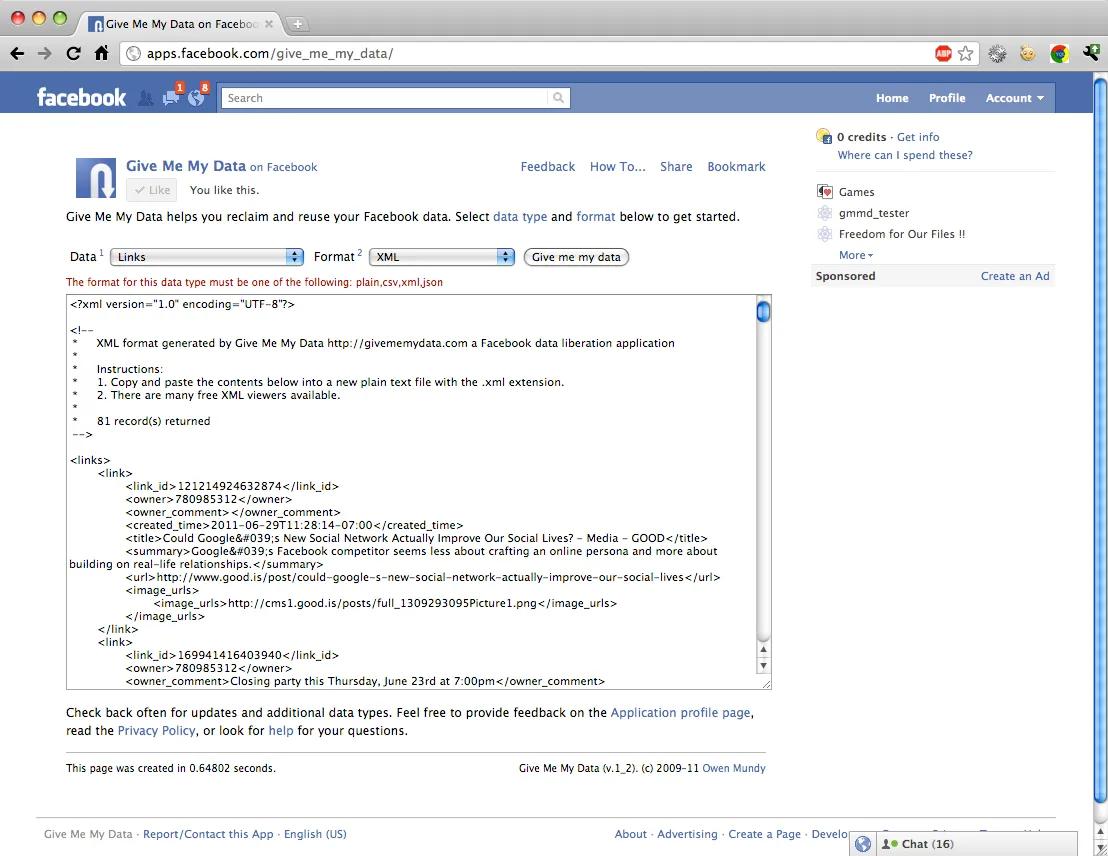
Give Me My Data givememydata.com free
First, to give some context, Give Me My Data is a Facebook application that helps users export their data out of Facebook for reuse in visualizations, archives, or any possible method of digital storytelling. Data can be exported in common formats like CSV, XML, and JSON as well as customized network graph formats.
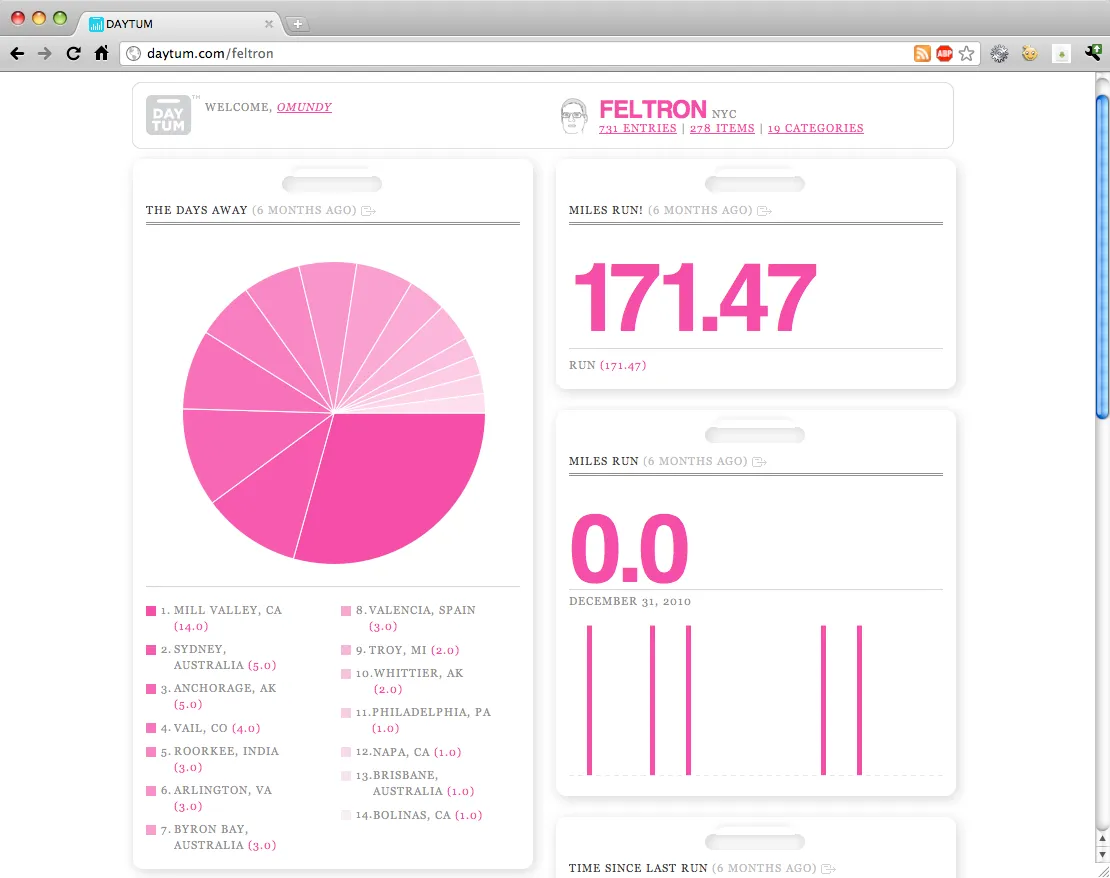
Daytum daytum.com free/$$
And to further contextualize, I’ll also address Daytum, an online app that allows users to collect, categorize, and share personal or other data. You can add any data that can be quantified or written down and organize and display it in many forms including bar and pie charts, plain text, and lists. There’s also a mobile site for quick submissions from your device or you can use their iphone app.
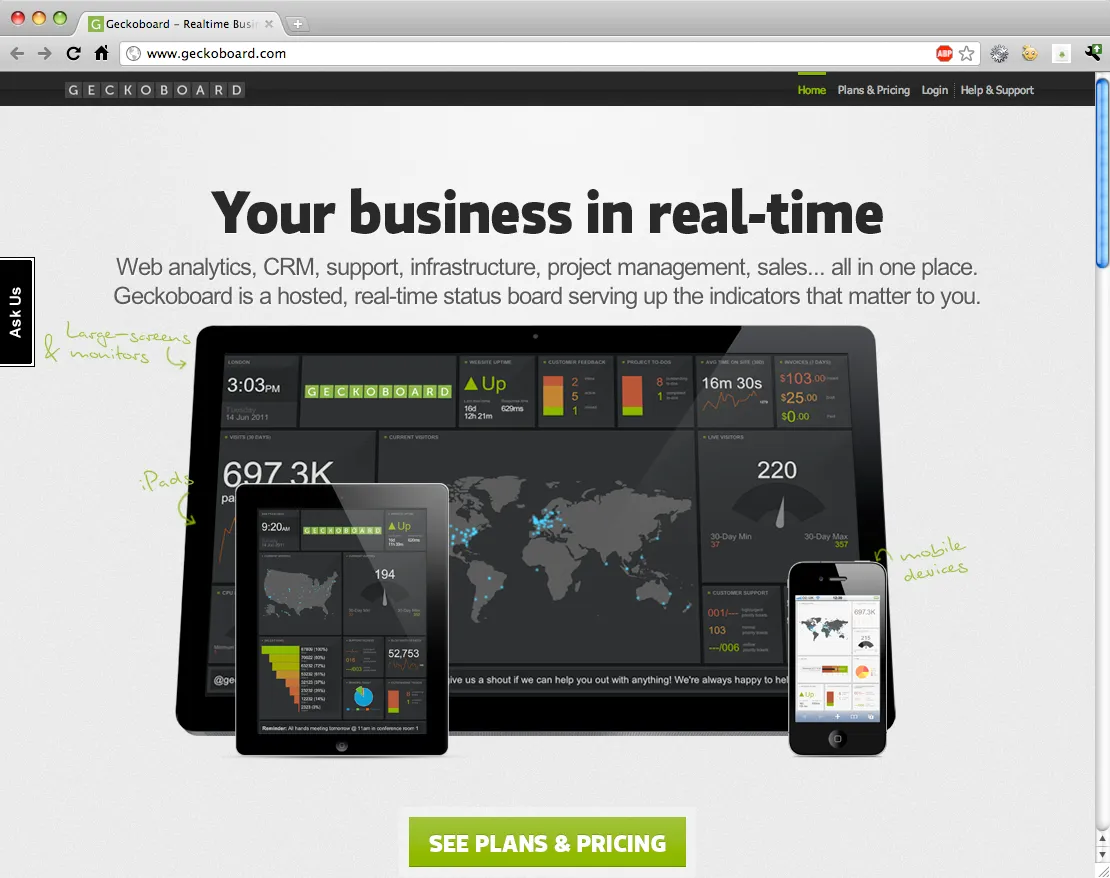
Geckoboard geckoboard.com $$
Geckoboard is a hosted real-time status board for all sorts of business (or personal) data. You can view web analytics, CRM, support, infrastructure, project management, etc., in one interface, on your computer or smart phone. To see data from other web services in your “dashboard” you add “widgets”—choose from a large list of APIs, give permissions, configure a variety of options, and see your data in a customized graph. Note though, this service is only for presenting data that is hosted elsewhere, and only in this interface. If you like looking at numbers all day, this is for you.
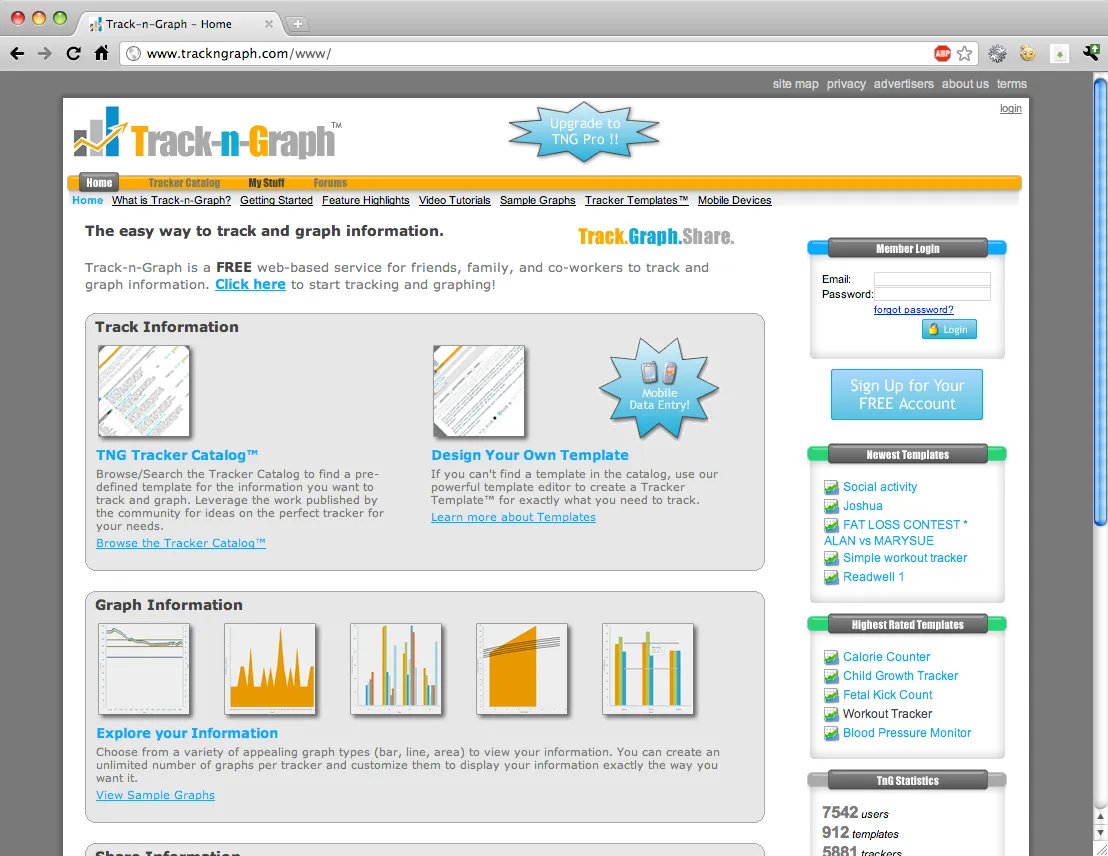
Track-n-Graph trackngraph.com free/$$
Track, graph, and share any information you can think of: your weight, gas mileage, coffee consumption, anything. The design is a little awkward, the graphs don’t display in Chrome or Safari (Mac), and as far as I can tell there’s no API, but the site seems very useful for storing and making simple graphs of your personal data. There are also various “templates” you can reuse to keep track of data like the Workout Tracker, which has fields for gender and age in addition to minutes you worked out, all of which are important in figuring other data (e.g. calories).
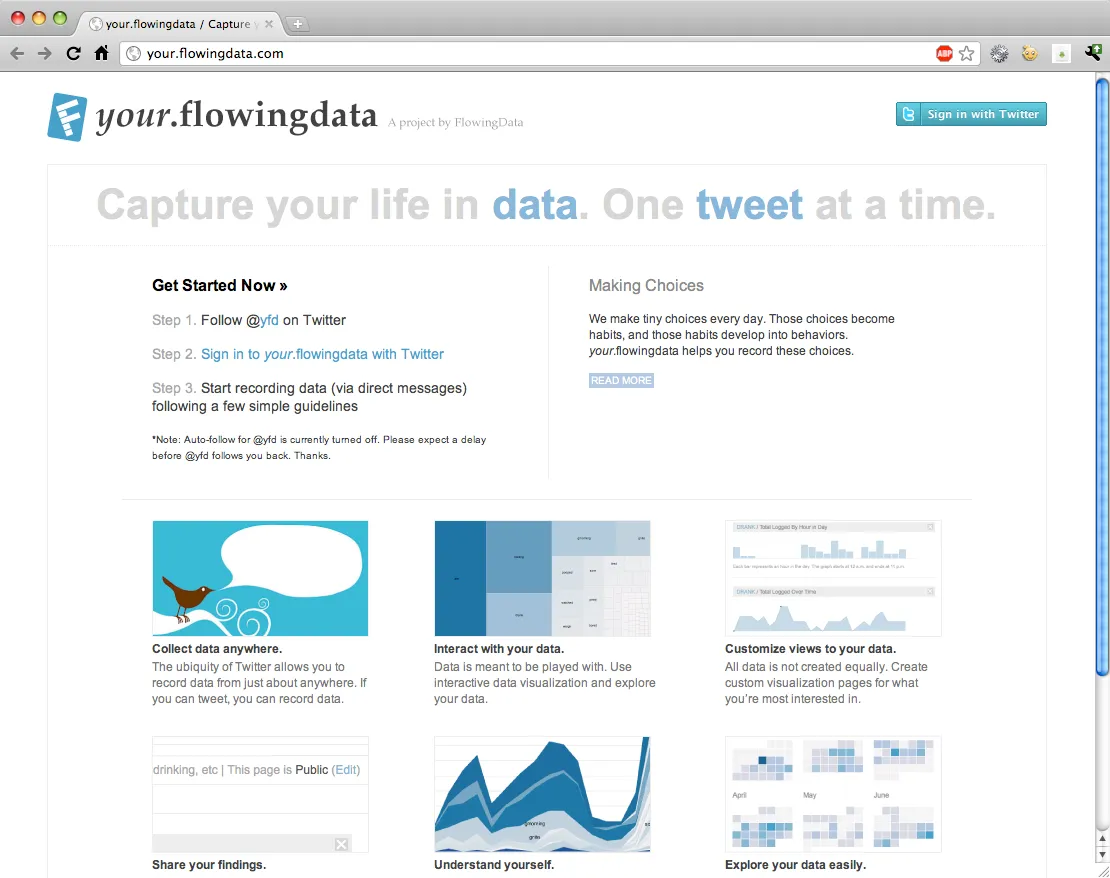
your.flowingdata.com your.flowingdata.com/ free
your.flowingdata lets you record your personal data with Twitter. With it you can collect, interact, customize views, and determine privacy by sending private tweets to your account. This project is created by Nathan Yau who writes Flowing Data and studies statistics at UCSD.
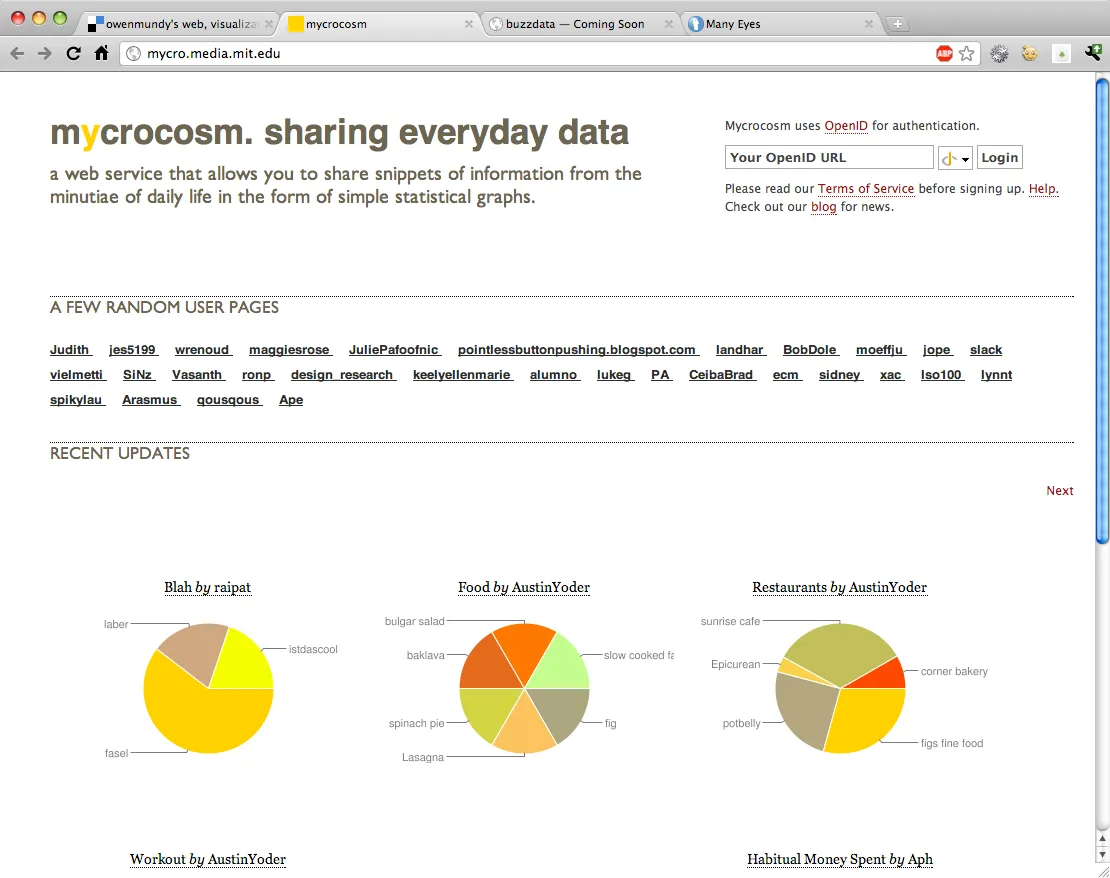
mycrocosm mycro.media.mit.edu free
Mycrocosm is a web service that allows you to track and share data and statistical graphs from the minutiae of daily life. Mycrocosm was developed by Yannick Assogba of the Sociable Media Group of the MIT Media Lab.
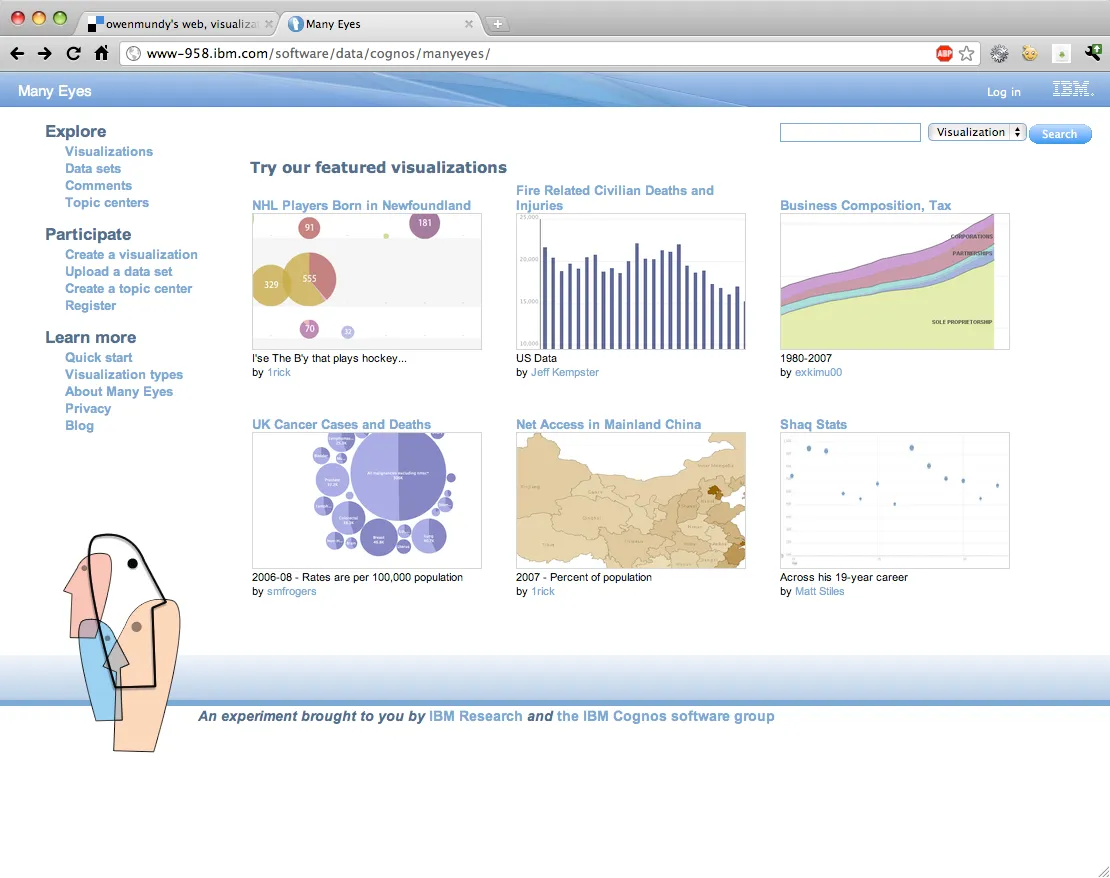
ManyEyes www-958.ibm.com free
ManyEyes is a project by the IBM Research and the IBM Cognos software group. On Many Eyes you can upload your own data and create visualizations, and view, discuss, and rate other’s visualizations and data sets. It is a great concept but it hasn’t evolved much since its original launch. In fact I’m finding the visualization technology has slowly devolved, leaving only about 20% of visualizations actually displaying (Chrome 12.0 on OSX 10.5.8 if folks are reading).
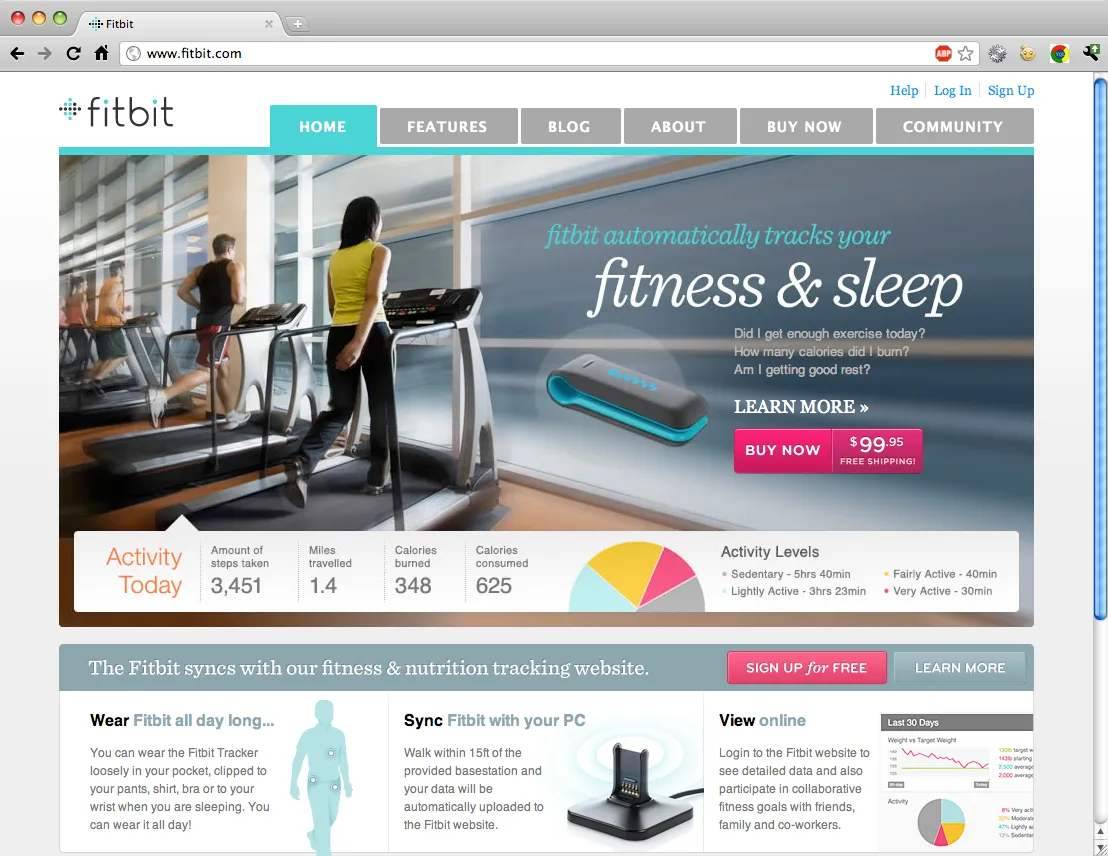
Fitbit fitbit.com $99.95
The Fitbit is a hardware device which tracks your motions and sleep throughout each day. This data can be uploaded and visualized on their website to realize information about your daily activities like calories burned, steps taken, distance traveled and sleep quality. The Fitbit contains a 3D motion sensor like the one found in the Nintendo Wii and plugs into a base station to upload the data.
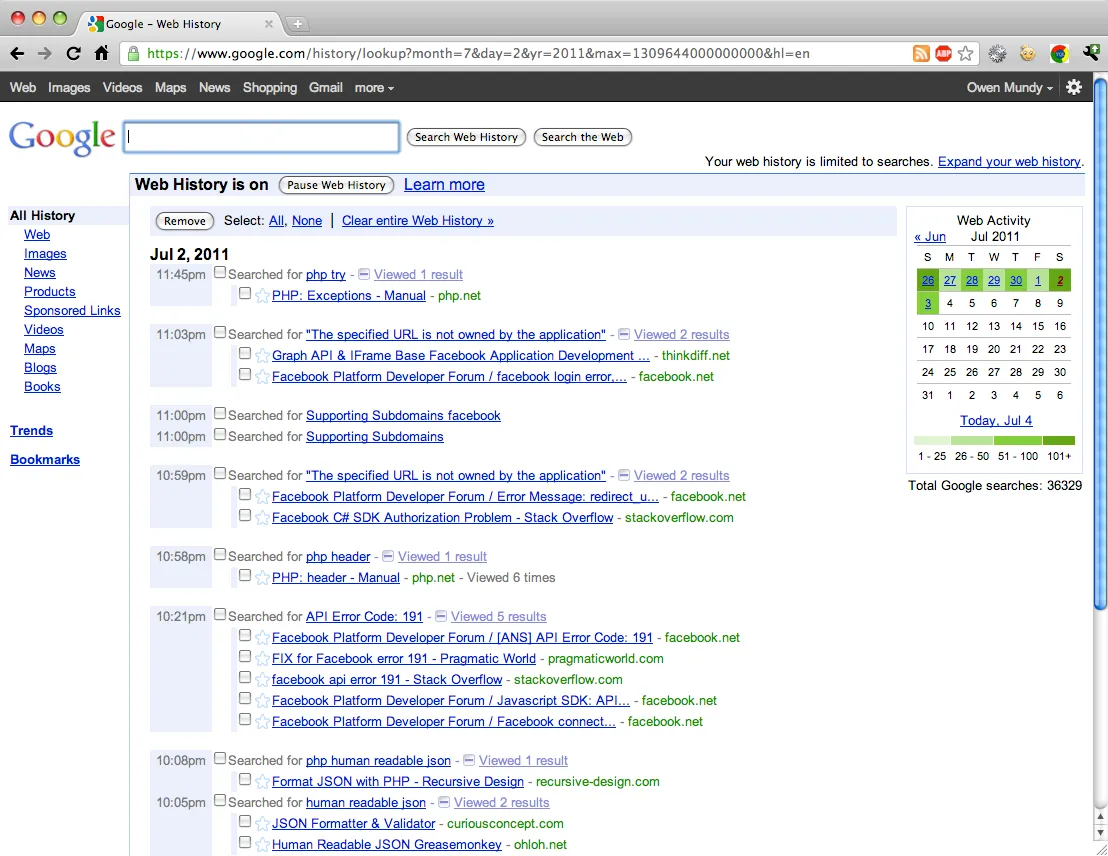
Personal Google Search History google.com/history free
When I first saw this application on the Google site I was immediately alarmed. The amount of data they have collected is staggering; for example, “Total Google searches: 36323.” (since Jan 2006) This is a fantastic picture into the life of a user and what they are reading, watching, responding to. It’s like another, admittedly less manicured version, of Facebook. Instead of creating a profile, I am being profiled.
The privacy implications are serious here, which is probably why you have to login again to view it. It is also why a user’s search history draws the interest of interface artist, Johannes P. Osterhof, who is in the process of exploring the line between private and public data, as well as the even further-evaporated division between surveillance and social networks, in his one-year-long search history-made public project, simply titled, Google.
But, as everyone probably already knows, these big companies are making money and providing services. Google has the resources to take your privacy seriously. Well, kind of, because it mostly doesn’t fit into their business model to not track people.
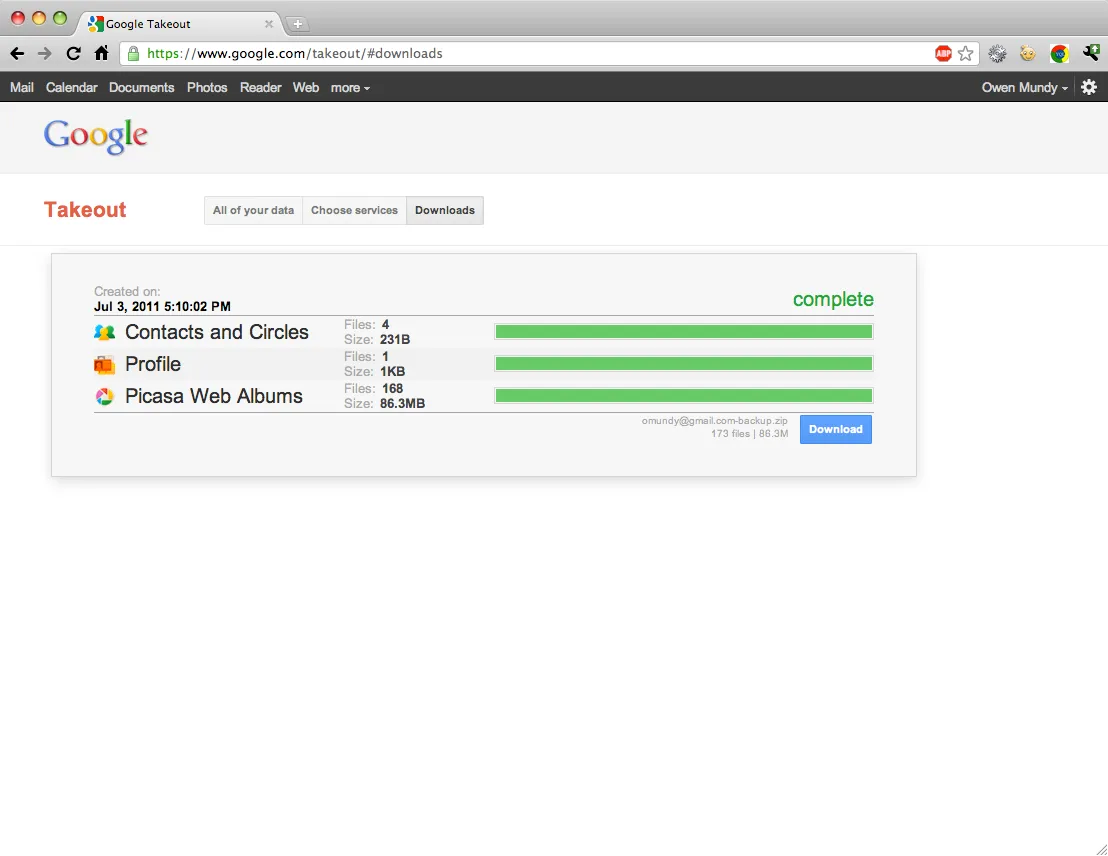
Google Takeout google.com/takeout free
Speaking of funding, I’m quite impressed by this project. Google Takeout is developed by an engineering team at Google called the Data Liberation Front who take their jobs very seriously. In addition to their Google Takeout project, which allows you to export some of your data from Google, they have a really great website with current information about getting access to the data you store with Google.
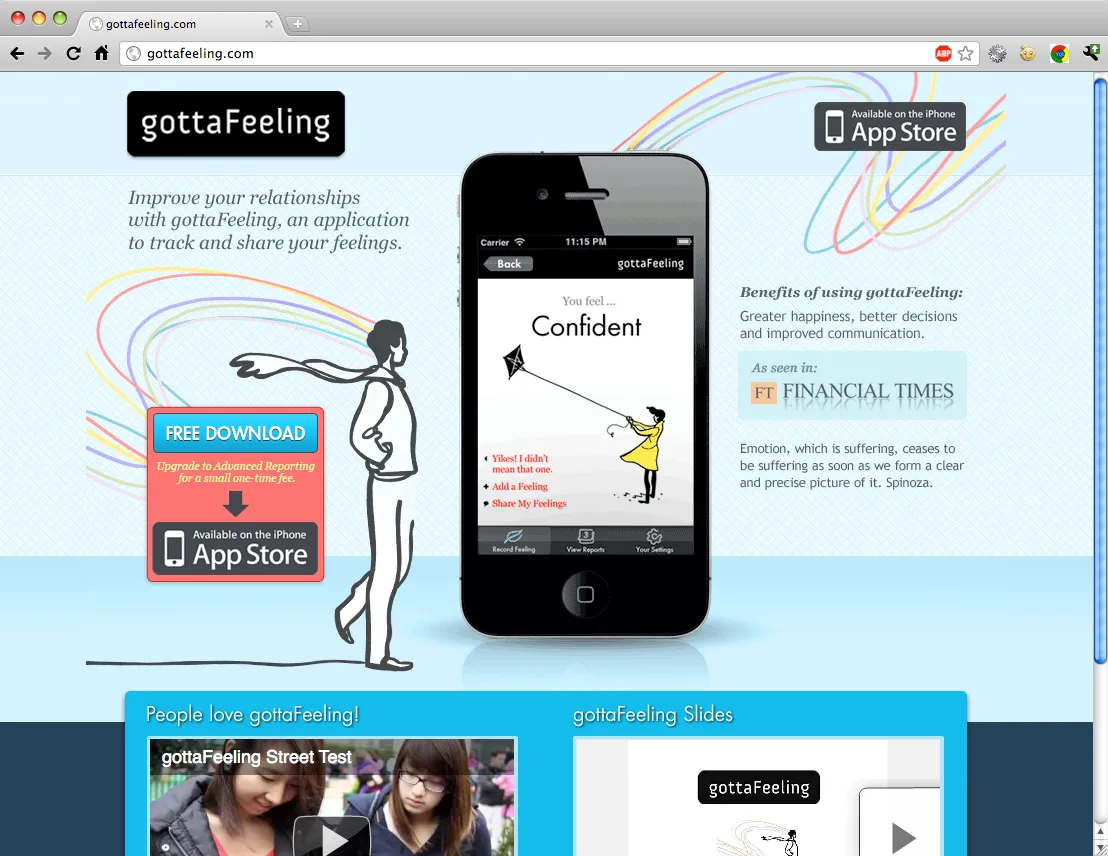
gottaFeeling gottafeeling.com free/$$
gottaFeeling is an iphone application that allows you to track and share your feelings. It’s a simple concept, and while loaded down with a lot of rhetoric, reminds me of the amazing, “We Feel Fine.”
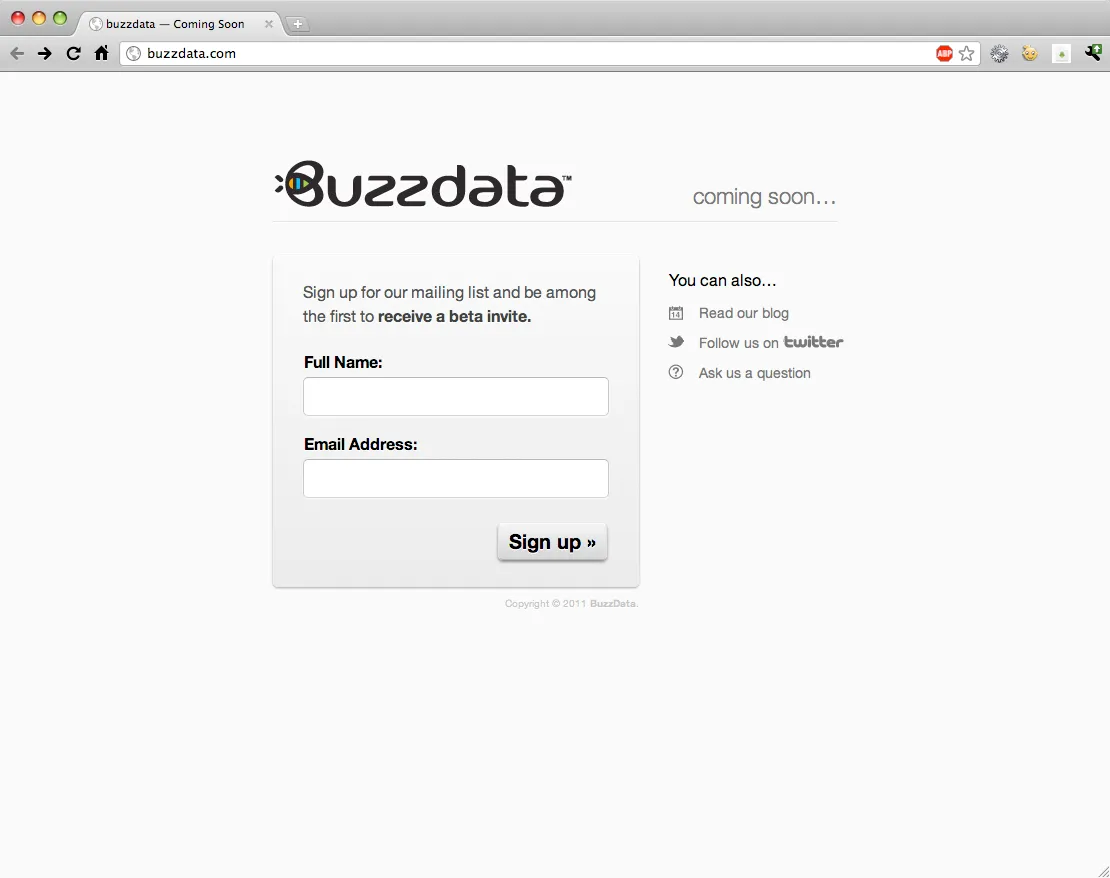
BuzzData buzzdata.com unsure
Finally, I’ll end with BuzzData, a data-publishing platform that encourages the growth of communities around data. Not yet public, I’ve received a private taste of what this app will do, and it looks like it will be pretty cool. Think a mashup between Github and ManyEyes.
So I’ll end with the table I created in my research. There are obviously many more types of ways to keep and manage data that I haven’t addressed here, but this is a good start. For further reading check out the Quantified Self blog/user community/conference created by Gary Wolf, who also authored, The Data-Driven Life, the New York Times article linked above.
| track/ upload | custom data types | visualize | publish | privacy | export | mobile upload | API | price | limits | |
| yes | yes | n/a | no | yes | yes | n/a | no | free | none | |
| yes | yes | yes | yes | $$ | yes | mobile site and iphone app | no | free / $4/ month | free account limited by amount | |
| no | yes | yes | no | yes | no | n/a | only for viewing | $9-$200 / month | number of users | |
| yes | yes | yes | yes | yes | no | web-based | no | free / $25 per year | free account limited by amount | |
| yes | yes | yes | yes | yes | yes | via twitter | via twitter | free | none | |
| yes | yes | yes | yes | yes | no | web-based | email-based | free | none | |
| yes | yes | yes | yes | no | yes | no | no | free | none | |
| yes | yes | yes | yes | yes | yes | ??? | ??? | ??? | ||
| yes | n/a | yes | yes | yes | yes | yes | no | free | none | |
| yes | yes | n/a | n/a | yes | yes | n/a | no | free | none | |
| yes | yes | yes | yes | yes | yes | yes | yes | $100 / website is free | free web account limited by amount | |
| yes | no | no | yes | yes | no | iphone | no | free | none |
| track/upload | Can you track or upload your own data? |
| custom data types | Does the a support custom data types? |
| visualize | Can you create visualizations with the app? |
| publish | Can you publish your data with the software? |
| privacy | Are there options for keeping your data private while using the app? |
| export | Can you export the data back out? |
| mobile upload | Are there options to track or upload data from a device? |
| API | Is there an Application Program Interface that allows you to write code to manage data? |
| price | Is there a free version? |
| limits | What limits are imposed on the free version? |
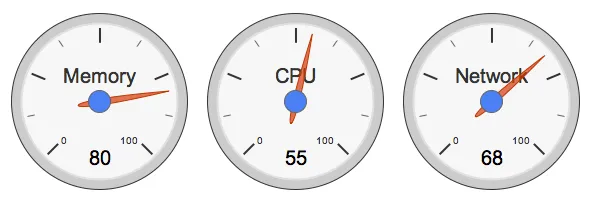
Update: Check out Google Guages and other Google Charts.
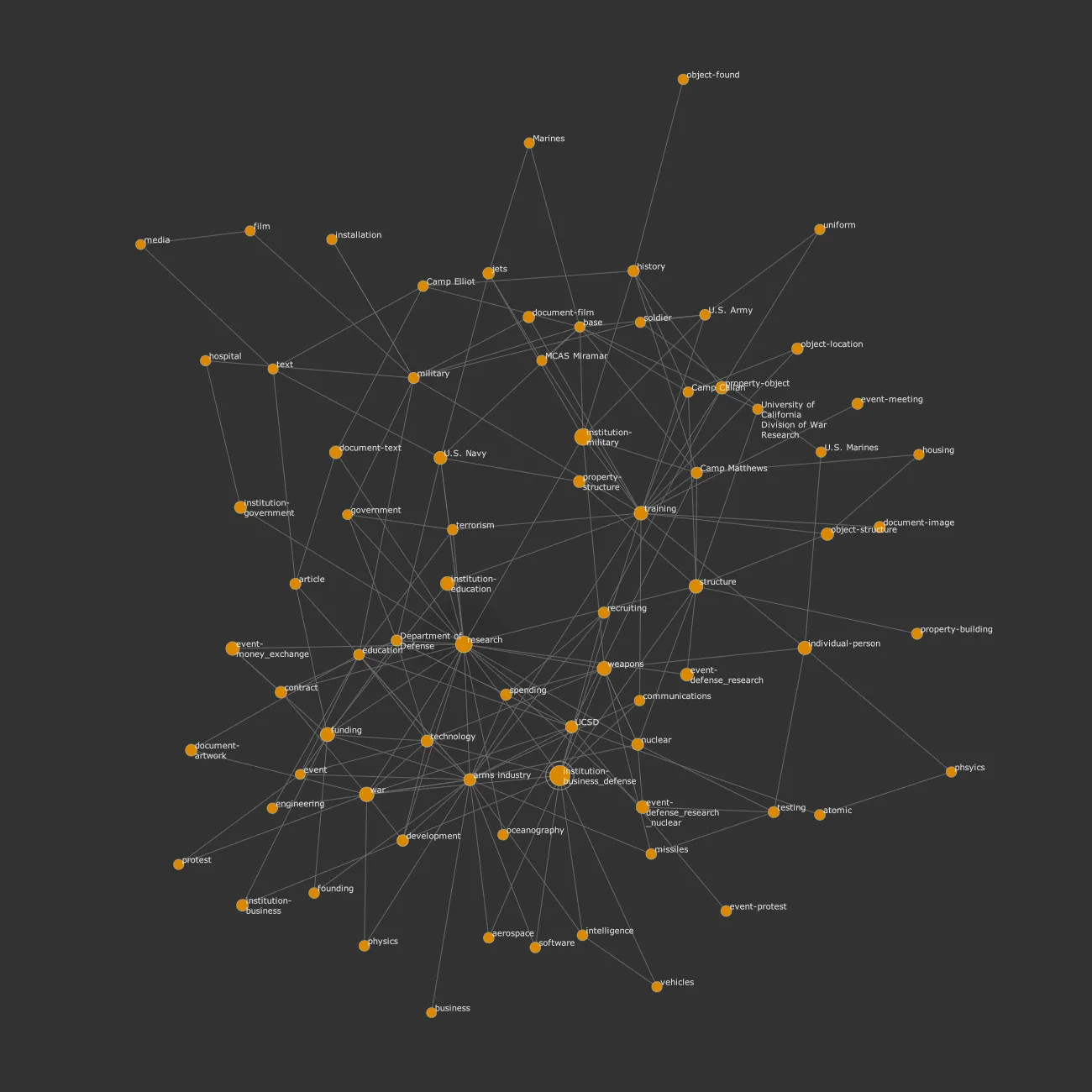
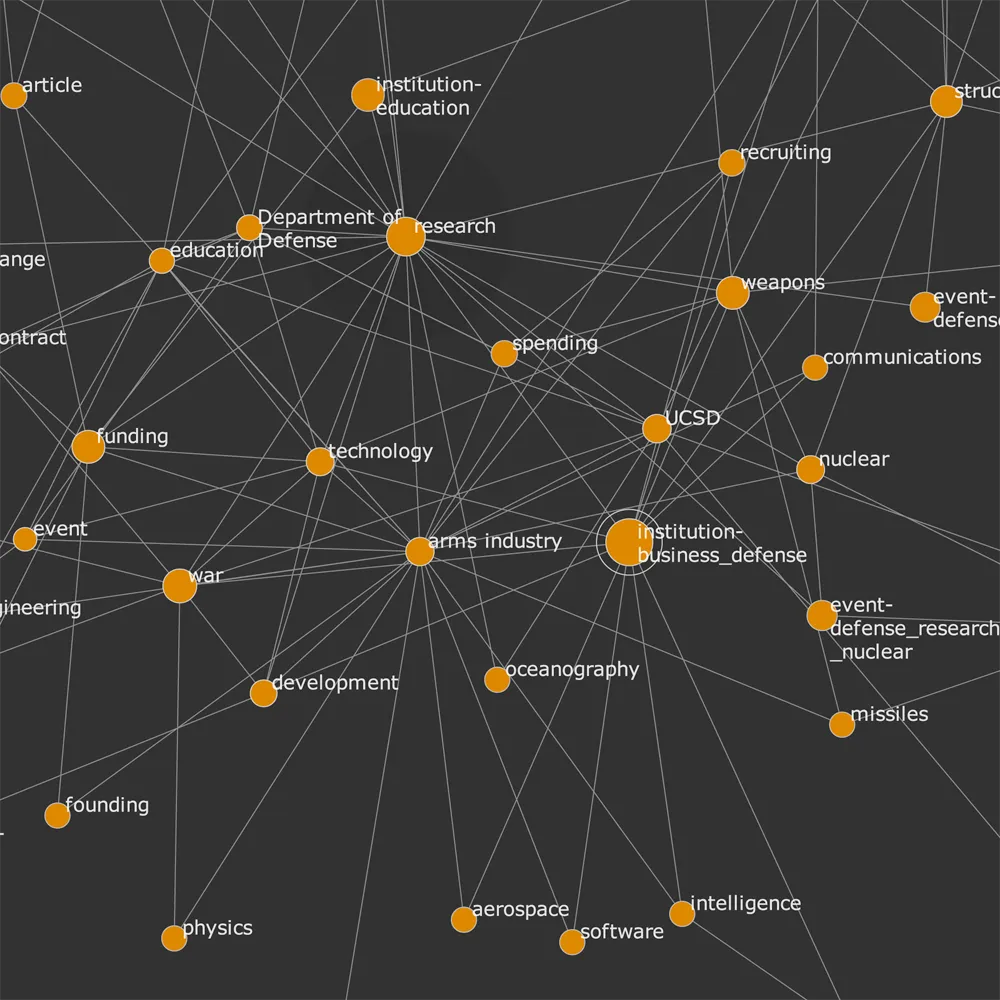
A semantic network visualization and detail using tags generated from the hierarchical tagging system I created with Thomas Evan Lecklider as part of my Camp La Jolla Military Park project.
For example this item, Defense Contractors recruit at UCSD Job Fair, in the park is filed under: business » arms industry » spending » recruiting
Here are some photos from my exhibition at Bauer&Ewald in Neuköln-Berlin. There will be a closing party this Thursday, June 23 at 7:00 pm.
Bauer&Ewald
Lenaustraße 20
12047 Neukölln-Berlin
u8 schönleinstraße, u7/u8 hermannplatz

I just learned the Give Me My Data 2.0 proposal I put together with Dr. Phil Steinberg has advanced to the second stage of 2011 Rhizome Commission voting. Give Me My Data 2.0 is an open source web application that exports your user data from any crowdsourcing website in multiple, reusable formats.
I created Give Me My Data while working on Automata, a project which visualizes powerful relationships and which also made it to the second round of the Rhizome Commissions two years ago.
Please VOTE for Give Me Me Data if you are a Rhizome member!
I’ve just returned from Linz, Austria, where I attended the art and technology festival/conference/exhibition called Art Meets Radical Openness (LiWoLi 2011). It is put on and hosted by Ushi Reiter and others of servus.at, and Martin Kaltenbrunner (creator of Reactable) and others at the Kunst Universität Linz.
While I was here I met a lot of friendly and engaging people, and saw some great works, talks, and performances. I also gave a paper about Give Me My Data, titled, “The Self-Indulgence of Closed Systems.” The presentation was about my current research into historic and contemporary modes of surveillance, ensuing privacy issues, and examples of resistance to these modes of data gathering. It was part the Naked on Pluto lecture series, organized by the cheery Marloes de Valk.
I also conducted a 2-day workshop, “Freedom for Our Files: Creative Reuse of Personal Data,” where I shared information and examples on how to go about data scraping and spidering, reuse and visualization, and using the Facebook API for all of the same, for creative or experimental purposes. I’ve posted some of the code and content from FFOF already.
One important motivation for my attendance was to meet programmers who might be interested in working with me on the more technical aspects of upgrading Give Me My Data to the new Facebook Graph API and finding a way around undocumented data limits imposed by Facebook that my users continue encountering.
I thought I would give a little bit of a background here, about Give Me My Data, for those interested in its development and other related projects.
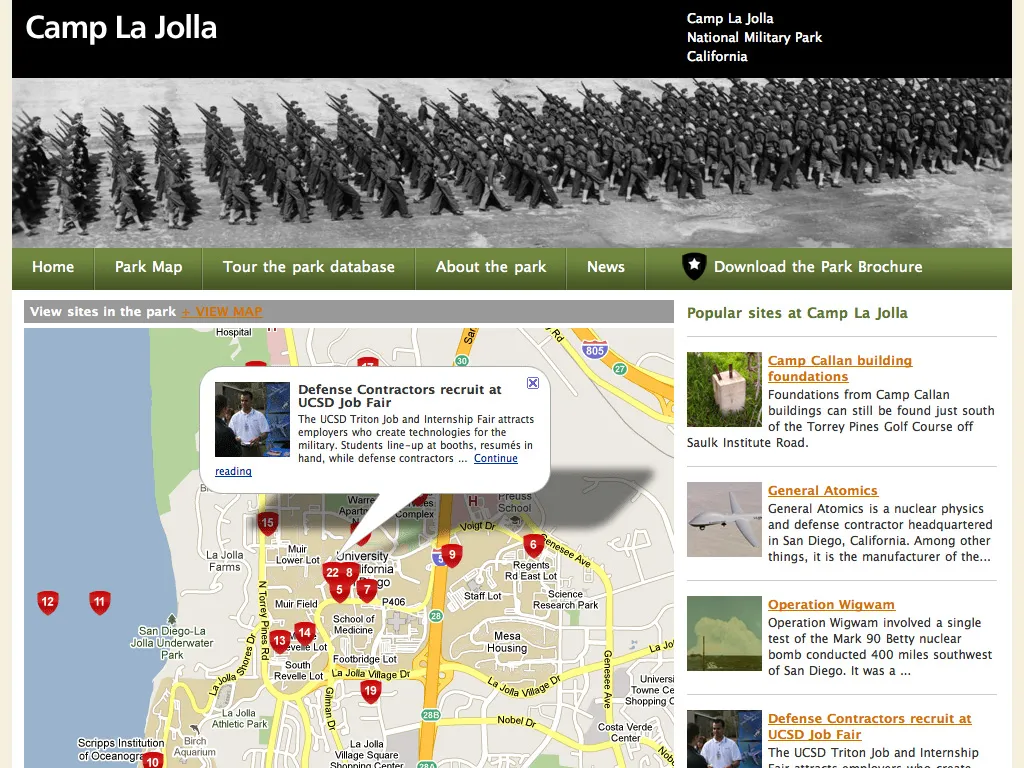
In 2008 I finished my Masters of Fine Arts at the University of California, San Diego with a thesis project titled Camp La Jolla Military Park. It was a fictional national park which documented the history and ongoing collaboration between the university with the defense industry. I created a custom content management system (PHP, MySQL, Google Maps API) and formed a group of collaborators to enter data in the system documenting relationships. The project exists now as a series of brochures and website which mimics the national park website and describes the research we conducted. I also gave tours of the “park” (campus) where technology was being developed for defense contractors and other sites with related interest.
The following year, while working during my first year as an assistant professor at Florida State University, I described and began developing aspects of a project I temporarily titled Automata. The project, which was a finalist in 2009 for the Rhizome Commission, proposed to use technology to visualize relationships in which there might exist ethical contradictions, but are difficult to discern for all the actors involved. An example of an ethical contradiction might be collaborations between the defense industry and educational institutions which encourage students to develop technology used to harm other human beings. I proposed to do this through various automated web spiders, semantic analysis, and finally visualizations and other interfaces to the data.
While working on Automata, which was named to reference the automation of the documentation Camp La Jolla performed, I was invited to MIT by Chris Csikszentmihályi, Research Scientist at the MediaLab and Director of Center for Future Civic Media at MIT, to discuss the project with members of his Center for Future Civic Media.
Later in 2009, while planning how I might visualize the network data from Automata, rather than creating the content from scratch I decided to use my Facebook contacts as a test subject. Since there was no application which exported data in various reusable formats, especially one which arranged the contacts into a format which described relationships, I created my own.
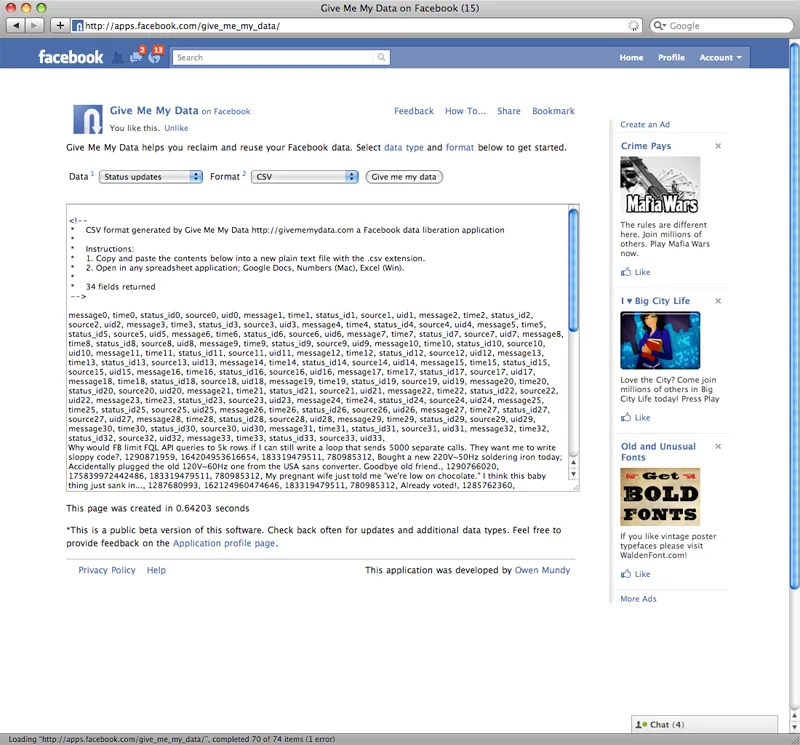
This application, live since October 2009, would soon became very popular in its own right. In late April 2010, Facebook made a change to the way they allowed users to present information about themselves. Previously entered user data was suddenly aggregated without permission in order to encourage strangers with common interests to form groups. This slight change in policy caused an uproar within the Facebook community because it attempted to force people together without regard to individual privacy.
Many Facebook users were originally attracted to the site because of its levels of privacy and therefore found this change to be manipulative and deeply disturbing. Further, users were no longer able to access or change this information because it had been incorporated into a larger structure. In their article, Facebook App Brings Back Data, May 1, 2010, The New York Times documented how my application allowed users to regain access to this and other information hidden behind the Facebook interface.
At this time, Facebook (still) did not feature a method to export your data for any purpose. In November 2010, likely influenced by Give Me My Data, Facebook finally added a way for users to export their profile data as a series of HTML pages. I believe their motivation originates in part with my application, and points to the effectiveness of such forms of public art / creative resistance to reach out beyond the art world and contribute to society in lasting ways.
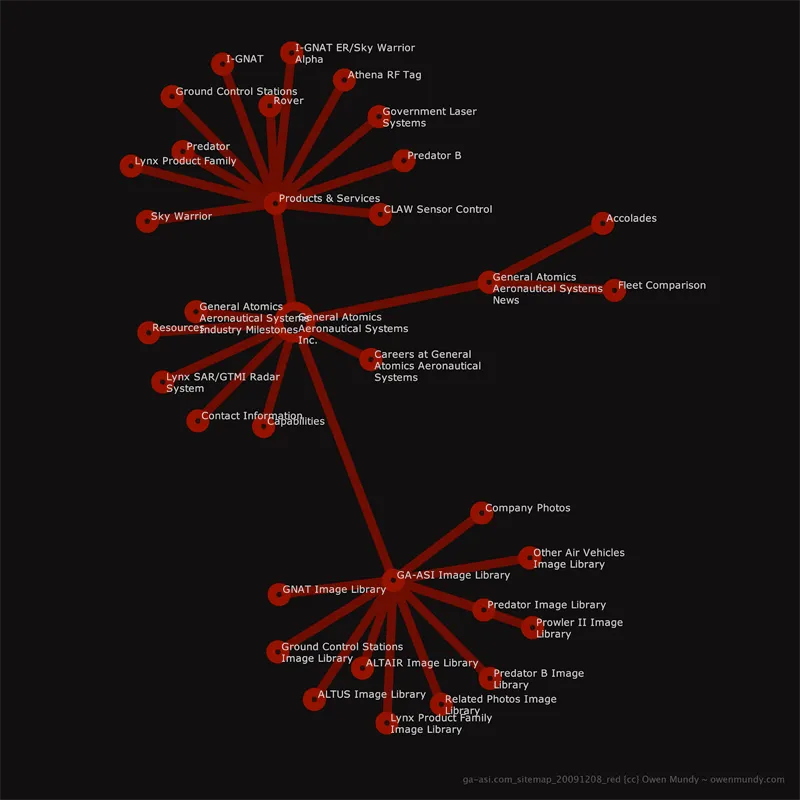
So in conclusion, I created Give Me My Data while working on projects related in concept and execution. While I have paused my work on Automata you can see some sitemap visualizations from the project in a series called Firing Blind.
As for the status of Give Me My Data, I developed it using the Facebook REST API, which will be deprecated soon. It uses both REST and FQL (Facebook Query Language) calls to help users access a variety of types and formats of their data. I’m working now to put the project on Github, thereby making the code open source, and also to invite others to help to upgrade the data retrieval method to the Facebook Graph API, and to improve existing code that reformats the data from JSON to XML, CSV, GraphML, Dot, and other popular data formats. Now that I have a handful of business cards and new acquaintances I’m looking forward to moving forward. Please get in touch if you are interested in contributing.
A two-day workshop, with both technical hands-on and idea-driven components. Learn to scrape data and reuse public and private information by writing custom code and using the Facebook API. Additionally, we’ll converse and conceptualize ideas to reclaim our data literally and also imagine what is possible with our data once it is ours!
Here are the slides and some of the code samples from the Freedom for Our Files (FFOF) workshop I just did in Linz at Art Meets Radical Openness (LiWoLi 2011).
The first one is a basic scraping demo that uses “find-replace” parsing to change specific words (I’m including examples below the code)
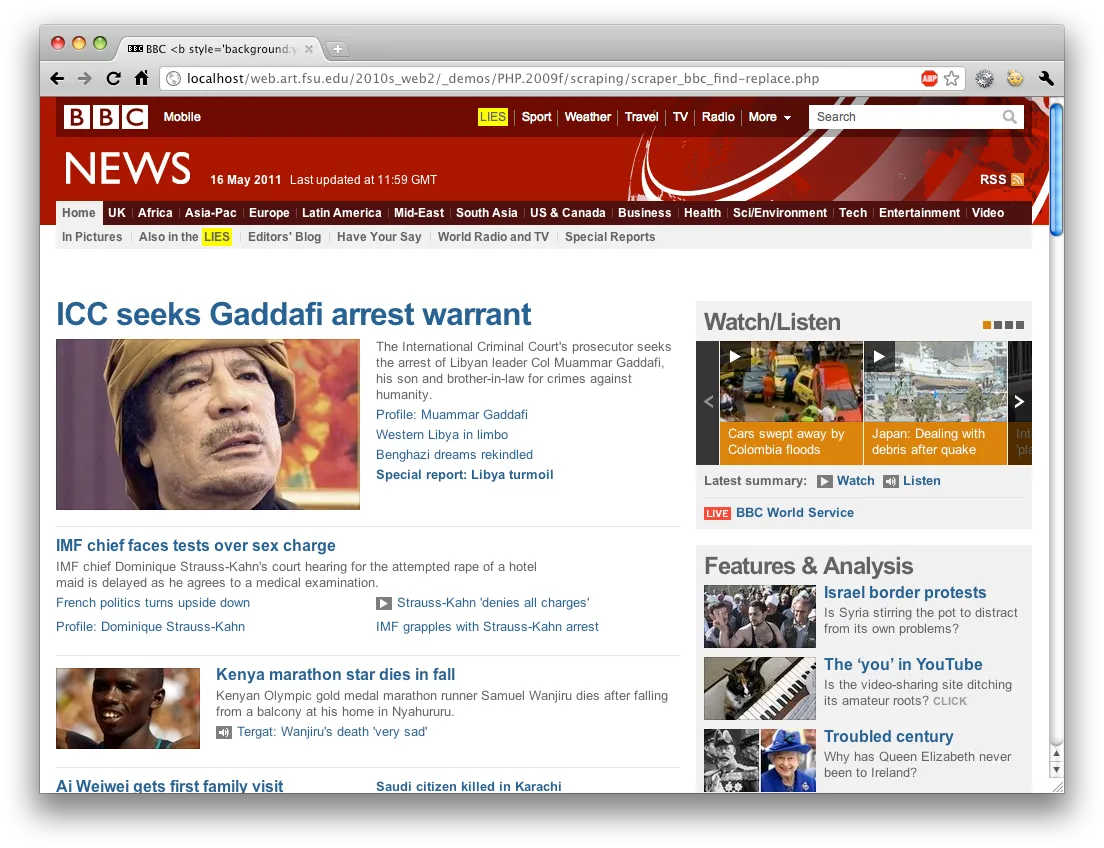
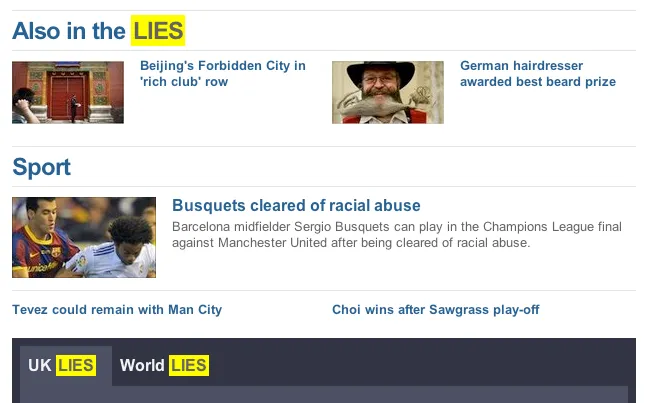
Basic scraping demo with “foreach” parsing
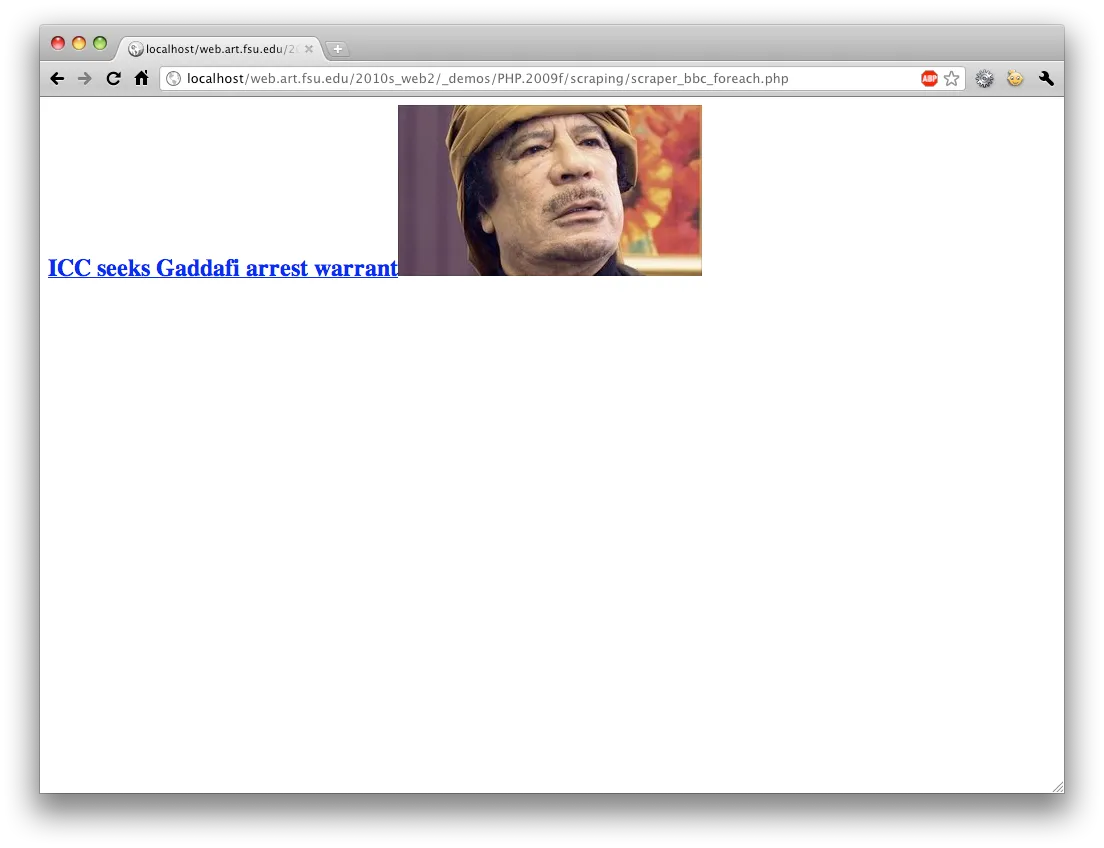
Basic scraping demo with “regex” parsing
Basic scraping demo with “foreach” and “regex” parsing
And the example, which presents the same information in a new way…
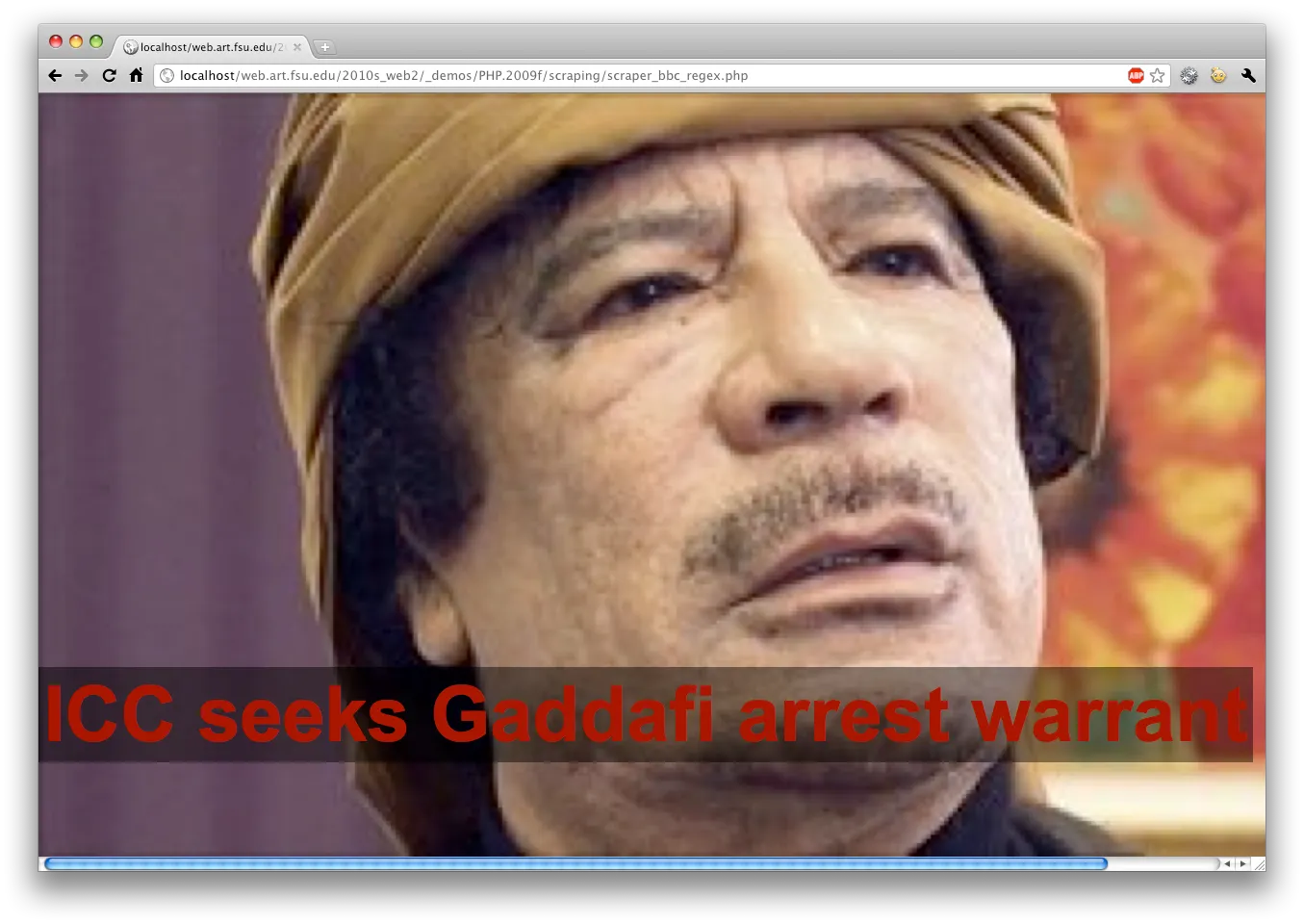
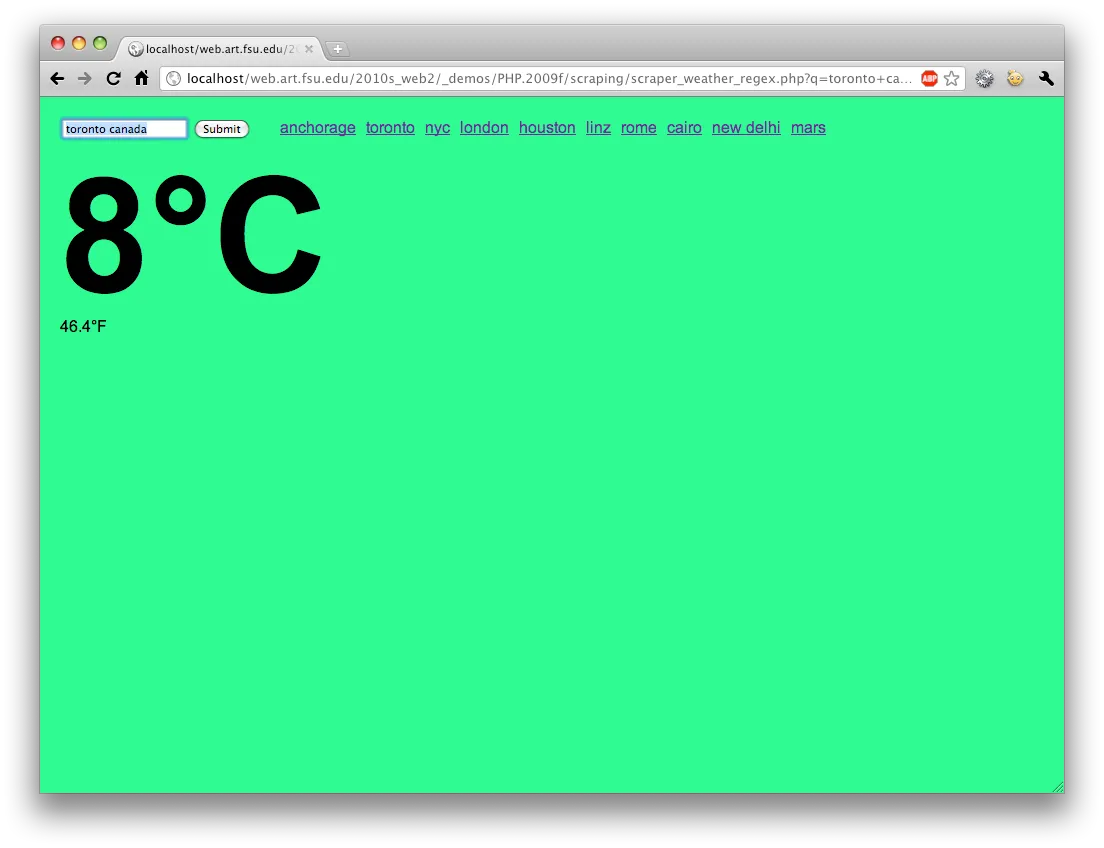
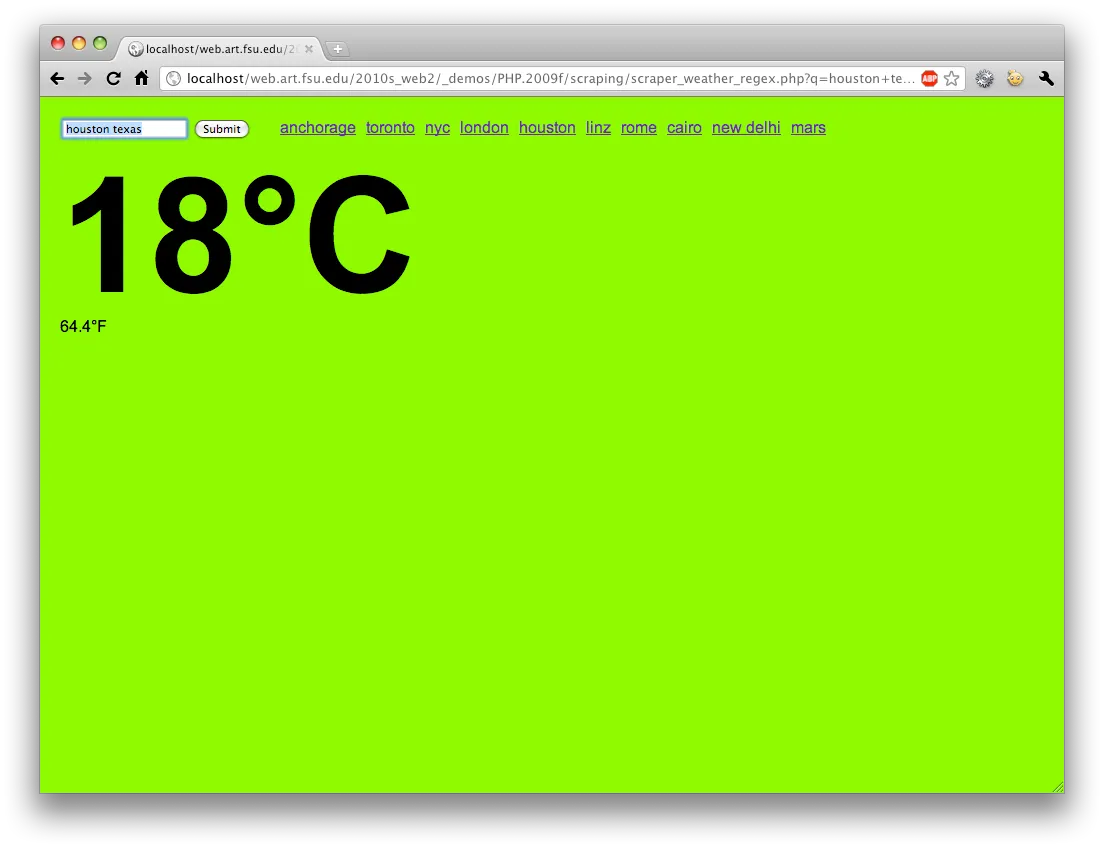
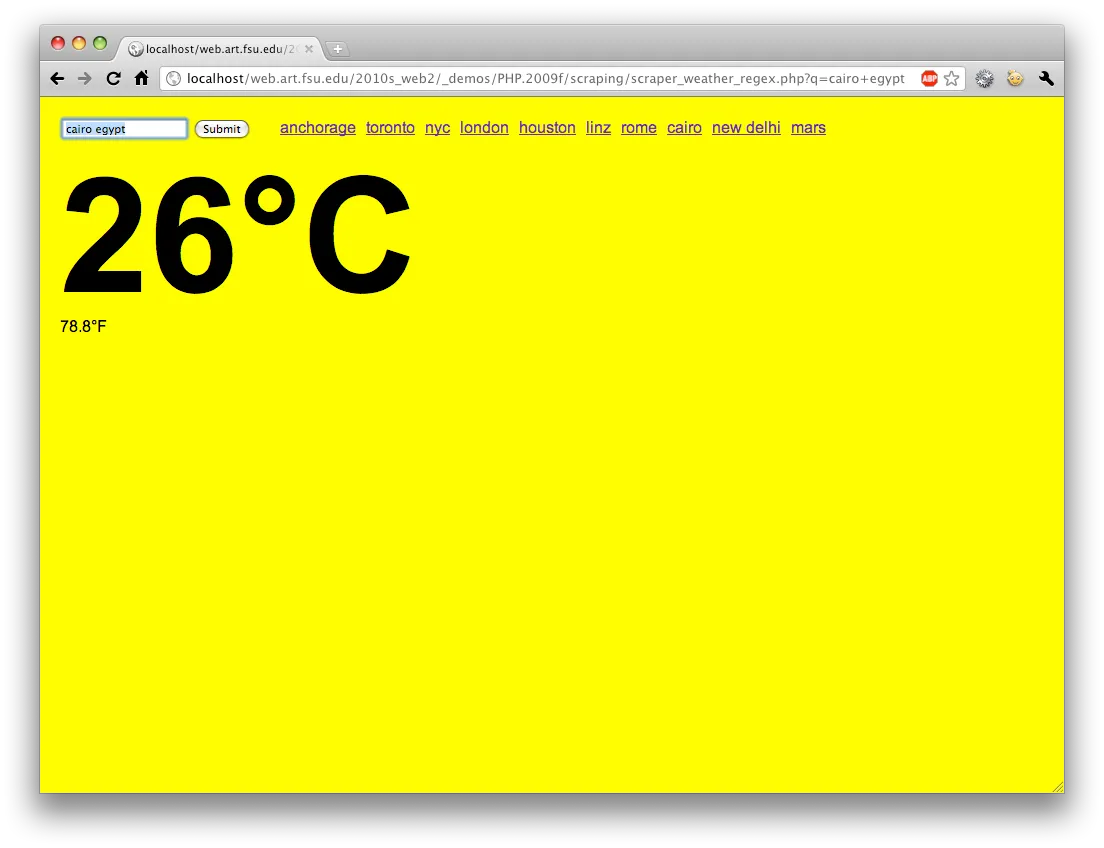
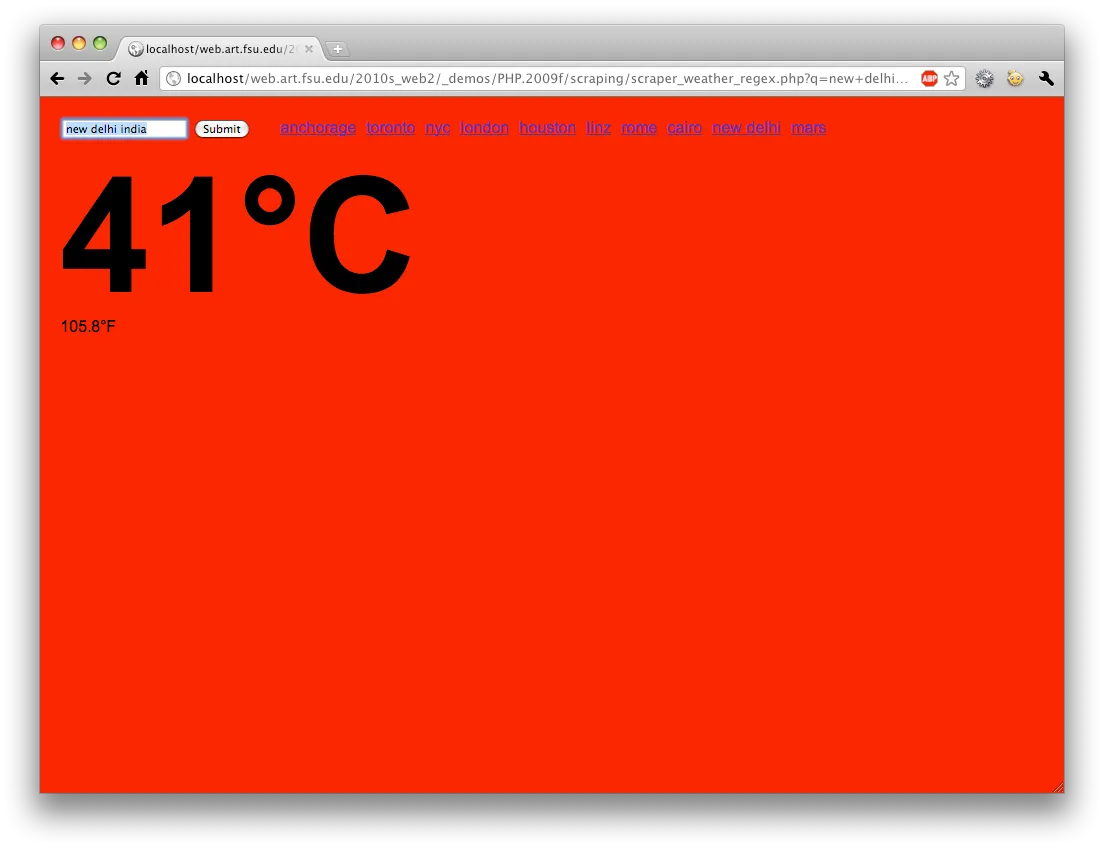
Advanced scraping demo with “regex” parsing. Retrieves current weather in any city and colors the background accordingly. The math below for normalization could use some work.
For an xpath tutorial check this page.
For the next part of the workshop we used Give Me My Data to export our information from Facebook in order to revisualize it with Nodebox 1.0, a Python IDE similar to Processing.org. Here’s an example:
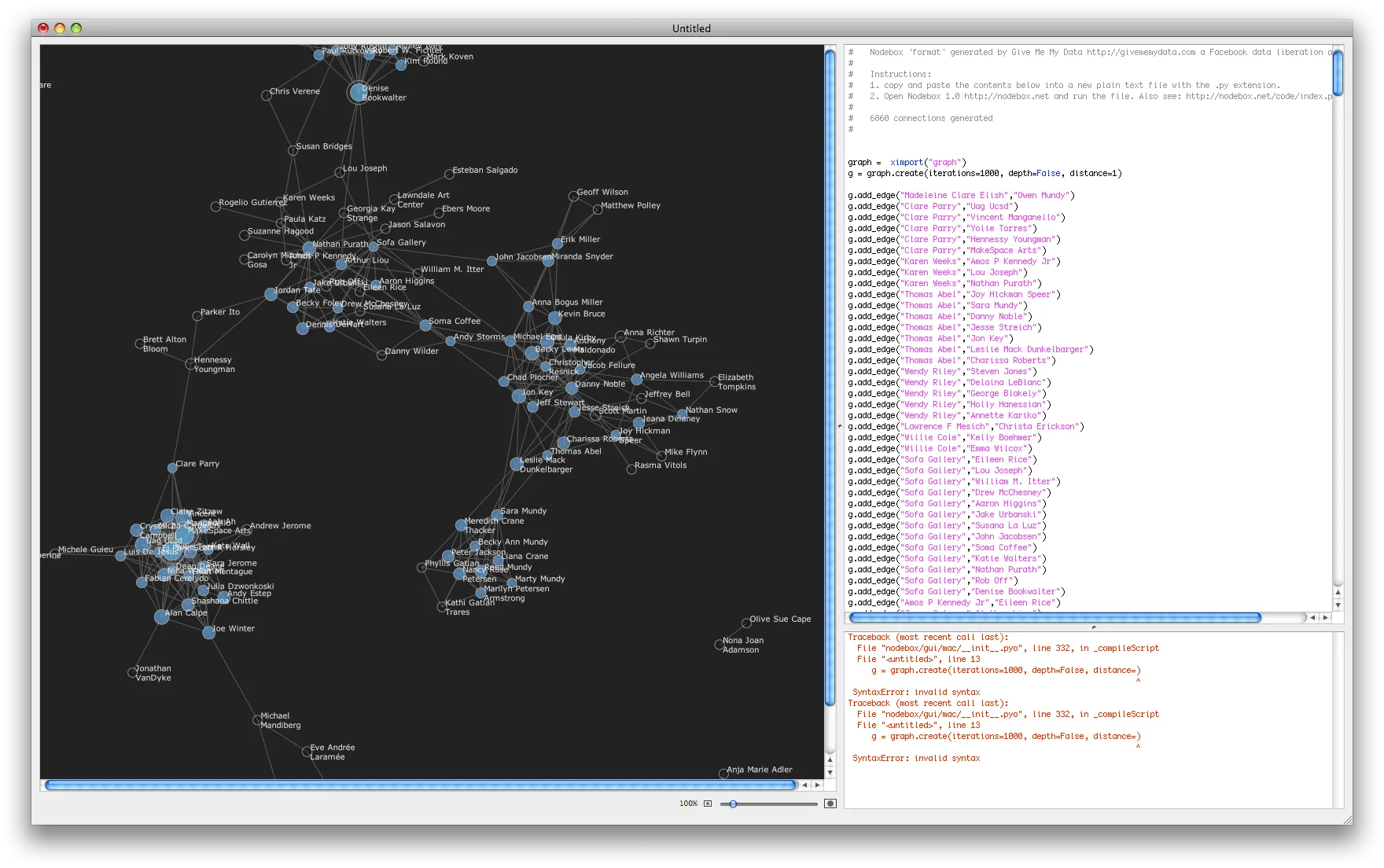
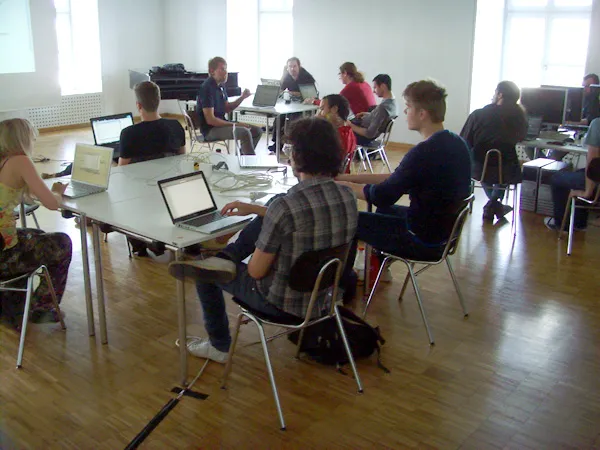
Update: Some user images from the workshop. Thanks all who joined!
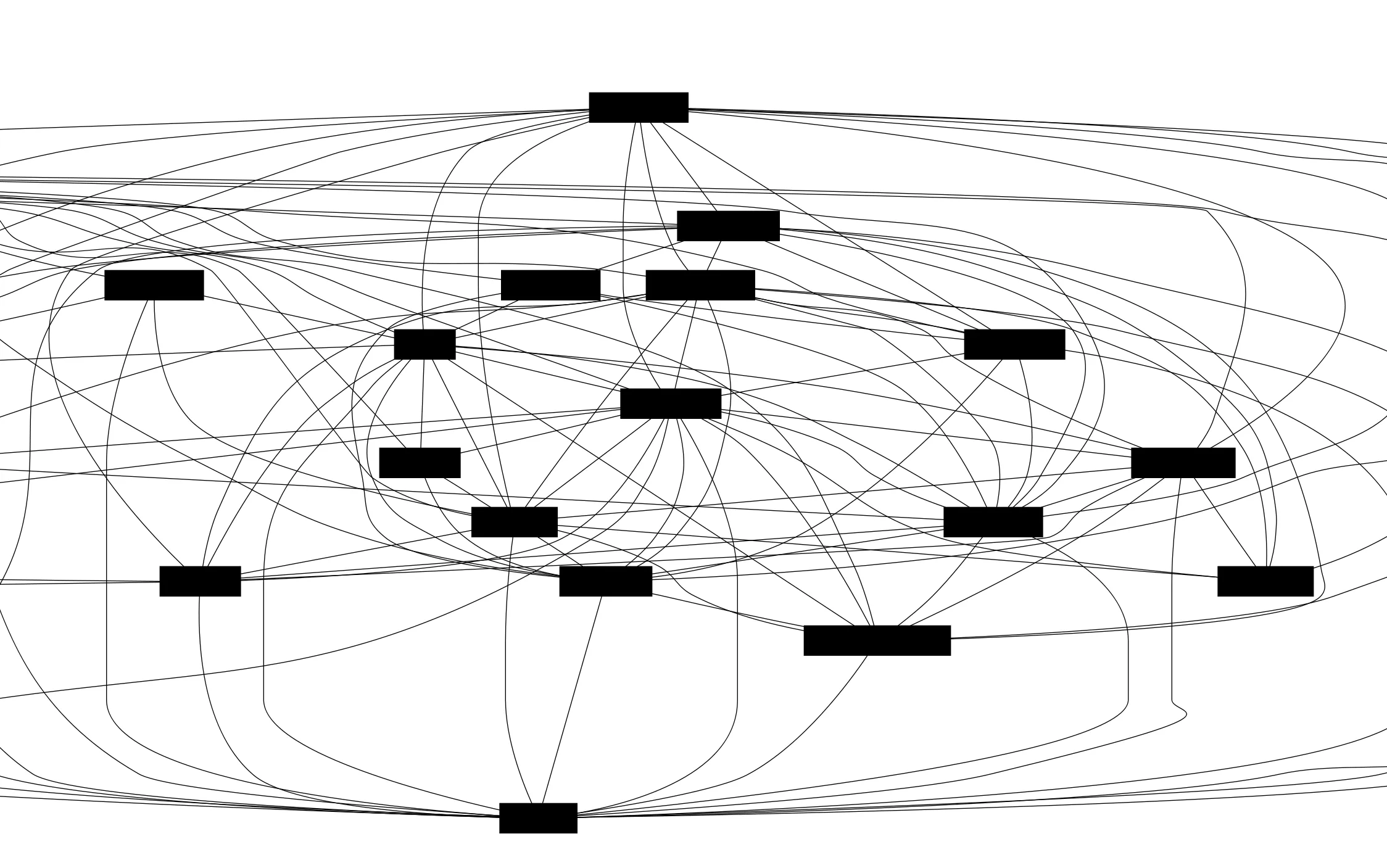

Mutual friends (using Give Me My Data and Graphviz) by Rob Canning
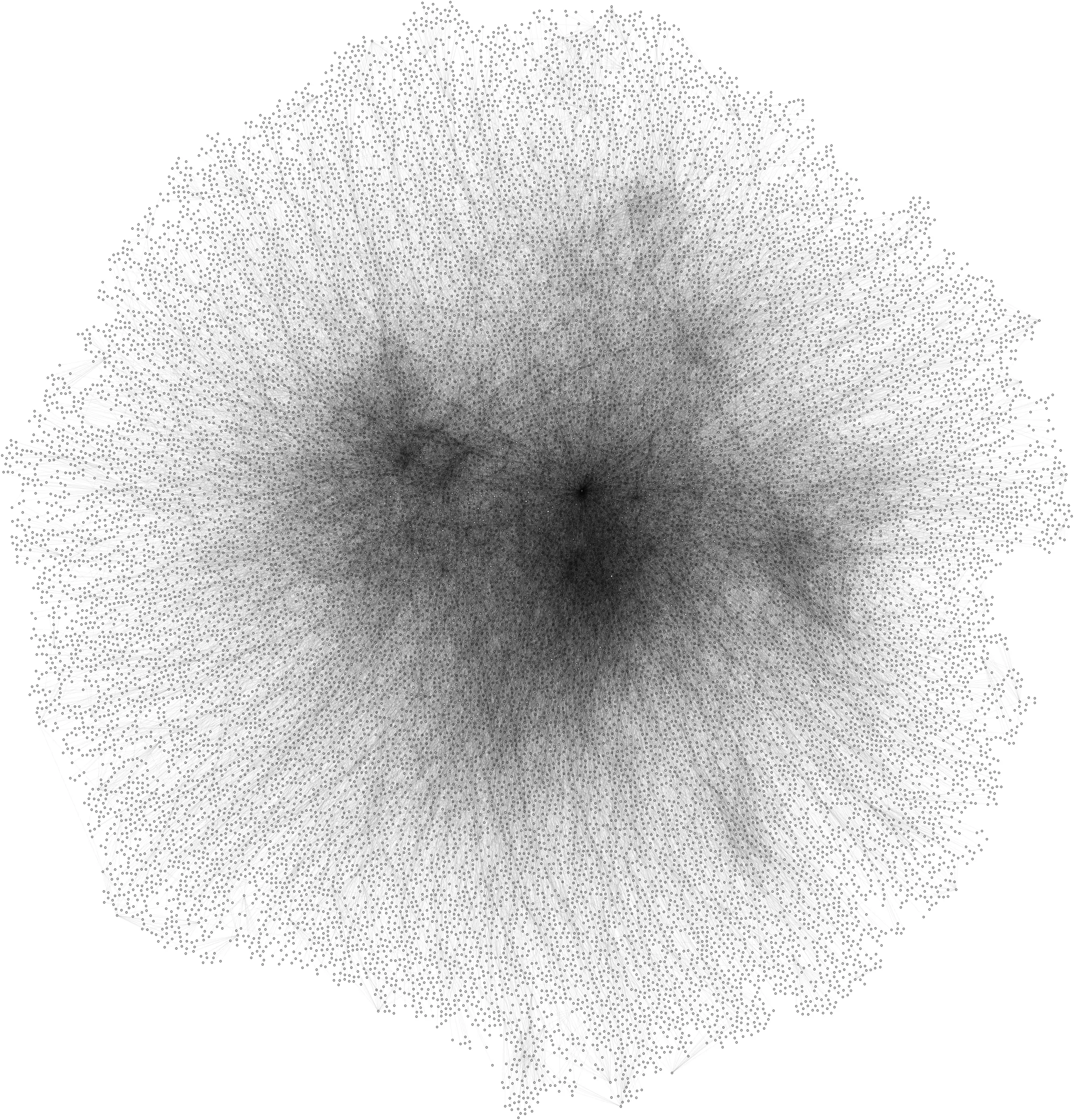
identi.ca network output (starting from my username (claude) with depth 5, rendered to svg with ‘sfdp’ from graphviz) by Claude Heiland-Allen
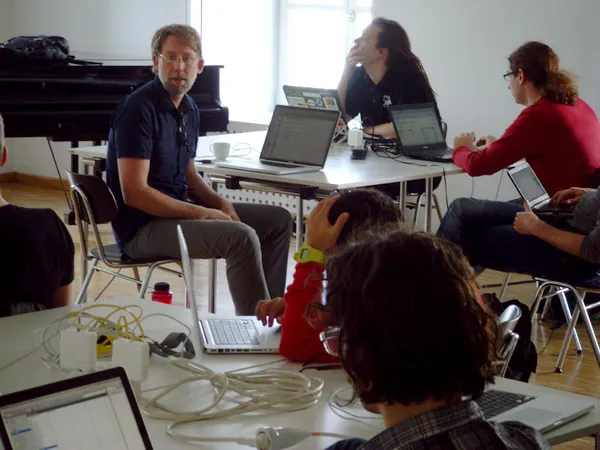
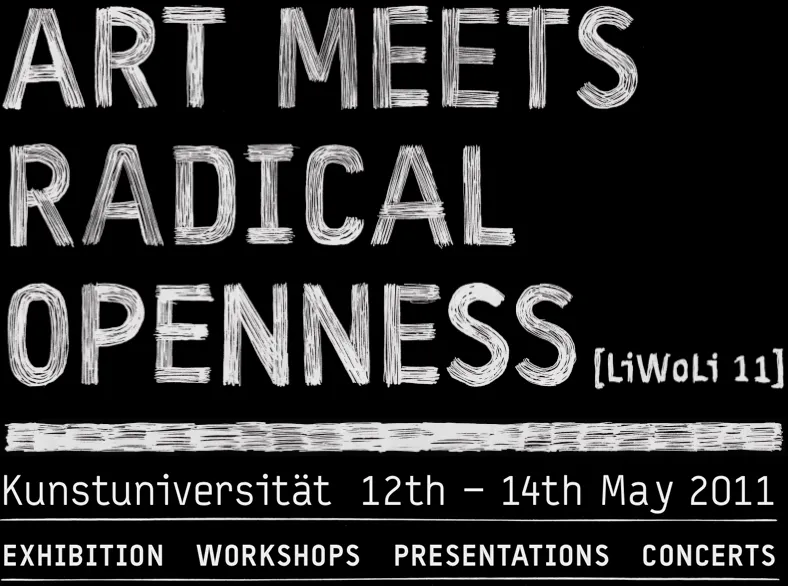
This weekend I am presenting a lecture about GIve Me My Data and conducting a two-day data-scraping workshop at Art Meets Radical Openness in Linz, Austria. Here are the details.
The Self-Indulgence of Closed Systems
May 13, 18:45 – 19:15
Part artist lecture, part historical context, Owen Mundy will discuss his Give Me My Data project within the contexts of the history of state surveillance apparatuses, digital media and dialogical art practices, and the ongoing contradiction of privacy and utility in new media.
Freedom for Our Files: Creative Reuse of Personal Data
May 13-14, 14:00 – 16:30
A two-day workshop, with both technical hands-on and idea-driven components. Learn to scrape data and reuse public and private information by writing custom code and using the Facebook API. Additionally, we’ll converse and conceptualize ideas to reclaim our data literally and also imagine what is possible with our data once it is ours! Register here
Art Meets Radical Openness (LiWoLi 2011),
Date: 12th – 14th May 2011
Location: Kunstuniversität Linz, Hauptplatz 8, 4020 Linz, Austria
Observing, comparing, reflecting, imitating, testing, combining
LiWoLi is an open lab and meeting spot for artists, developers and educators using and creating FLOSS (free/libre open source software) and Open Hardware in the artistic and cultural context. LiWoLi is all about sharing skills, code and knowledge within the public domain and discussing the challenges of open practice.
This week I am installing an ambitious new project in a quaint and friendly space called bauer&ewald located in Kreuzberg / Neuköln (Berlin) opening on May 7 until the end of June. There will be a party on the evening of the opening day. Please come if you are in town.
You can see a video of a small study online here and here.
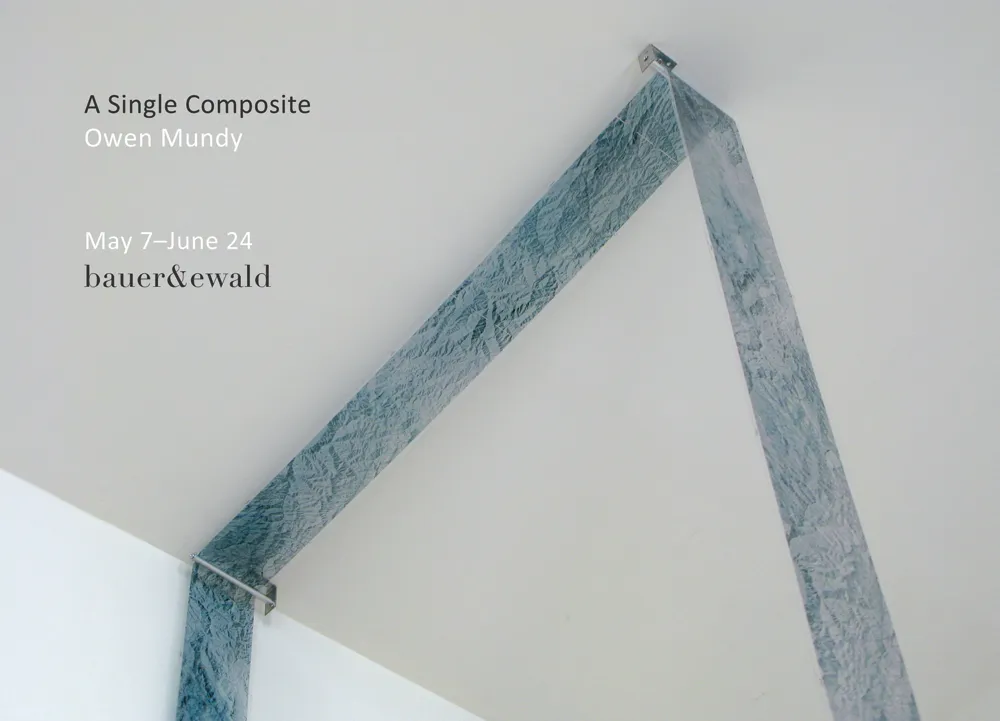
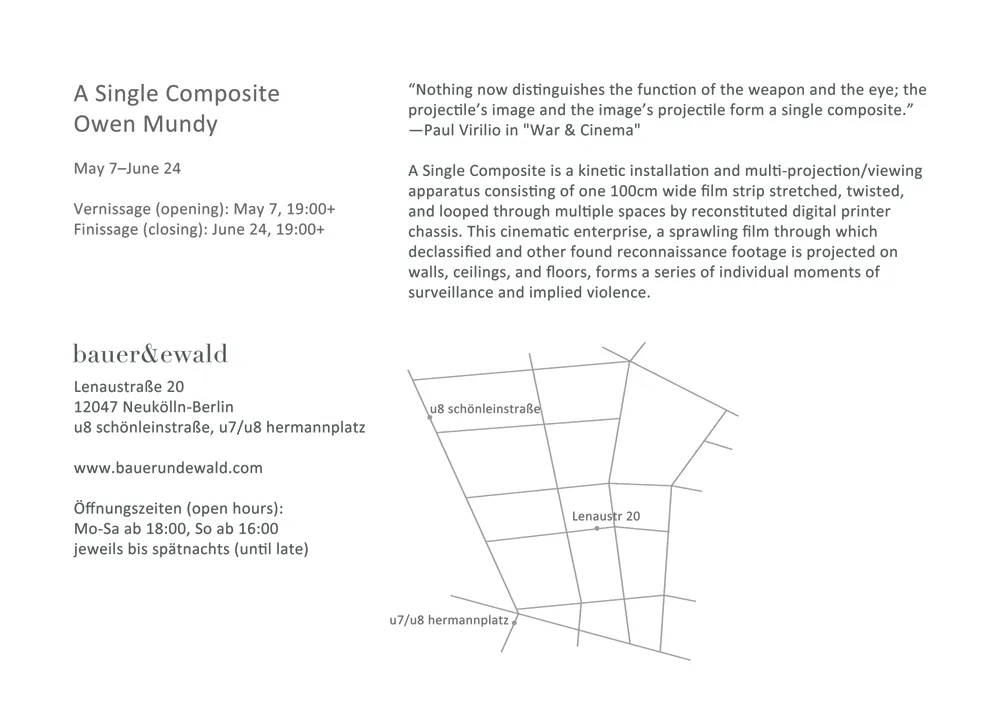
A Single Composite
Owen Mundy
May 7–June 24
Vernissage (opening): May 7, 19:00+
Finissage (closing): June 23, 19:00+
“Nothing now distinguishes the function of the weapon and the eye; the projectile’s image and the image’s projectile form a single composite.”
—Paul Virilio in “War & Cinema”
A Single Composite is a kinetic installation and multi-projection/viewing apparatus consisting of one 100cm wide film strip stretched, twisted, and looped through multiple spaces by reconstituted digital printer chassis. This cinematic enterprise, a sprawling film through which declassified and other found reconnaissance footage is projected on walls, ceilings, and floors, forms a series of individual moments of surveillance and implied violence.
Bauer&Ewald
Lenaustraße 20
12047 Neukölln-Berlin
u8 schönleinstraße, u7/u8 hermannplatz
Öffnungszeiten (open hours):
Mo-Sa ab 18:00, So ab 16:00
jeweils bis spätnachts (until late)
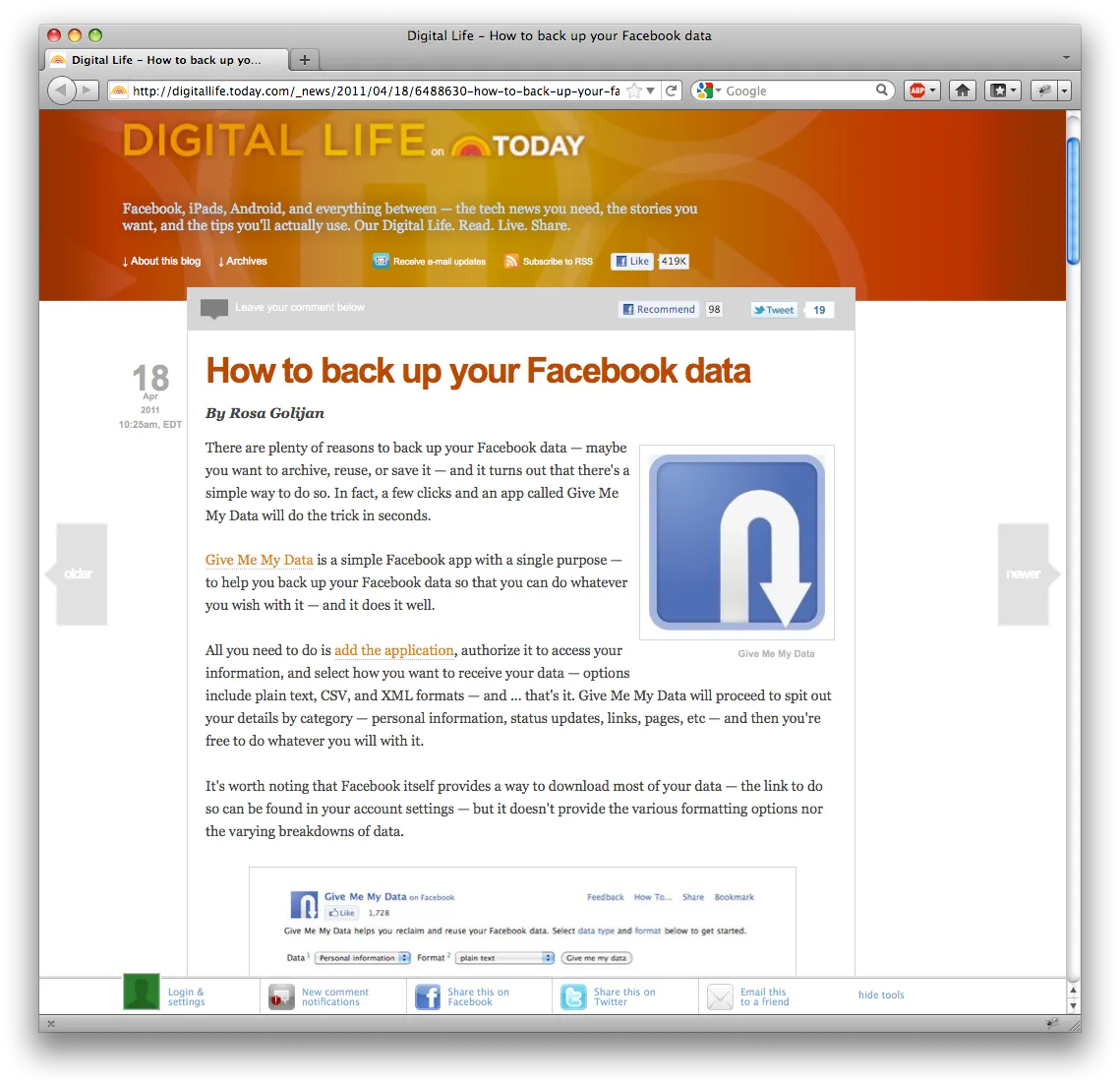
How to back up your Facebook data
By Rosa Golijan
“There are plenty of reasons to back up your Facebook data — maybe you want to archive, reuse, or save it — and it turns out that there’s a simple way to do so. In fact, a few clicks and an app called Give Me My Data will do the trick in seconds.
Give Me My Data is a simple Facebook app with a single purpose — to help you back up your Facebook data so that you can do whatever you wish with it — and it does it well.
All you need to do is add the application, authorize it to access your information, and select how you want to receive your data — options include plain text, CSV, and XML formats — and … that’s it. Give Me My Data will proceed to spit out your details by category — personal information, status updates, links, pages, etc — and then you’re free to do whatever you will with it.
It’s worth noting that Facebook itself provides a way to download most of your data — the link to do so can be found in your account settings — but it doesn’t provide the various formatting options nor the varying breakdowns of data.”
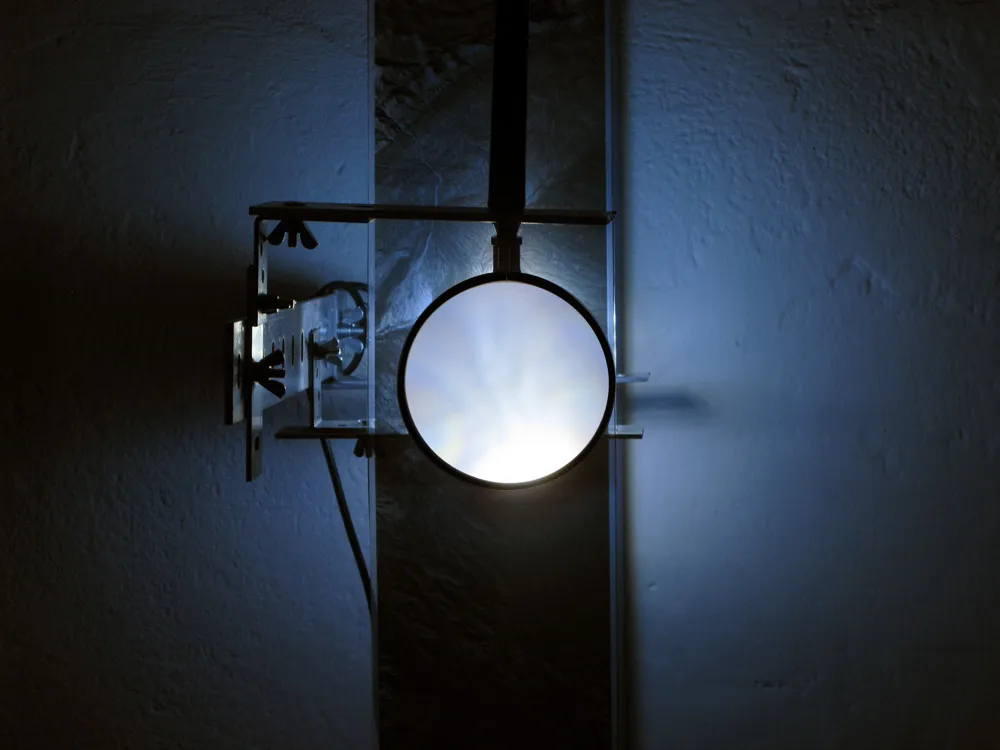
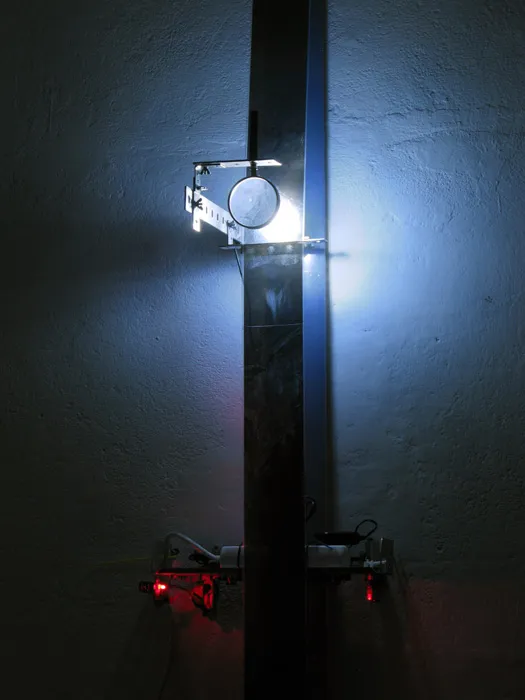
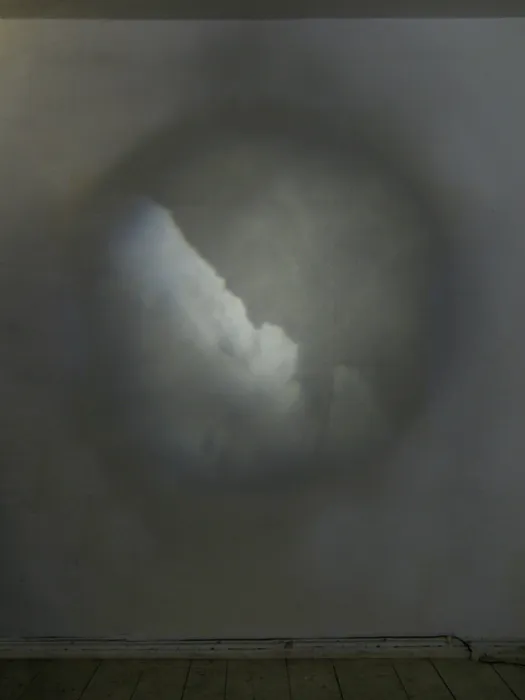
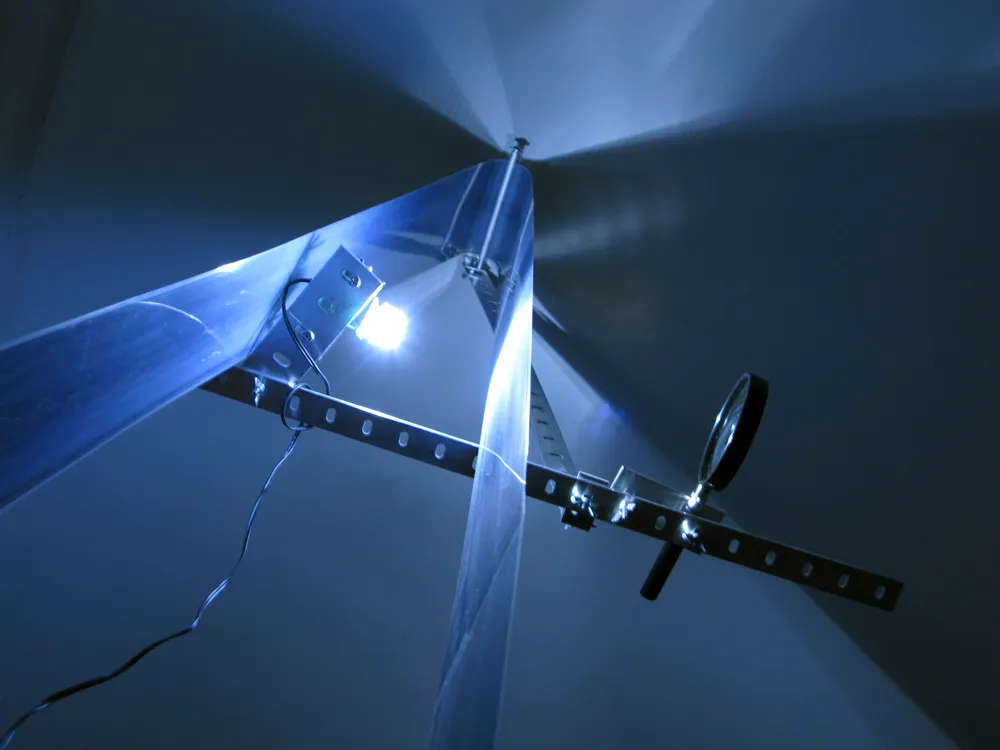
A study for an upcoming installation in Berlin.
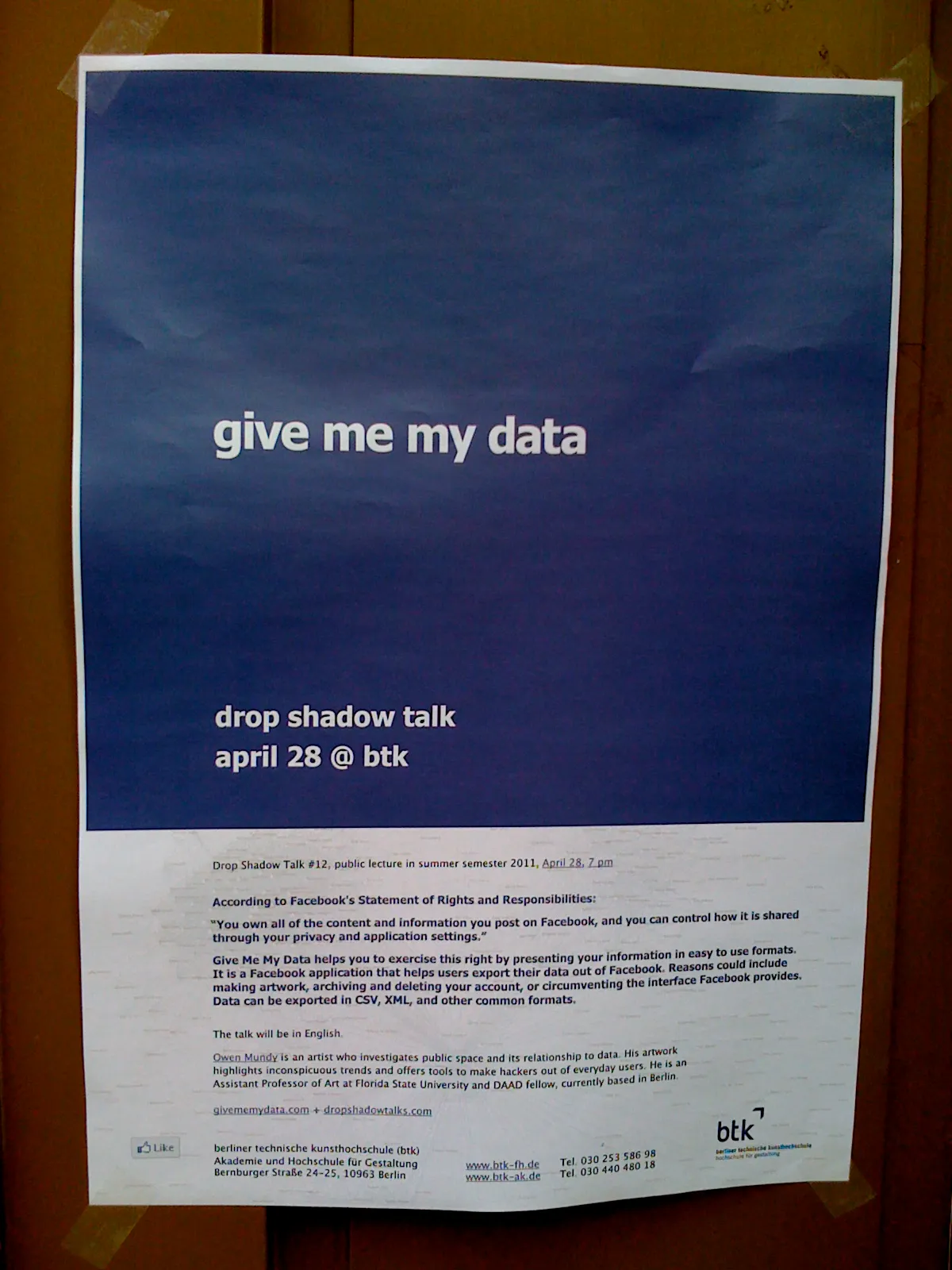
I am giving a presentation about my work and Give Me My Data at the Berliner Technische Kunsthochschule (BTK) as part of the Drop Shadow Talk series there curated by Johannes P Osterhoff.

April 28, 19:00–21:00
Berliner Technische Kunsthochschule BTK
Bernburger Straße 24–25
D-10963 Berlin

Update: Poster from talk
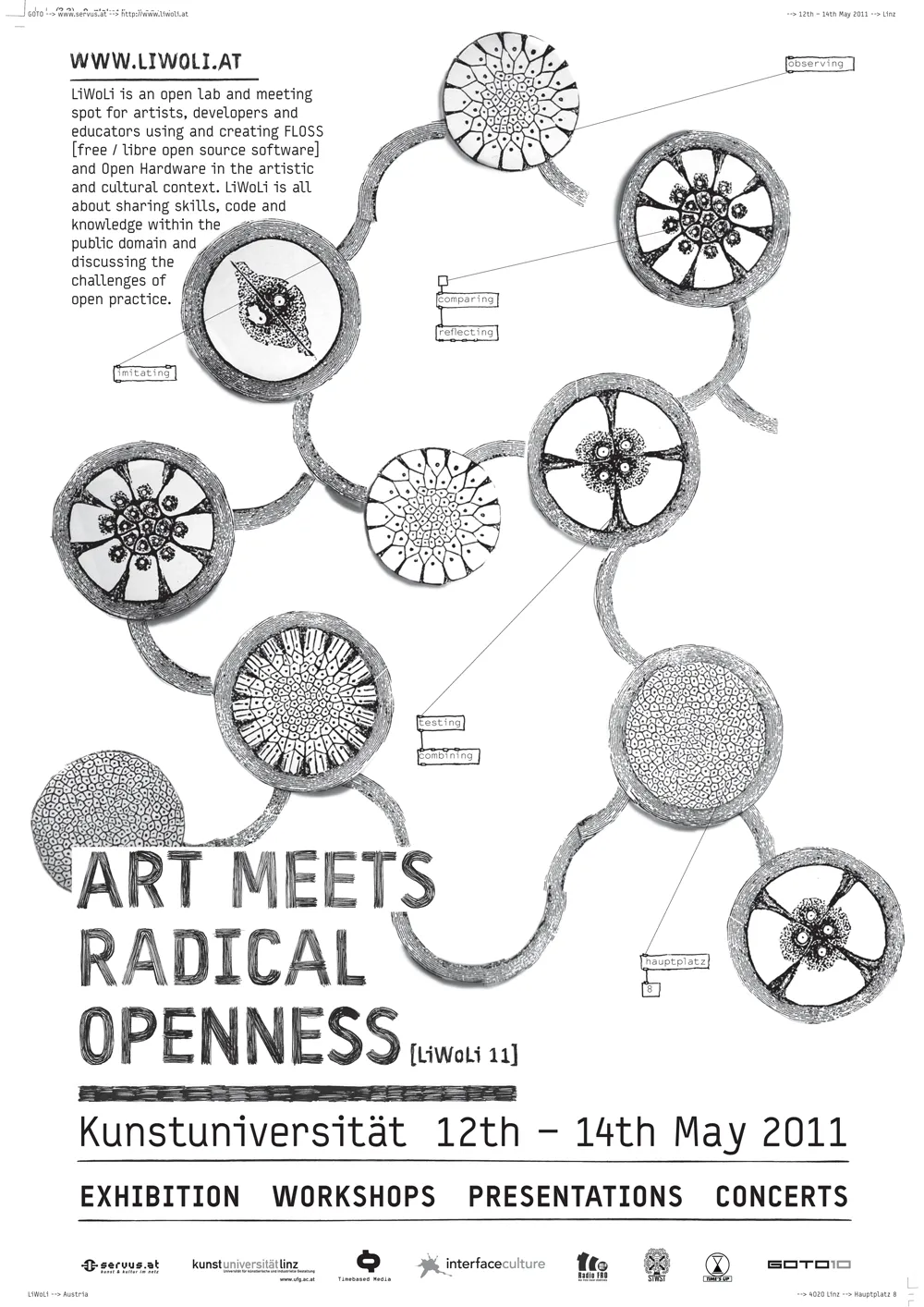
Art Meets Radical Openness (LiWoLi 2011)
Date: 12th – 14th May 2011
Location: Kunstuniversität Linz, Hauptplatz 8, 4020 Linz
Observing, comparing, reflecting, imitating, testing, combining
LiWoLi is an open lab and meeting spot for artists, developers and educators using and creating FLOSS (free/libre open source software) and Open Hardware in the artistic and cultural context. LiWoLi is all about sharing skills, code and knowledge within the public domain and discussing the challenges of open practice.
This year’s event offers an exhibition, artists’ workshops and – like every year – lectures, presentations and sound-performances.
with:
minipimer.tv (ES), Aileen Derieg (A), Martin Howse (UK/DE), Jorge Crowe (AR)pending), Malte Steiner(DE), Servando Barreiro (ES), Enrique Tomás(ES/A), Peter Bubestinger (A), Stefan Hageneder (A), Audrey Samson (CA/NL), Sabrina Baston (DE), Sebastian Pichelhofer (A), Barbara Huber (A), Max Nagele (A), Helen Varley Jamieson (NZ/DE), Adnan Hadzi (GB), André Carvalho Hostalácio (BR/DE), Claudia González Godoy (CL), Dominik Leitner (A), Rob Canning (IR/UK), Marloes de Valk (NL), Owen Mundy (US/DE), Dušan Barok (Sk), Nicolas Malevé (BE), Margaritha Köhl (A), Pippa Buchanan (AU/A), Birgit Bachler (A/NL),…
More information: http://liwoli.at/
A study for an upcoming installation in Berlin.
I am premiering this “Epilogue” for Through A Glass Darkly today in New York at Flux Factory.
Here is an excerpt from the script:
“In my short film, Through A Glass Darkly, I steer the focus away from the narrative, away from the explosions and violence, away from the masculine overload, and towards the serene landscapes where hollywood produces its fictional wars.
Through A Glass Darkly is a remix of landscapes from popular films that depict conflict. The chronological compilation relies on the influence of cinema to access a collective memory of images of war. While peaceful, they are frightening moments in their original context, used to contrast tranquility with chaos, beauty with destruction, and property with the actions that attempt its acquisition. Seen in this form, they remind the viewer that war is violent and chaotic while questioning the idea that conflict is a means to an harmonious end.”
Geographical and Social Landscapes of Conflict, Both Real and Perceived:
A Special Flux Thursday
Thursday, April 14
8 pm +
Join us for Flux Thursday, our monthly potluck and salon. Dinner starts at 8, with presentations to follow. As part of The Typhoon Continues and So Do You, we are happy to present Geographical and Social Landscapes of Conflict, Both Real and Perceived, a pair of videos curated by Elizabeth Larison. Through a Glass Darkly, a short film by Owen Mundy, brings together over one hundred of the most popular war films edited into a chronologically correct survey of landscapes of conflict, at least according to Hollywood. Untitled part 2: beauty and the east, a documentary by Jayce Salloum, addresses issues of nationalism and the nation state, alienation, ethno-facism, polarities of time – among others – as described in a series of interviews with individuals from former Yugoslavia.
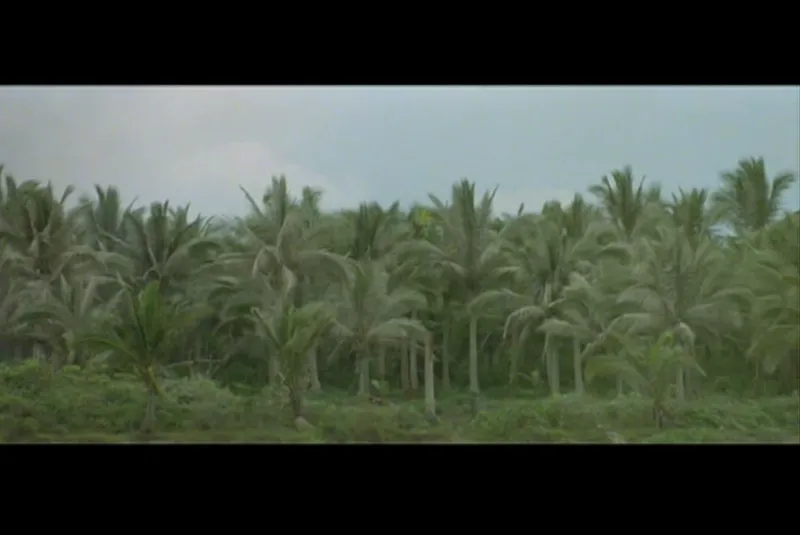
Owen Mundy, Through a Glass Darkly, 2011
DATAPOLIS
Exhibition of the 5th International Art | Science | Technology Biennale Prague ENTER
DATAPOLIS is a one evening and three days of full-size experiment in art and technology. The exhibition addresses interactions of media technologies, novel visualization practices and urban realities. Exhibiting artists from all over the world discover moods and rhythms of our cities, bodies and planet. They innovatively mash both visible and invisible data that re-present individual and collective lives and actions. Keywords: data, city, communities, mapping, social, geographical, economical, political, sentient, ambient, mobile, ubiquitous, embedded intelligence, architecture, fashion, quantified selves, body & environment monitoring, robotic systems, trash, transport, pollution, open innovation & design.
Exhibition Opening: Thursday, April 14, 2011, 18:00
Exhibition dates: April 15 – April 17, 2011 (Limited version of the exhibition will run until Sunday, April 24, 2011)
Location: National Technical Library (NTK)
Address: Technická 6,160 80 Praha 6 – Dejvice, http://www.techlib.cz/
Curatorr: Pavel Sedlák (CZ)
Co-curator: Andrej Boleslavský (SK/CZ)
ENTER website: http://festival-enter.cz/
Artists in the exhibition:
Alessandro Ludovico, Paolo Cirio (IT): Face to Facebook
Mark Shepard (USA): Sentient City Survival Kit
Mark Shepard (USA): Serendipitor
Varvara Guljajeva (EST) & Mar Canet(ES): The Rhythm Of The City
James George(US), Alexander Porter(US): DepthEditorDebug
Eric Conrad (USA): Palbable City
Eric Conrad (USA): Bark Rubbings
Teresa Almeida (PT/SG): Modes for Urban Moods: Space Dress
Jenny Chowdhury (USA): 802.11 Apparel – Wifi Jacket
MIT SENSEable City Lab (USA): Trash Track
Secret Cooks Club (SG): FoodMatch
Dušan Barok (SK/NL): FaceLeaks
Owen Mundy (USA/DE): Give Me My Data
Jaro Dufek (CZ): Reality Ends Here
Aram Bartholl (DE) & Ivan Floreš (CZ): Dead Drops
Niki Passath (AT): Zoe
Dardex Mort2Faim (FR): Machine 2 Fish
Saša Spačal (SLO): 7K: New Life Form
Marie Polakova (CZ) & Jonathan Cremieux (FI/FR): Mimodek
Scott Hessels (USA/HK) & Gabriel Dunne (USA): Celestial Mechanics
Pedro Cruz (PT): The Morphing City
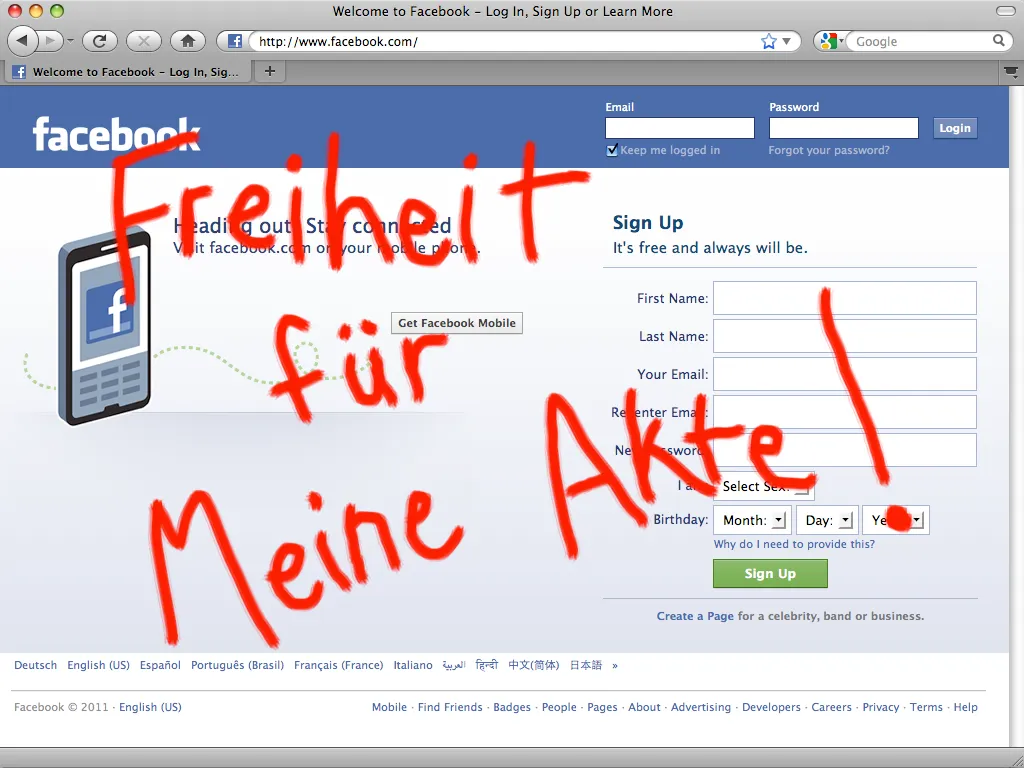
Giving a talk today in Dresden, Germany titled, “Give Me My Data: A Facebook Application Inspired by the Stasi Files Controversy.” Here is the abstract.
During the final days of the German Democratic Republic (or GDR) it became evident that the Ministry for State Security (more popularly known as the “Stasi”) was destroying incriminating evidence from its 40-year history of domestic and international surveillance. These documents, which the Stasi was attempting to destroy using shredding machines, as well as by hand when the machines failed, included information gathered through various clandestine methods about lives of citizens of the GDR without their knowledge or consent.
On January 15, 1990, protestors stormed the Stasi headquarters in Berlin in attempt to prevent the destruction of personal records which they felt they should be able to access. The phrase, “Freiheit für meine Akte!” (in English: Freedom for my file!) spray painted on the Stasi guardhouse during this protest embodies a desire by citizens to open this closed world of state surveillance in order to understand the methods of control employed the Stasi
This moment in history inspires my ongoing project, Give Me My Data, a Facebook application that helps users export their data out of Facebook. While clearly utilitarian, this project intervenes into online user experiences, provoking users to take a critical look at their interactions within social networking websites. It suggests data is tangible and challenges users to think about ways in which their information is used for purposes outside of their control by government or corporate entities.
At the height of its operations, the Stasi is believed to have hired, between spies and full- and part-time informants, one in every 6.5 East German citizens to report suspicious activities, almost 2.5 million people.1 At this moment, the ratio of people entering data on Facebook to non-members is one in fourteen for the entire world,2 introducing possibly the most effective surveillance machine in history.
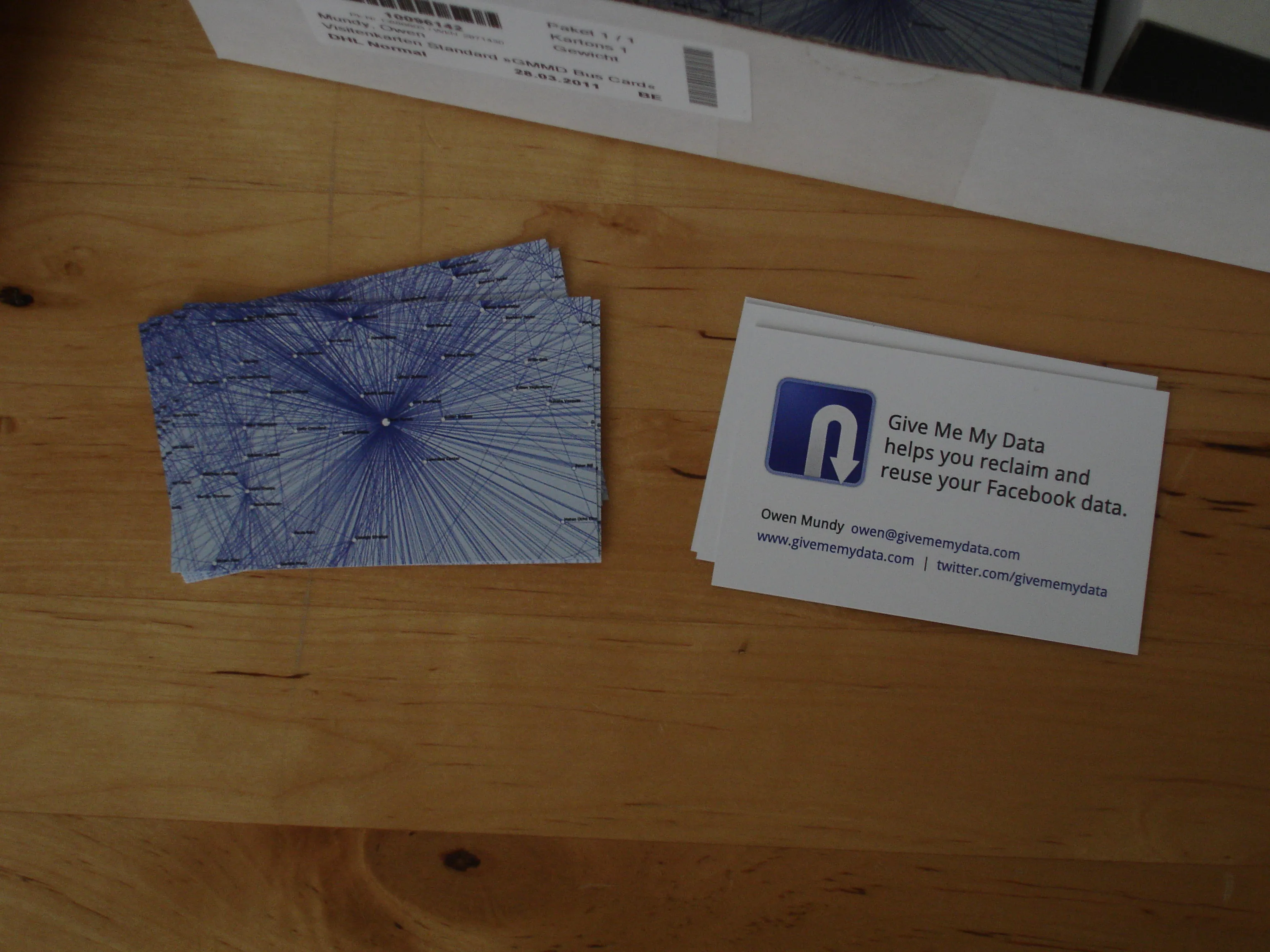
One of my visualizations on the front. More info
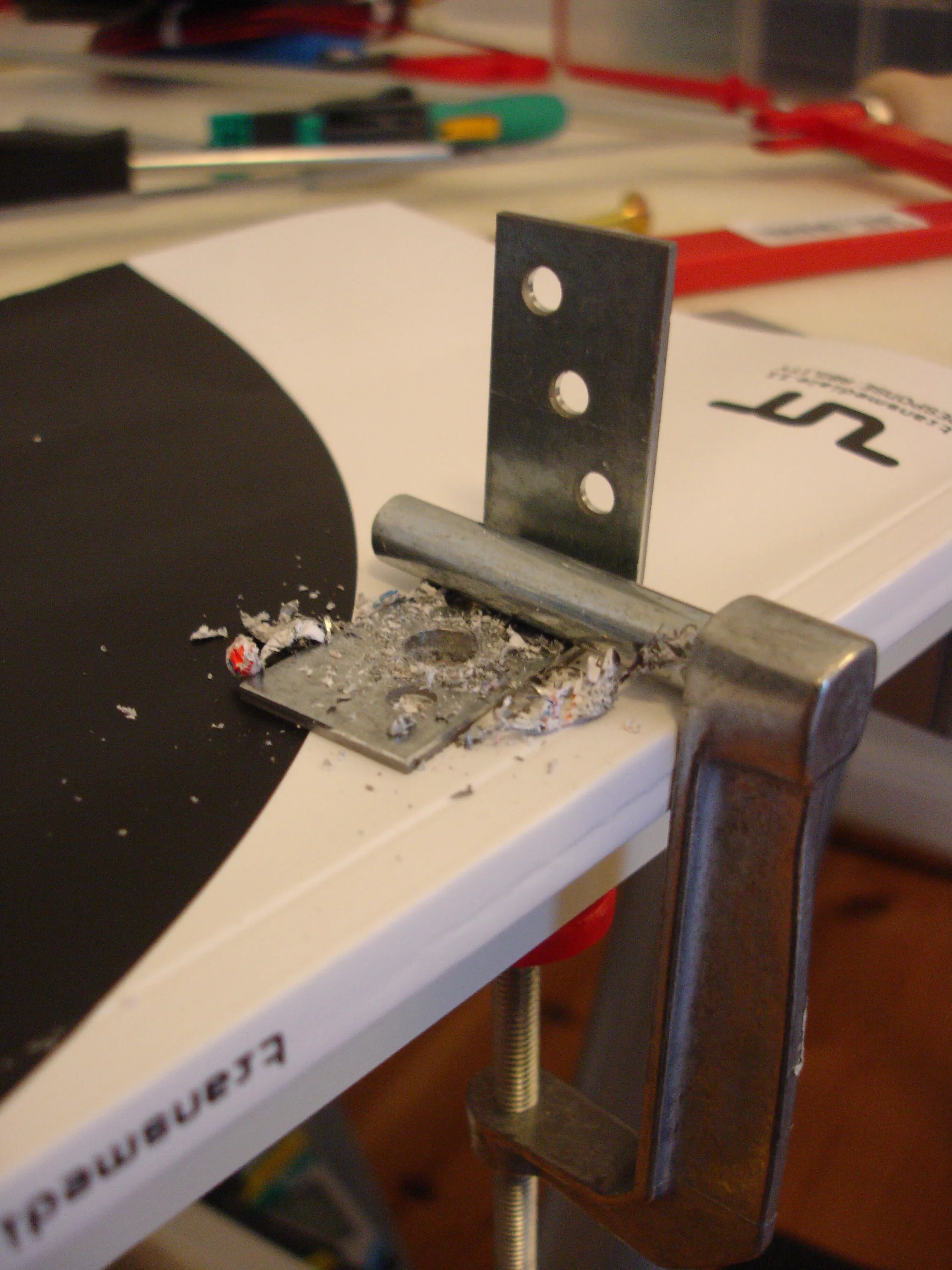

I found a great (re)use for leftover conference catalogs.
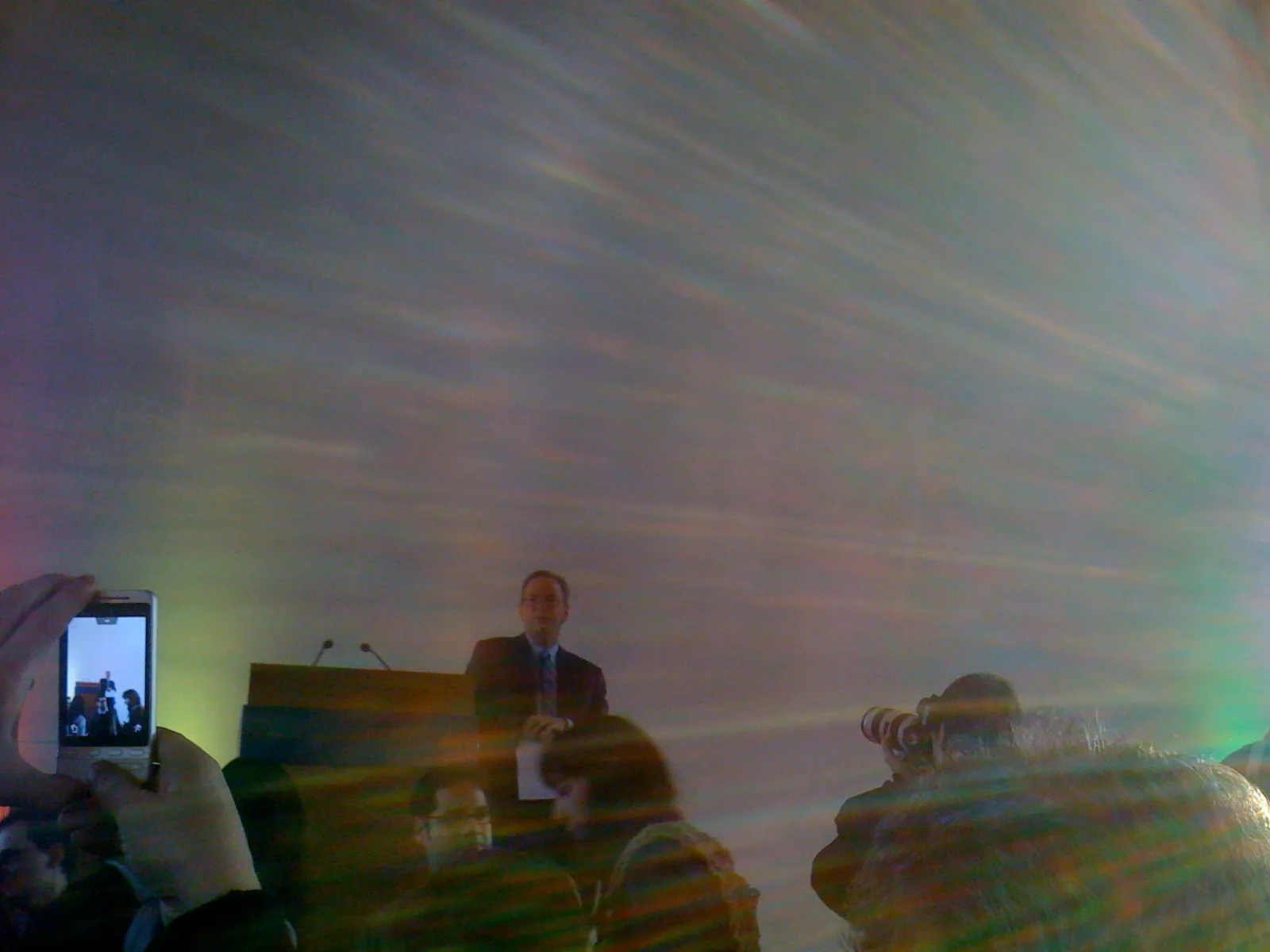
Eric Schmidt, CEO of Google Inc., at Humboldt University, Berlin, Germany, February 16, 2011
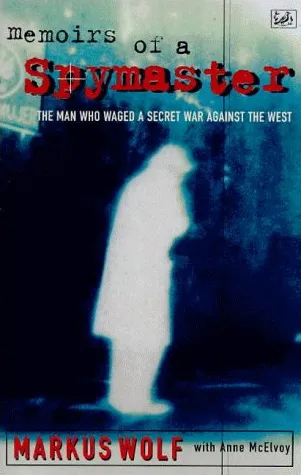
This is a review for the 1997 autobiography of Markus Wolf, the former head of East Germany’s foreign intelligence department.
Wolf’s story begins with a fascinating personal history, particularly, regarding his father who was a communist and their exile from Nazi Germany in Moscow. After the end of WWII and the downfall of the Third Reich Wolf returns to Germany, to Berlin, taking a position first as a journalist in the Soviet Zone and later taking a position and rising through the ranks of the party. He eventually becomes and serves for 30 years as head of the foreign intelligence division, the Hauptverwaltung Aufklärung (HVA) (en. Main Reconnaissance Administration), within the Ministry for State Security.
I found the writing articulate, though it often provides too much detail. It is especially riddled with justifications for controversial actions on the part of himself or the DDR. For example, there is a whole chapter devoted to Willy Brandt, the Chancellor of West Germany who resigned when one of his aides was exposed as an East German spy.
For all the dull details of his bureaucratic life …
“Vast stretches of this work were very boring. Intelligence is essentially a banal trade of sifting through huge amounts of random information in a search for a single enlightening gem or illuminating link.” (101)
… the book also contains a unique historical perspective of WWII and the two German states during the Cold War. It also has many other interesting facts about pre-digital-computer surveillance including methods for protecting identities of spies and ways to physically transfer secret messages. One example, which would be easy with a computer’s ability to generate pseudo-random numbers, was the use of bank note serial numbers for random numbers in cryptographic messaging. He mentions often that he was not a fan of the use of the computer to automate details of record-keeping or gathering because he felt computer records could to easily be stolen and put into the wrong hands.
“The problem with technical intelligence is that its essentially information without evaluation.” (284)
In closing, I recommend this book to anyone interested in the historic details of East Germany’s Ministry for State Security. I’ll end with a few choice quotes which point to the author’s wisdom and ability for critical self-reflection.
“The dividing line between freedom fighters and terrorists is usually determined by which side you are on.” (279)
“No secret service can ever be democratic nor, … open to constant scrutiny.” (282)
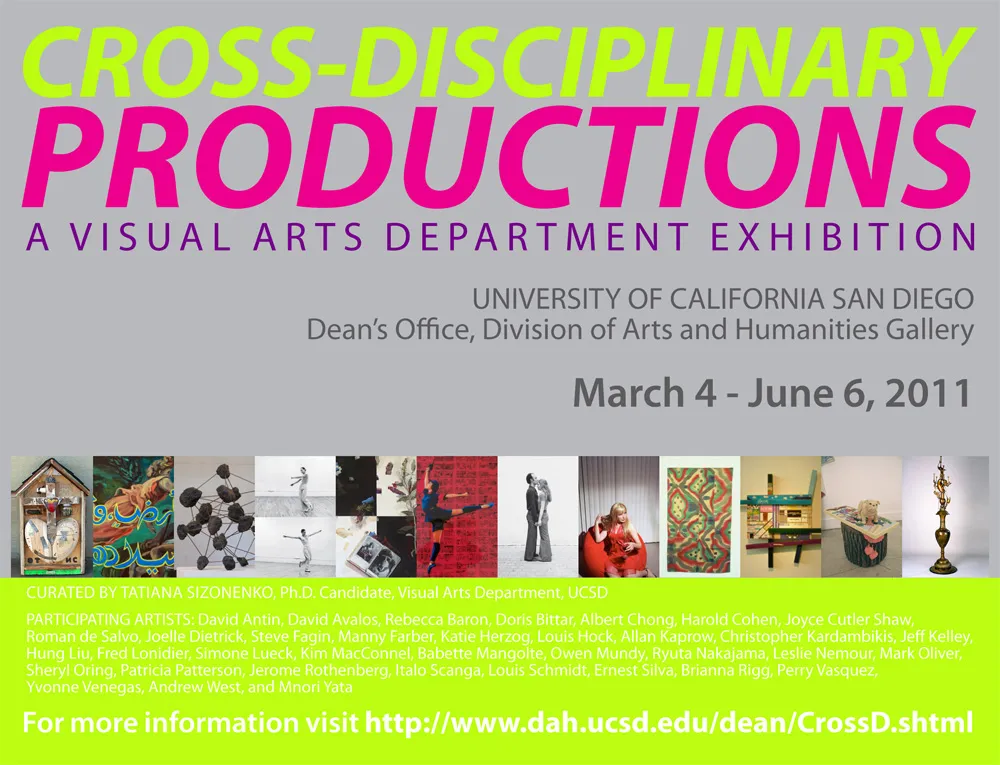
In recognition of the 50th anniversary of the founding of UCSD, the Division of Arts and Humanities is hosting an exhibition celebrating the artistic identity of the Visual Arts Department, running from March 4 through June 6, 2011. Cross-Disciplinary Productions is curated by Tatiana Sizonenko, a PhD Candidate in Art History. The exhibition will present a survey of works by its founding and long-term faculty, most distinguished alumni, and current MFA students.
The Visual Arts Department was founded on the principle that art production, art theory and criticism, and art history are inter-related practices which together constitute the world or culture of art. This exhibition investigates the various ways that the department’s distinctive commitment to the theoretical framework of art was put into practice and whether this shared philosophy about the theoretical framework of art constitutes a tradition in the contemporary world.
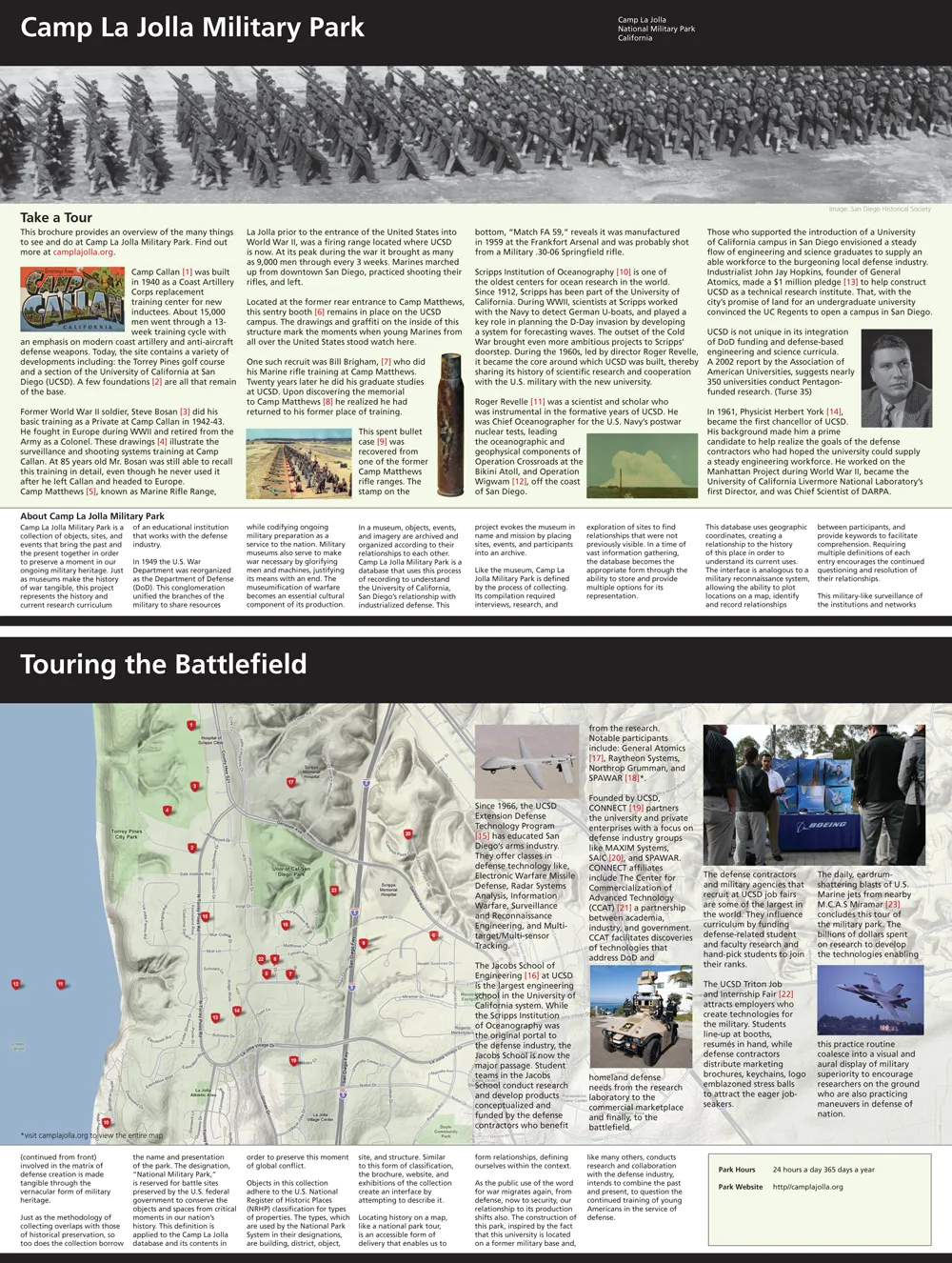
Cross-Disciplinary Productions explores the dynamic interaction between art and society through the distinctive philosophy of the UCSD MFA program. This exhibition is the second in the series for the current academic year focusing on the identity
of Visual Arts Department. The first exhibition mounted in the Fall “The San Diego Effect” centered on the identity of place through works by MFA students at UCSD and San Diego State University that engaged with greater San Diego as a locale. The upcoming exhibition tracks the department’s identity through time as it is revealed by the personal stories and careers of graduated artists.
The exhibition pre-view reception includes a lecture and conversation with artist / critic / theorist Allan Sekula (UCSD/MFA 1974) and historian / critic / curator Moira Roth (Professor at UCSD 1974-85) who will discuss the history of UCSD MFA program and their own work. The pre-opening is scheduled for March 4, 2011 at 2pm in the Visual Arts Facility, performance space. Following the talk there will be an exhibition preview viewing with the curator on March 4 at 4pm in the Literature Building.
The exhibition opens to full viewing on March 11, 2011, with a special guest Jeff Kelley (MFA, UCSD 1985), an art critic, theorist, curator, and educator, currently residing in Oakland. Jeff Kelley will lead an enactment of Allan Kaprow’s “Easy” (1972) with PhD and MFA students (by RSVP). ” Join Jeff Kelley at 5:00 p.m. at the Dean’s Office for a conversation about Allan Kaprow’s performance and opening reception from 5:00 p.m. to 6:00 p.m.
Participating artists:
David Antin, David Avalos, Rebecca Baron, Doris Bittar, Harold Cohen, Joyce Cutler Shaw, Joelle Dietrick, Steve Fagin, Manny Farber, Katie Herzog, Louis Hock, Allan Kaprow, Christopher Kardambikis, Jeff Kelley, Hung Liu, Fred Lonidier, Simone Lueck, Kim MacConnel, Babette Mangolte, Owen Mundy, Ryuta Nakajama, Leslie Nemour, Mark Oliver, Sheryl Oring, Patricia Patterson, Jerome Rothenberg, Italo Scanga, Louis Schmidt, Ernest Silva, Brianna Rigg, Perry Vasquez, Yvonne Venegas, Andrew West, and Minori Yata.
Special thanks go to: Jack and Michele Greenstein, Grant Kester, Susan Smith, Anya Gallaccio, Steve Fagin, Ernest Silva, Joseph Scanga and Italo Scanga Foundation, Joe Yorty, Lara Bullock, Steve Willard, Nancy Mah, B.J. Barclay, and Betty Jones.
March 4, 2011 – June 6, 2011
Hours: M-F, 9am-noon and 1-4pm
On view at the Division of Arts and Humanities Gallery, Literature Building, rooms 410 & 310
A Visual Arts Department Exhibition
For maps and directions visit:
http://dah.ucsd.edu/dean/directions.shtml
For information:
http://dah.ucsd.edu/dean/officeart.shtml

VIDEOGUD SPRING 2011
Kultur i länet
Uppsala, Sweden
A collaboration between the county councils of Gävleborg, Uppsala, and Dalarna to show video art in public places – for example in libraries, schools and hospitals.
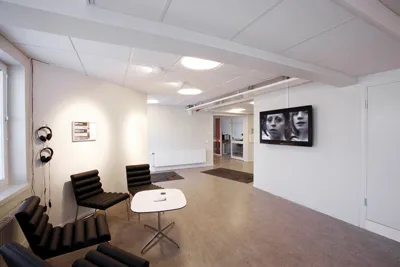
The theme for this spring’s movies is the human relationship with the city and countryside. Whether the works in the spring program takes place on the coast, in town or in front of a waterfall as they all have in common that they are asking questions about how humans project the feelings and sentiments of the phenomena in nature and in the city.
Common to the five works is that the artists relate to the province or city as the work takes place in. The city or the countryside is not given to the works but its influence is being investigated.
The program begins with Owen Mundy film “Through A Glass Darkly” in which what we normally see as the wings – the landscape now is the focus, Mundy works followed by Hanna Ljungh settlement and dialogue with a waterfall. In Ulu Braun’s film “Atlantic Garden” meet people, landscapes and nature, reality and fiction.
The program concludes with two films “Zwischen” and “The Perfect Hour” which takes place in cities, one in Berlin, the others in Stockholm. In both works, you can choose to see the city as a backdrop or motaktör the main character.

(translated from Swedish)
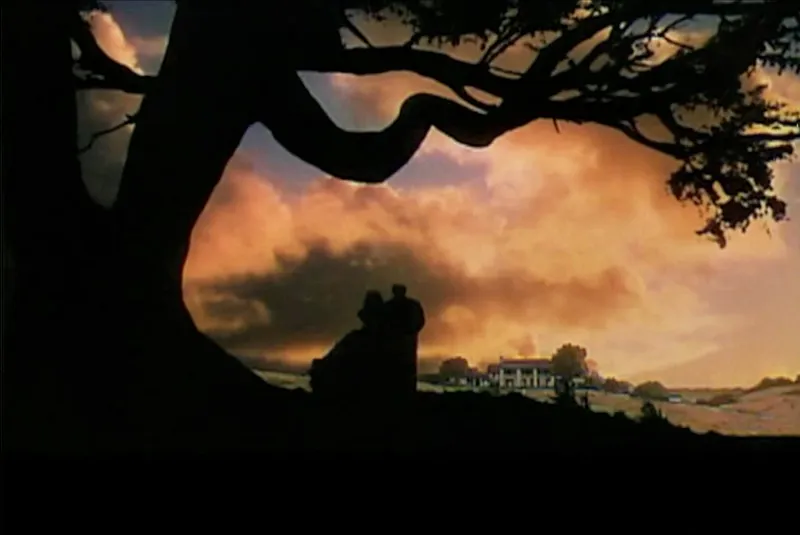
Through A Glass Darkly is a remix of the landscape of popular films depicting war. Eerily quiet, but also beautiful, creates images at a contrast between stillness and chaos, between beauty and destruction.
The films are chronologically compiled, ie. first clip is from a film about American War of Independence followed landscapes and scenes from movies depicting war and conflicts in the world until today. Taken out of context becomes important landscapes charged in themselves, while they remind us of nature as a battleground. Examples of some films that used in the work are The Patriot, Gone with the Wind, The Thin Red Line and Apocalypse Now.
Through A Glass Darkly is originally an English translation of a verse in the Bible’s Korinterbrev, in Swedish reads: “Now we see in a dim way, such as in a mirror, but then we shall see face to face.” Stanza, Breakthrough A Glass Darkly, has been used in the English translation of Ingmar Bergman’s film “Through a Glass Darkly.”
—Andreas Bjersby
Kultur i länet
Projektledare konst
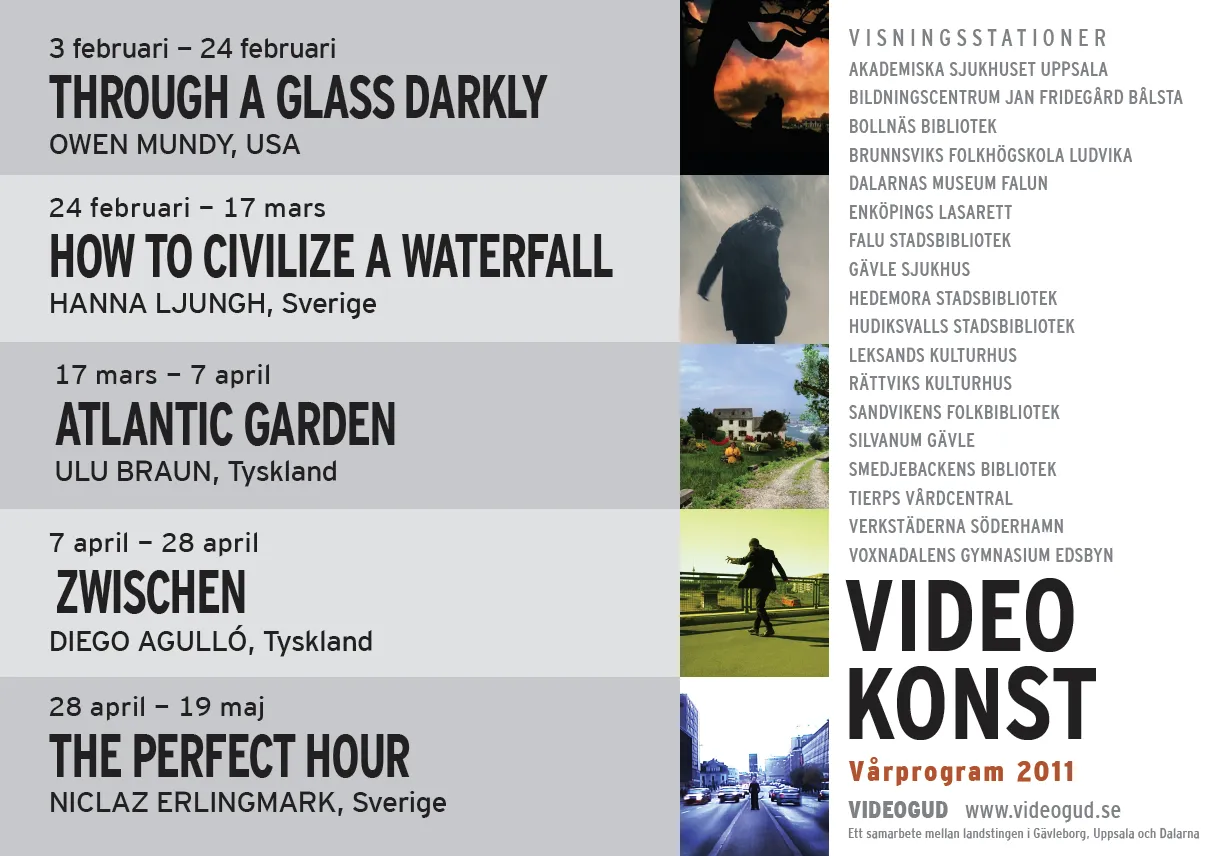
3 Feb – 24 Feb
Through A Glass Darkly
Owen Mundy, USA
24 Feb – 17 Mar
How to Civilize A Waterfall
Hanna Ljungh, Sweden
17 Mar – 7 Apr
Atlantic Garden
Ulu Braun, Germany
7 Apr – 28 Apr
Zwischen
Diego Aguilló, Germany
28 Apr – 19 May
The Perfect Hour
Niclaz Erlingmark, Sweden
Gävleborg: Sandviken Public Libraries, Silvanum Gävle, Voxna Valley High School, Show Bilbliotek, Gävle Hospital, Hudiksvall Library, Workshops Port Hedland.
Uppsala: Uppsala University Hospital, Formation Center Jan Fridegård Bålsta, Enköping Hospital, Tierps clinic.
Dalarna County: Dalarna Museum, Falun Public Library, Old Meken Smederevo, Hedemora Public Library’s Cultural Right, Vansbro library.
In February Through A Glass Darkly will be shown at 16 different public locations (libraries, hospitals and community halls) in Sweden. More details to follow.
In the meantime, I just posted the full version online. Enjoy.
When converting NTSC digital video to PAL the pixel aspect ratio needs to change from 720 x 480 (NTSC) to 720 x 576 (PAL). Depending on your project the more important problem is the transition from 29.97 (NTSC) frames per second to 25 (PAL).
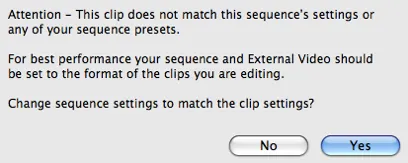
I found Final Cut Pro and QuickTime both convert 29.97 to 25 frames per second by cutting the five extra frames to make it fit. This results in a loss of temporal resolution, making motion in the footage jerk and skip because the frames which created the illusion of motion are missing.
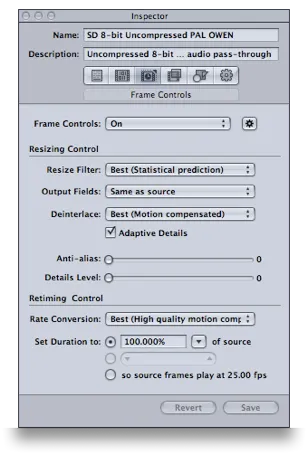
There are a few commercial applications that can convert NTSC to PAL with smooth motion, but I followed advice on this forum which suggested using Compressor for the standards conversion:
This should give you a 720 x 576 (PAL CCIR 601) with 25 frames per second. Finally, in DVD Studio Pro make sure you choose PAL before you import any footage, and leave all the regions selected which is the default.
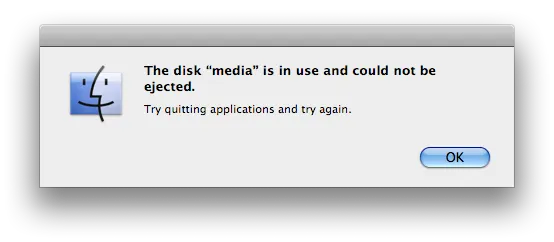
Can’t eject a CD or unmount an external hard drive on your mac because of this error: The disc
This UNIX command reports a list of all open files and applications that opened them. Open Terminal and replace the name of your volume below to test.
$ lsof | grep /Volumes/media/
Addendum: Here’s an even more helpful command: eject the disk with UNIX when the GUI won’t allow it.
$ diskutil eject [Mount Point|Disk Identifier|Device Node]
Oh, and a final tip nestled in this addition: If you have a space in the name (for example you had two disks mounted named “backup” and OSX named the second one to mount “backup 1”) then you can easily reference the name (or any file or directory name with a space) with a backslash which “escapes” the character. Typing the first few characters and then type the tab key will do it automatically.
$ diskutil eject /Volumes/backup\ 1/