Just installed “The Americans” exhibition and artwork with the same title. Here are the details:
The Americans
June 20–July 25, 2010
Holzhauer Gallery
Northwest Florida State College
Niceville, Florida


Just installed “The Americans” exhibition and artwork with the same title. Here are the details:
The Americans
June 20–July 25, 2010
Holzhauer Gallery
Northwest Florida State College
Niceville, Florida
“Open sourcing” the schematic for the electronic components for You Never Close Your Eyes Anymore.

Products:
RBBB boards (Arduino clone)
custom-designed circuits
– female headers
– TIP31 transistor
– 6-wire Unipolar Stepper motor (48 step Nippon Electric Pulse Motor)
– ULN2803A Darlington Array
– hook-up wire
– various resistors
– LEDs
used camera lenses
aluminum “flat bar”
hose clamps
rubber wine corks
various mounting hardware
More photos from You Never Close Your Eyes Anymore production.


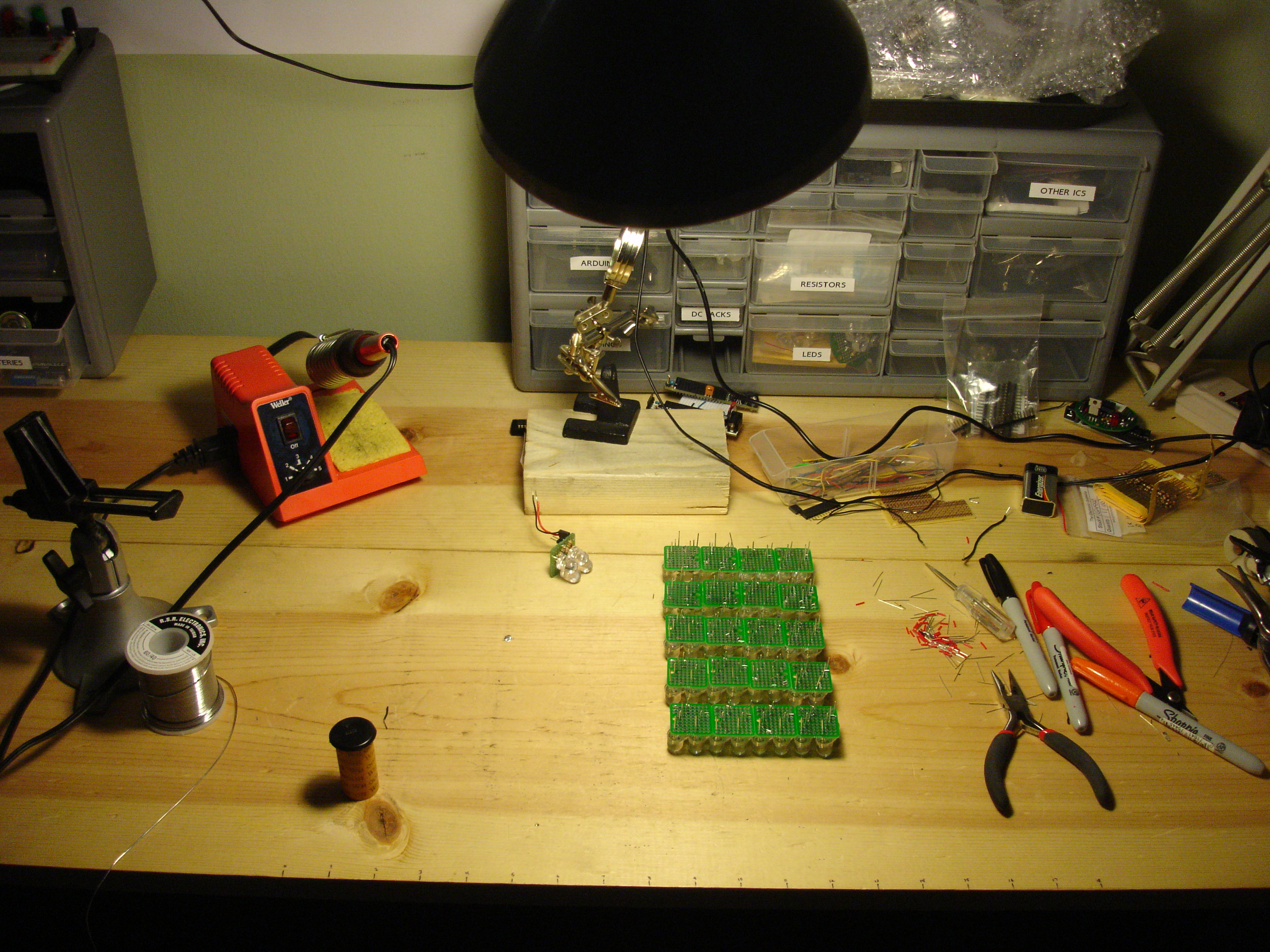


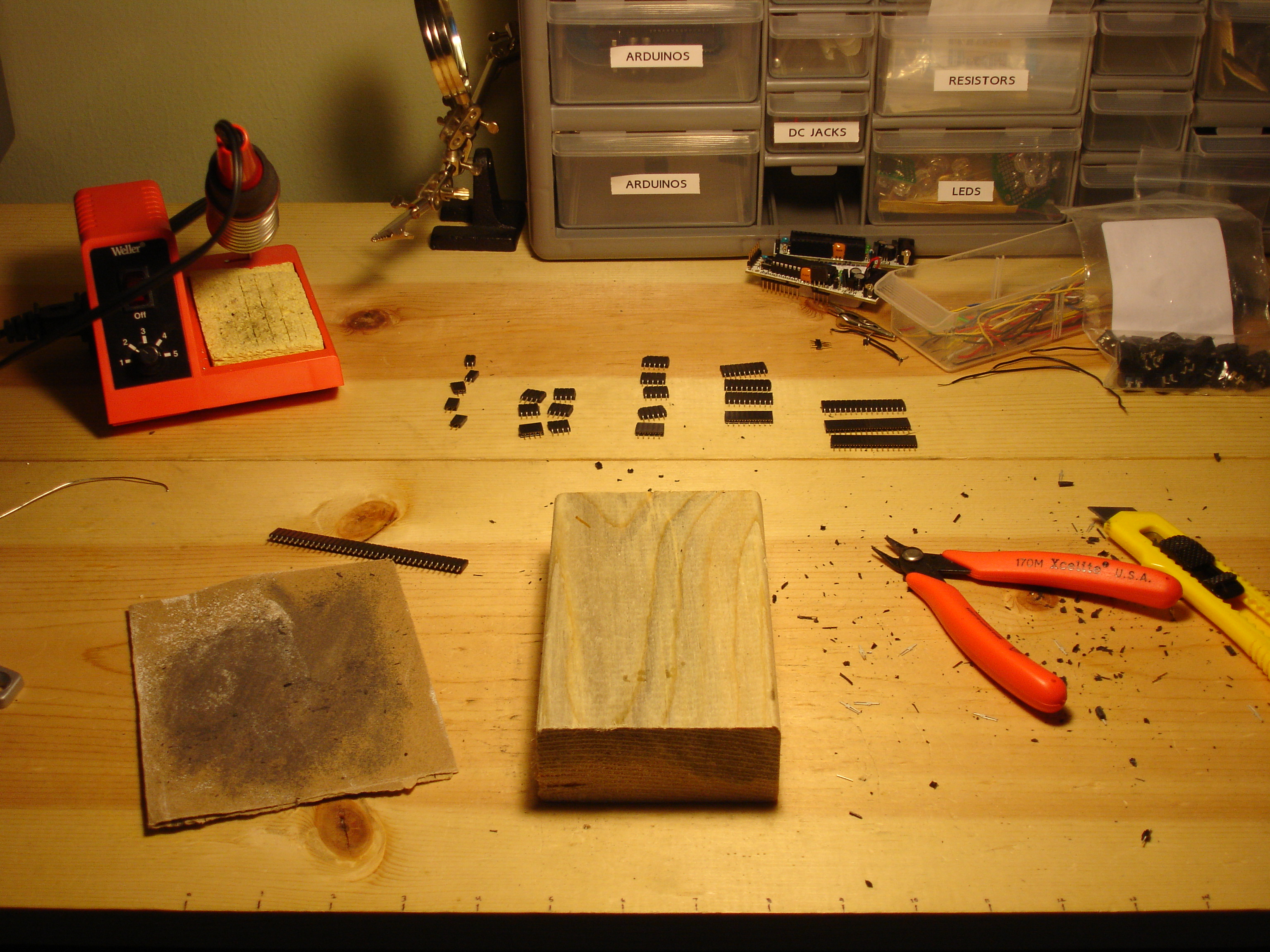


“Apple for teacher” birthday cupcakes from students. White cake, with red ‘sparkly’ icing, a chocolate-covered hazelnut, and a gummy worm = gold stars all around!


Preparing for show at AC Institute in New York.

This issue of Drain attempts to expose the cultural faciality of power, as well as manifestations of power as simulacra, which obfuscate traditional inquiries into its construction. If power connects the virtual and the actual, how does cultural creativity channel or destabilize this connectivity? The corporate-academic-entertainment-military-industrial complex and its front-end, the global information machine floods us with images, and images of images, to cause sensory overload, and yet at the same time, acute sensory deprivation. Most of all, power entrenches a visual literacy that allows us to see only its style, leaving us unable to access other ways of seeing and becoming. How can we parody this visual literacy, and the speed, cadence and grammar of this power and its affects?
If the simulation of power is necessary and absolute, can creative acts and molecular politics slip through the surveillance and desensitizing of territorializing systems?
This issue of Drain invites artwork, papers, and other creative works to actualize answers to these questions and re-channel them into different connectivities, ways of becoming and conceptual production.
Submission deadline: Sep 15, 2010
Please send submissions to:
Owen Mundy owen -at- drainmag -dot- org
or
Avantika Bawa avantika -at- drainmag -dot- org

Give Me My Data mentioned in a Bild article:
Die peinlichsten Einträge bei Facebook, StudiVZ und Twitter The most embarrassing messages on Facebook, StudiVZ, and Twitter (English), May 22, 2010
(translated from German) “Many users are unaware that their comments will be permanently stored in networks. For example Facebook can retrieve all stored Stautusmeldungen. The U.S. Professor Owen Mundy has a developed application, Facebook members ever entered all the data and displays the posts. Under “Select Data”, you select which data you want to see (for example, personal data, status messages). Here also dive old, long deleted on posts, which are provided with a time code. Facebook apparently never forgets.”
After 4 months the new yourarthere.net website and member-run content management system is now live. Thanks to Braylin and Brittany Morales, Beth Lee, and Chris Cumbie for all their hard work.
The site is valid XHTML/CSS and runs on PHP/MySQL using the Codeigniter framework. All the details from our research from inception onward are archived here.
This site is based around the idea that members should have control of the content on the website. Every member has a profile where they can add images, text, tags, and events to promote their artwork or group. Members can create a new profile for every domain they host with yourarthere.nets.


Joelle Dietrick and I sent images this week to two international group shows at the Golden Thread Gallery in Belfast, Northern Ireland, U.K. and the Raccolte Frugone Museum in Genoa, Italy. We were invited to submit proposals that “could not be realized” to Sean Miller, who curated the exhibitions as part of his John Erickson Museum of Art project.
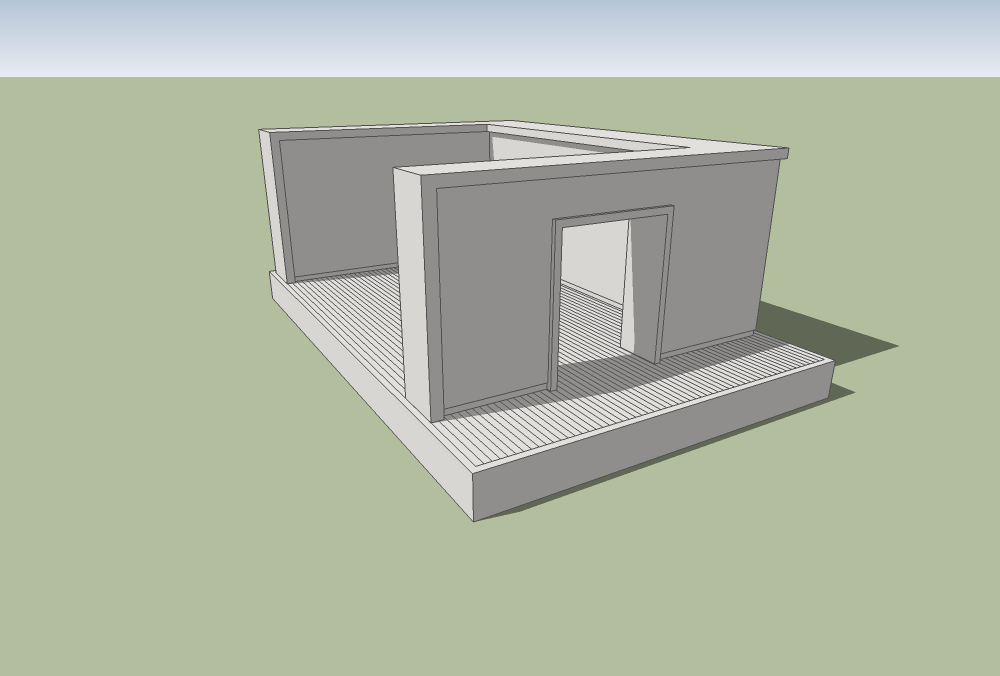
Our process involved first constructing a 3-dimensional model of the space. I did this using Google SketchUp.
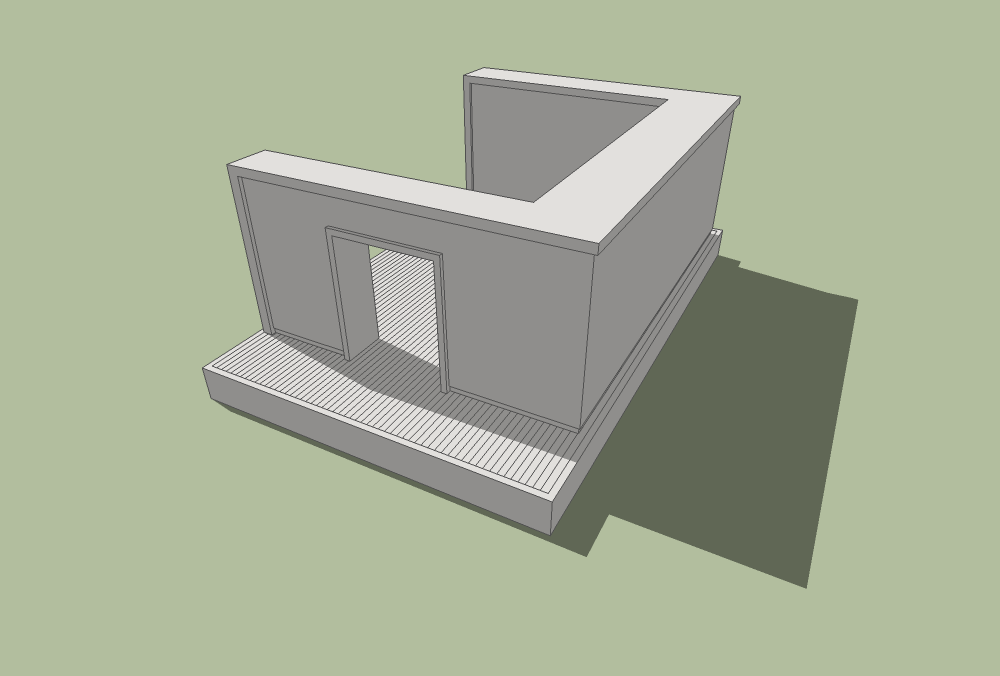
A different view of the final model.

The first work, Everything You Ever Wanted to Know But Were Afraid to Ask, constructed inside the space using SketchUp.
Following are the final works on paper.

Everything You Ever Wanted to Know But Were Afraid to Ask, 11×8.5″, archival inkjet on paper, 2010
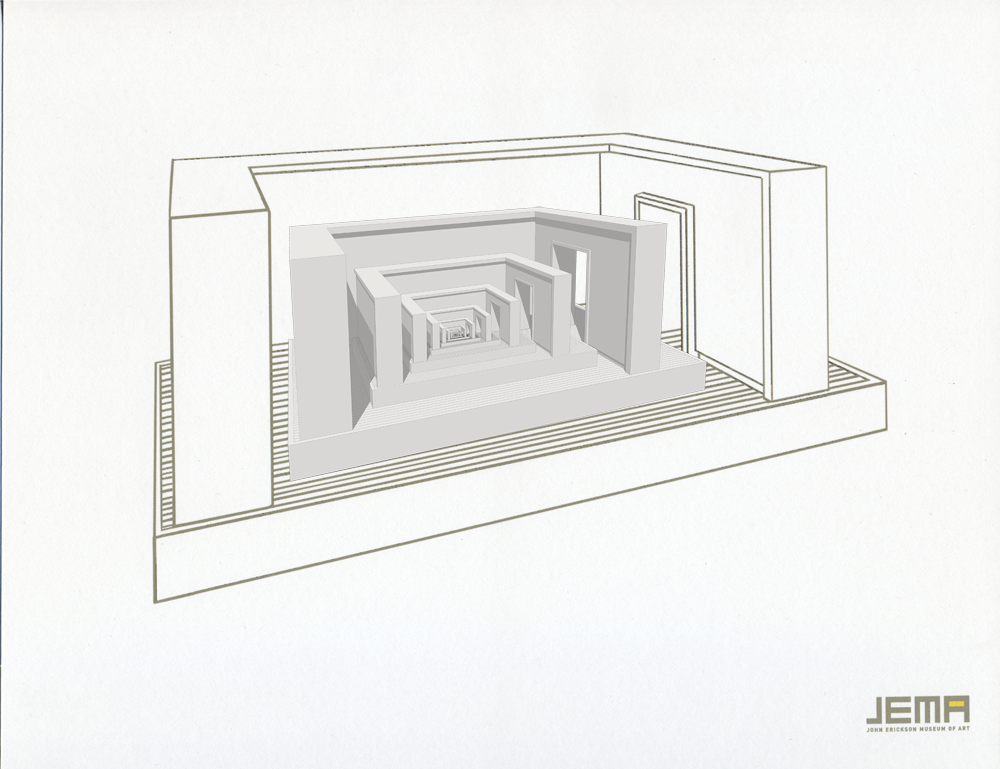
Everything You Ever Wanted to Know But Were Afraid to Ask, 11×8.5″, archival inkjet on paper, 2010
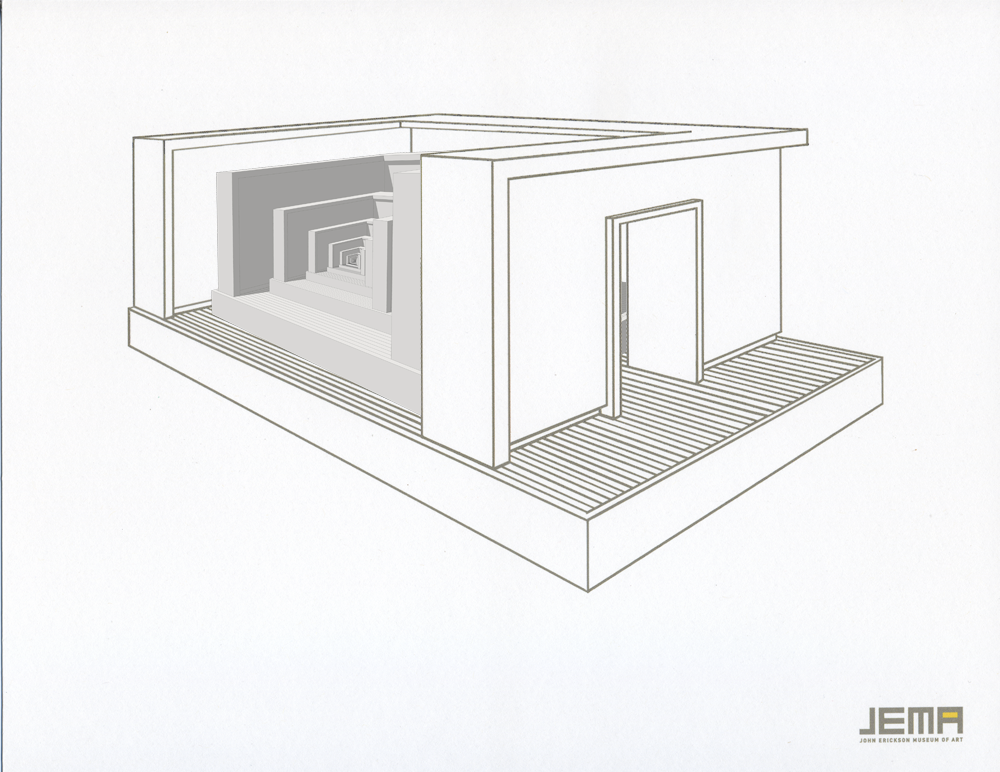
Everything You Ever Wanted to Know But Were Afraid to Ask, 11×8.5″, archival inkjet on paper, 2010

JEMA.3333, 11×8.5″, archival inkjet on paper, 2010
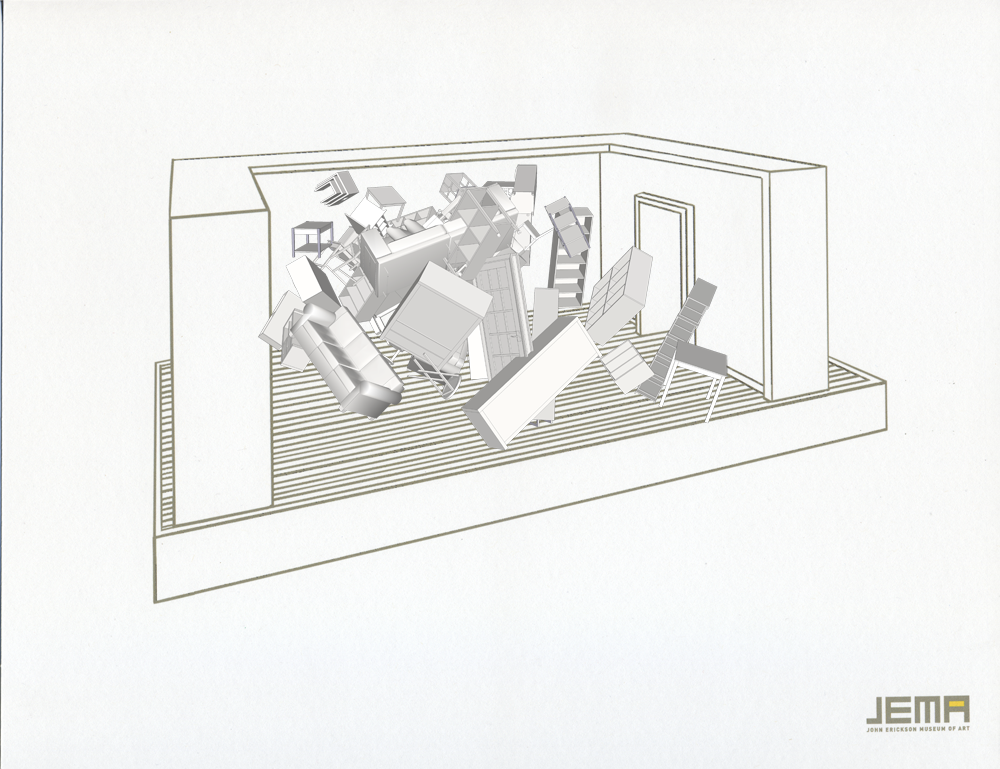
JEMA.3333, 11×8.5″, archival inkjet on paper, 2010
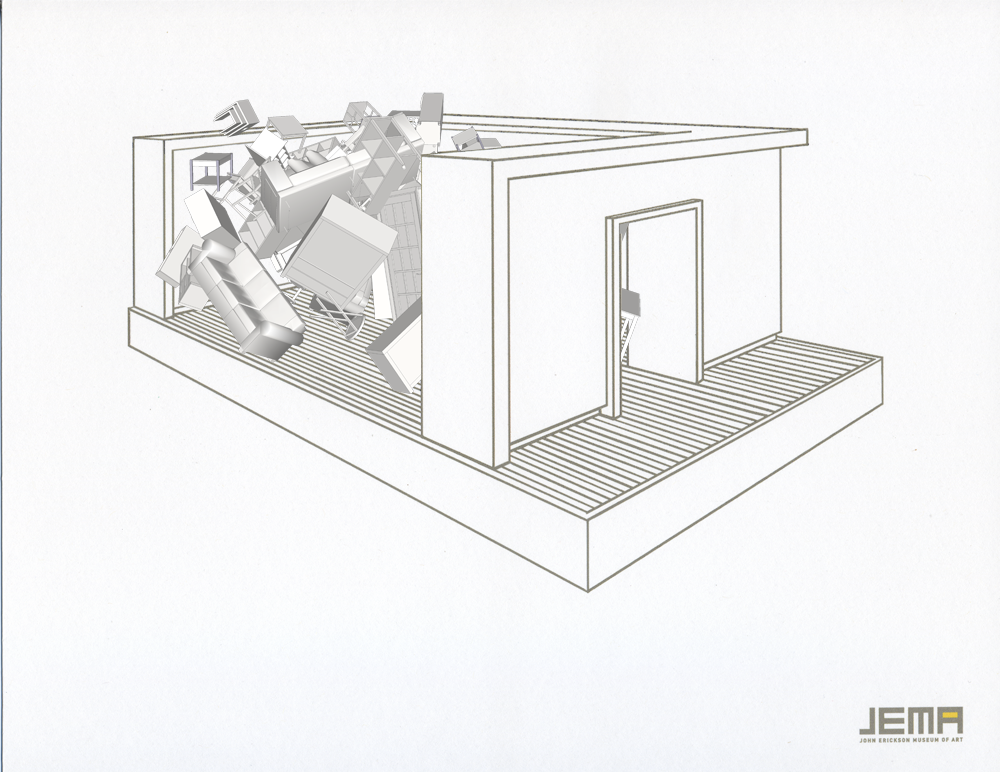
JEMA.3333, 11×8.5″, archival inkjet on paper, 2010
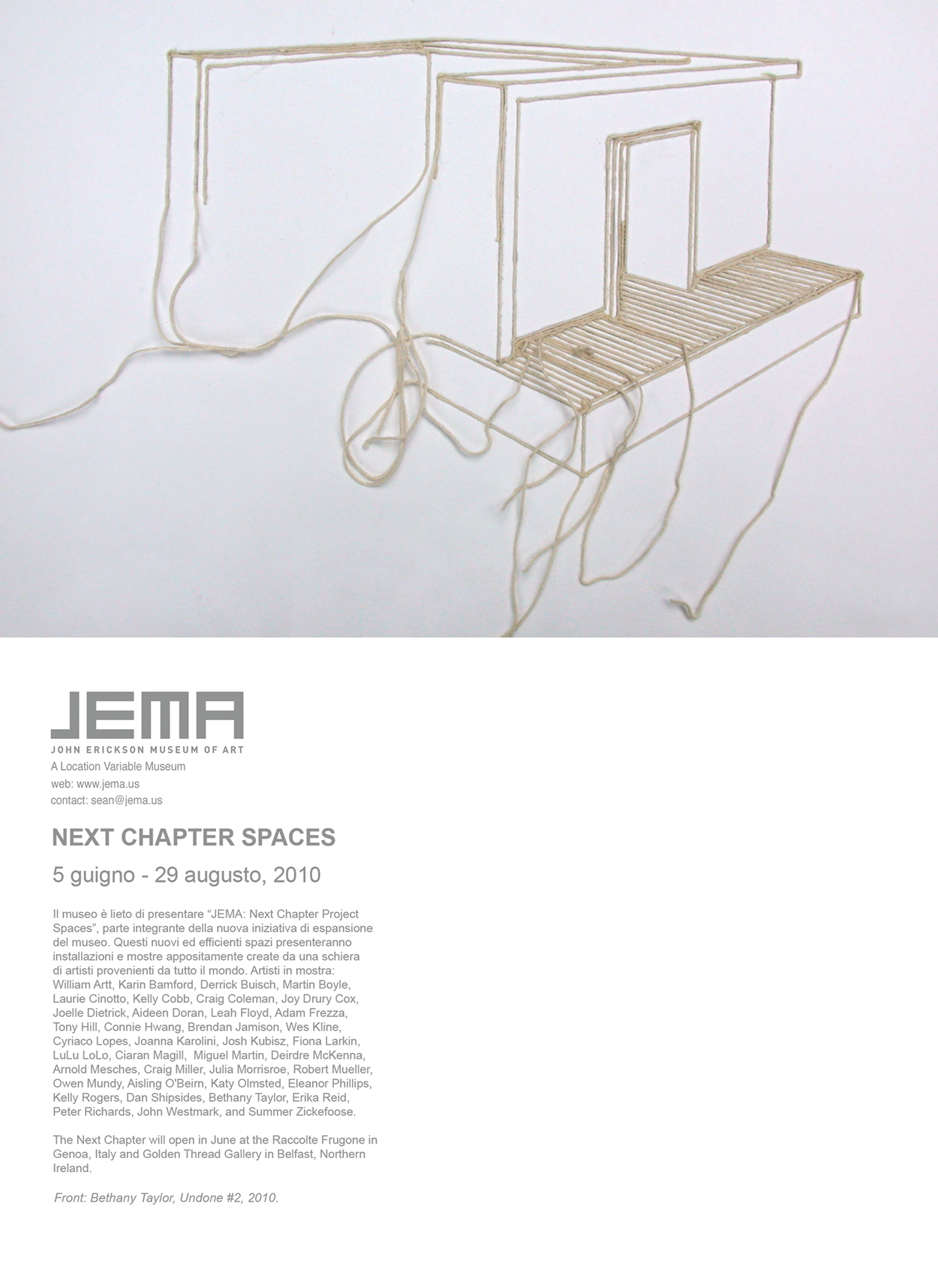
Museum All-Over
June 4-August 29, 2010
John Erickson Museum of Art: Next Chapter and
Raccolte Frugone Museum
Genoa, Italy
Little Wonder
June 4-June 17, 2010
John Erickson Museum of Art: Next Chapter and
Golden Thread Gallery
Belfast, Northern Ireland
U.K.
Considering sharing the source code behind Give Me My Data on GitHub. Looks like its great for archiving, improving, and sharing…