Stasi / Facebook / Big Data DAAD Day 6 – MfS Department M (postal control selection)

Stasi Department M workers removed enormous amounts of mail from Deutsche Post each day for inspection. Mail was identified visually based on handwriting, types of letters, or specific addresses. Surveillance of mail was technically illegal in the GDR. Still, mail was withheld on an official basis “in order to prevent attacks” by western intelligence agencies, presumably using “threats and explosives.” This led to the inspection of all incoming and outgoing mail to press agencies, embassies and consulates of NATO countries, and other western correspondence.

Unofficially, in the interest of multiple surveillance, control and censorship possibilities for the Stasi, everything possible was scrutinized, both foreign and domestic. The postal inspections contributed intelligence on GDR and foreign citizens who were suspected of spying for the west. They allowed the Stasi to filter information the citizens of the GDR were allowed to access, share, or communicate to the outside world. The Stasi intercepted undesirable books, seditious content, and other materials with the ultimate goal of preventing public protests, or other conspiratorial activities. While the goal of Department M was to return the mail collected for inspection back to Deutsche Post within a 12-hour window, many deliveries were seized and never returned. This massive operation naturally resulted in frequent delays in delivery or damage to letters or parcels, which including those that never arrived, led the public to become increasingly aware of the ongoing postal inspection.

Finally, the postal surveillance provided the Stasi with information about the mood of the population in the GDR, by examining personal communications, as well as messages sent between in companies and institutions. Reports prepared by administrators in Department M on population mood included information on economic and political sentiment and specifically targeted demographic groups (Labrenz-Weiß, 13) across specific geographic locations and social strata in the GDR in order to give the best possible assessment. For example, the following population groups are described in BStU documents

  • Brandenburg: 1,000 workers each at the East coaster and the Brandenburg Steel Works, and 1,000 old and new builders
  • Mecklenburg: 1,000 workers of the shipyards, 500 students and 50 teachers of the University of Rostock, and 1,000 old and new builders
  • Saxony-Anhalt: 1,000 workers of the chemical industry and of Magdeburg heavy machinery construction, 800 students and 100 faculty members of the Martin Luther University Hall, and 1,000 old and new farmers in Altmark
  • Saxony: 1,000 workers of the Stahlwerk Riesa as well as tradesmen / merchants, and 800 students and 100 lecturers from the University of Leipzig
  • Thuringia: 1,000 workers of the Unterwellenborn steelworks, Zeiss works in Jena and tradesmen, and 800 students and 100 professors of the Jena University


East Germany’s State borders established after WWII 1945-1947 in violet. In red the borders of the new states established during reunification. Source: Wikipedia

  1. Hanna Labrenz-Weiß, Abteilung M (MfS Handbuch). Hg. BStU. Berlin 2005.

Stasi / Facebook / Big Data DAAD Day 5 – MfS Department M (Organizational structure overview)

In 1989 Department M had 10 divisions, which were subdivided into 36 units. The head office, which consisted of 8 divisions and their corresponding units, was located in East Berlin. The divisions were organized based on mail destinations (western, non-communist countries for example), types of mail (like parcels or telegrams), or function within the scope of the work of the Department. Specific units were tasked with selecting mail for examination, while in technical processing units the selected mail was opened, examined, documented, and closed again by their respective units. Other units in Department M were assigned to inspecting customs declarations, maintaining secrecy, or operational engineering, where design, manufacturing, and maintenance of the technology took place. (Labrenz-Weiß, 8–10)

  1. Hanna Labrenz-Weiß, Abteilung M (MfS Handbuch). Hg. BStU. Berlin 2005.

Stasi / Facebook / Big Data DAAD Day 4 – MfS Department M (the workers)

The Stasi surveilled the post of the GDR for nearly 40 years, starting with the founding in 1950, until the fall of 1989 when the Berlin wall fell. The number of workers in Department M rose from a few dozen in the beginning, to nearly 2,200 by the end. The largest office occupied two buildings in the massive Stasi headquarters complex in Berlin-Lichtenburg and included almost 500 employees, with the remaining 1,700 spread across 15 district administration offices. (Polzin, 105)

While the ratio of women to men in Department M shrank over the years possibly due to the increasing focus on technology and automation, it was consistently at least twice that of the entire MfS. In the beginning 80% of Department M employees were women, compared with 25% in the MfS, while in the 1960s 40% were women compared to 14%. In 1989 only 20% of Department M employees were women. (Labrenz-Weiß, 5)

Employees were subject to numerous specialized training to prepare them for their work. This included courses on typography, x-ray certification, and photography for those performing inspections. Employees who were integrated with Deutsche Post received information like electronic training for working with telegraph devices, operating postal vehicles, and other knowledge related to the movement of mail and parcels. Those employees charged with the development of specialized equipment for Department M studied engineering, paper technology, air and refrigeration systems, and the mechanics around the movement of postal and newspaper materials. (Labrenz-Weiß, 6)

While Department M employees were physically embedded in Deutsche Post locations, their activities there were considerably constrained in order to ensure the secrecy of their work. For example, they were required to sit in closed groups in the cafeterias in order to avoid direct contact with actual postal workers. Official contacts were only allowed with Stasi officers already embedded in the post control system special operations.

  1. Arno Polzin, Postal Inspection, Telephone Surveillance and Signal Intelligence in Daniela Münkel (eds.), State Security: A Reader on the GDR Secret Police, Berlin 2016.
  2. Hanna Labrenz-Weiß, Abteilung M (MfS Handbuch). Hg. BStU. Berlin 2005.

Stasi / Facebook / Big Data DAAD Day 3 – MfS Department M

The Ministry for State Security’s Department M was tasked with “postal control”, or the inspection of domestic and international letters and packages. They conducted their work thanks to cooperation with Deutsche Post which, as another state institution concerned with “security of the state,” was subject to the same politics and power infrastructure of the single party system of the DDR (1). Consequently, the Department M had access to every letter and parcel which traveled throughout East Germany by inserting itself in the logistical operations of the postal system. The Stasi reserved special rooms or entire floors within the Deutsche Post buildings, which were off limits to regular post workers.

In Berlin, Department M had offices in the post office at Nordbahnhof, in the central telegraph office on Oranienburger Strasse and in the railway post office at Ostbahnhof. These rooms used by the MfS were designated “Department 12” of the German Postal Service, both internally and officially.(2)

  1. Arno Polzin, Postal Inspection, Telephone Surveillance and Signal Intelligence in Daniela Münkel (eds.), State Security: A Reader on the GDR Secret Police, Berlin 2016.
  2. Hanna Labrenz-Weiß: Abteilung M (MfS Handbuch). Hg. BStU. Berlin 2005.

Stasi / Facebook / Big Data DAAD Day 2 – The Stasi’s automatic letter opener invention

The former East Germany’s Ministry for State Security (more popularly referred to as the MfS or “Stasi”) is widely known for the inventive and clandestine gadgets that appear in films like Das Leben der Anderen (English: The Lives of Others) or on exhibit at the Stasi Museum in Berlin. Some of my favorites from the museum are the cameras disguised as everyday, boring objects. Take this watering can with a hidden camera.

Imagine a sweet old Oma in her garden, tipping the can just so, with the intention of spying on the grandma next door. This technologically-enabled interpersonal collection of data of our “friends” was very much like how Facebook operates today. The Stasi used blackmail to infiltrate networks and get people to give up their neighbors, while Facebook coerces us in different ways; for example, through algorithms that implore us to post details from our private lives in order to build up one’s cultural capital and sense of self worth. I’ll explore this connection more in later weeks, particularly in reference to a special type of behind the scenes inventions of the Stasi: a series of machines that automatically opened personal letters and closed and resealed them after their contents were examined.

In this project, a central question is what do the motivations and methods of this machine, which was used to intercept and automate the secret unpacking and examination of personal information of letters between private citizens, tell us about how the software used by the NSA for monitoring citizens around the globe? Or about the even more secretive methods of Google or Facebook as they examine our personal information in order to influence our behavior? Until tomorrow.

Stasi / Facebook / Big Data DAAD Day 1 – Willkommen in Deutschland

This is the first post in a long time. Over the next two months I will add one every day while I’m working on a new stage of an ongoing project I began in Berlin in 2010. I haven’t posted like this in a while. I find it extremely helpful to share and collect research, create an arc for the work, and of course to stay focused. While the project will evolve as I add content to this space, I’ll share the essential bits from my plans here:

This proposal for a DAAD grant will support research and a series of writings and visualizations that examine how the technological inventions of the East German Ministry for State Security preempt Facebook, the NSA, and the world of Big Data. I will work at Humboldt University and the Stasi Records Agency (BStU) in Berlin and the Museum at the Round Corner in Leipzig, researching and documenting the schematics and actual machines developed by the Stasi for surveillance. With this knowledge I will frame an investigation that uses the analog devices of the Stasi to lend insight into the methods implemented today as software by social media, advertising groups, and intelligence agencies in the service of domestic surveillance and censorship.

I feel super fortunate to be able to continue this project I started almost seven years ago thanks to support from the German Academic Exchange Service or DAAD (German: Deutscher Akademischer Austauschdienst) and Prof. Dr. Wolfgang Ernst at the Institute of Musicology and Media Studies at Humboldt University Berlin.

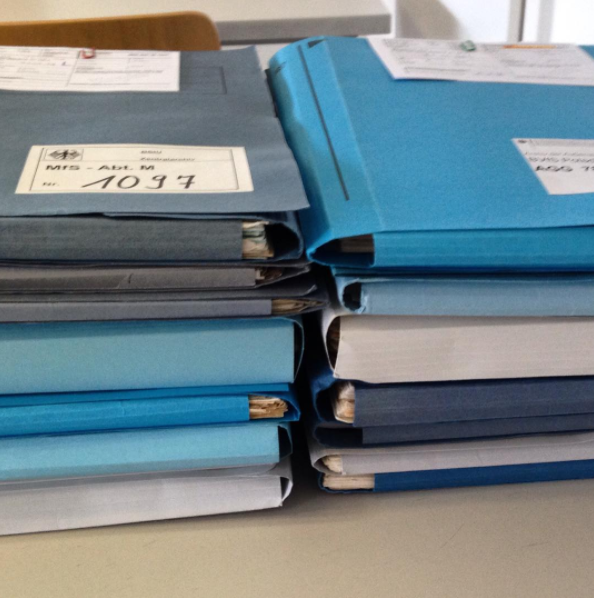
Stasi files at the BStU. These are not the personal files the Stasi collected, but notes, diagrams, and parts lists detailing the inventions and processes developed during the Stasi’s almost 40 year reign.

Big Bang Data at Somerset House in London, other exhibitions and interviews, and 5 million + cats!

I Know Where Your Cat Lives will be featured at the new exhibition, Big Bang Data, opening today at Somerset House in London. This is a traveling exhibition curated by Olga Subirós and José Luis de Vicente.

image001

Emails, selfies, shopping transactions, Google searches, dating profiles: every day we’re producing data in huge quantities. Our online activity, alongside that of businesses and governments, has led to a massive explosion – a ‘Big Bang’ – of data.

This radical shift in the volume, variety and speed of data being produced, combined with new techniques for storage, access, and analysis, is what defines the proliferation of data. It is radically reshaping our world and is set to revolutionise everything we do.

Data today gives us new ways of doing things: from scientific research to business strategy, politics to social interaction, our new data-driven society that has the potential to be more fair, stable, and efficient and yet it also created a tools for unprecedented mass surveillance and commodification. Data access and usage rights, along with the value they comprise, are at the heart of many concerns.

Big Bang Data explores the issues surrounding the datafication of our world through the work of artists, designers, journalists and visionaries. As the data explosion accelerates, we ask if we really understand our relationship with data, and explore the meaning and implications of data for our future.

sustainability

The exhibition, which runs Dec 3, 2015—Feb 28, 2016, includes over 50 works by artists, designers and innovators, comprising also a number of authors I’ve long admired like:
Brendan Dawes, Charles Joseph Minard, David McCandless, Ellie Harrison, Eric Fischer, Erica Scourti, Eva and Franco Mattes, Fight for the Future and Demand Progress, Florence Nightingale, Forensic Architecture, Future Cities Catapult, Heather Dewey-Hagborg, Horst Ademeit, IF, Ingo Günther, Ingrid Burrington and Dan Williams, Interaction Research Studio, Goldsmiths, ITO World, Jaime Serra, James Bridle, John Snow, Jonathan Harris, Jonathan Minard, Julian Oliver, Julie Freeman, Kamel Makhloufi, Kiln, Laura Poitras, Lev Manovich and Moritz Stefaner, Lisa Jevbratt, Lise Autogena and Josh Portway, mySociety, Nesta, Nicholas Felton, Open Knowledge, OpenCorporates, Owen Mundy, Paolo Cirio and Alessandro Ludovico, Philipp Adrian, Rafael Lozano Hemmer, Ryoji Ikeda, Safecast, Stefanie Posavec and Giorgia Lupi, Tekja, TeleGeography, The Guardian, The Long Now Foundation, Thomson and Craighead, Timo Arnall, Umbrellium, William Elford, and Zach Blas

Some press is emerging already and I’ll add more images as the show opens:

Meanwhile time for a…

2015 Update on IKWYCL

Just over a year ago I launched I Know Where Your Cat Lives and it immediately went viral. I’m gracious for all the positive attention the project has received, and even more so for the reach it generated. In addition to a notable influence on research and dialogue around metadata security, the impact for individuals has been significant. Over 25% of owners of cat photos from the original sample have removed or increased privacy on their images and, even more noteworthy, nearly 60% of users have chosen to leave their photos public but have manually removed their location data from the images they shared, underlining the importance of this project to experts in the field, as well as everyone who uses social media.

Screen Shot 2015-12-03 at 1.00.30 AM

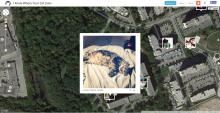
Since then I’ve found time to evaluate the project’s impact and begin to work on the conclusion. The site I shared was only a prototype, containing just one million images from the at least 15 million tagged with #cat on social media. Thanks to everyone at FSU’s Research Computing Center, and to support from Dr. Ostrander at the FSU Office of Research, I’ve made great progress in collecting and visualizing the millions of images that users have unknowingly uploaded with geolocation data. With this exhibition at Somerset House I’m uploading another large dataset to bring the total number of cats to just under 5.4 million!

Screen Shot 2014-10-29 at 4.30.31 PM

The final project will include expanding the data set to run in real time, as well as a mobile app called “Like Tinder for Cats,” and a book project which contextualizes and documents the research, the technology I developed, and most importantly, the impact of this ephemeral web-based work on industry, academia, and culture. I’m also thankful for the opportunity to work with my longtime colleague and amazing writer, Shana Berger, on the writing for the project, the first essay of which is currently under review.

Highlights from the last year

The IKWYCL prototype website has already received press in Motherboard/Vice Magazine, The New York Times, Time Magazine, The Atlantic, Wired Magazine, MSNBC, NPR, and many others. It has been featured in several international exhibitions including the Tempo Documentary Festival in Stockholm, Sweden, and numerous others like:

doclabsamples

I Know Where Your Cat Lives was nominated for a 2014 IDFA DocLab Award for Best Digital Storytelling at the International Documentary Film Association (IDFA) Festival. While ultimately the amazing Serial podcast took the prize, I was thrilled to be nominated among many great interactive documentary works including Miranda July’s conceptual app Somebody. Read more about IDFA DocLab in this review on We Make Money Not Art.

I was also excited to take part in the festival, not only as a presenter, but a mystery guest on the evening of my talk. Previously I had shared a selection of my Google searches with a team of experts who led a quiz style analysis of my search history, complete with an artist who did a rendering of what my family looked like according to my searches, and a chef who prepared food for the audience based on what my data revealed.

That same month found me giving a presentation on my work during the L2 Forum at the Morgan Library in New York City.
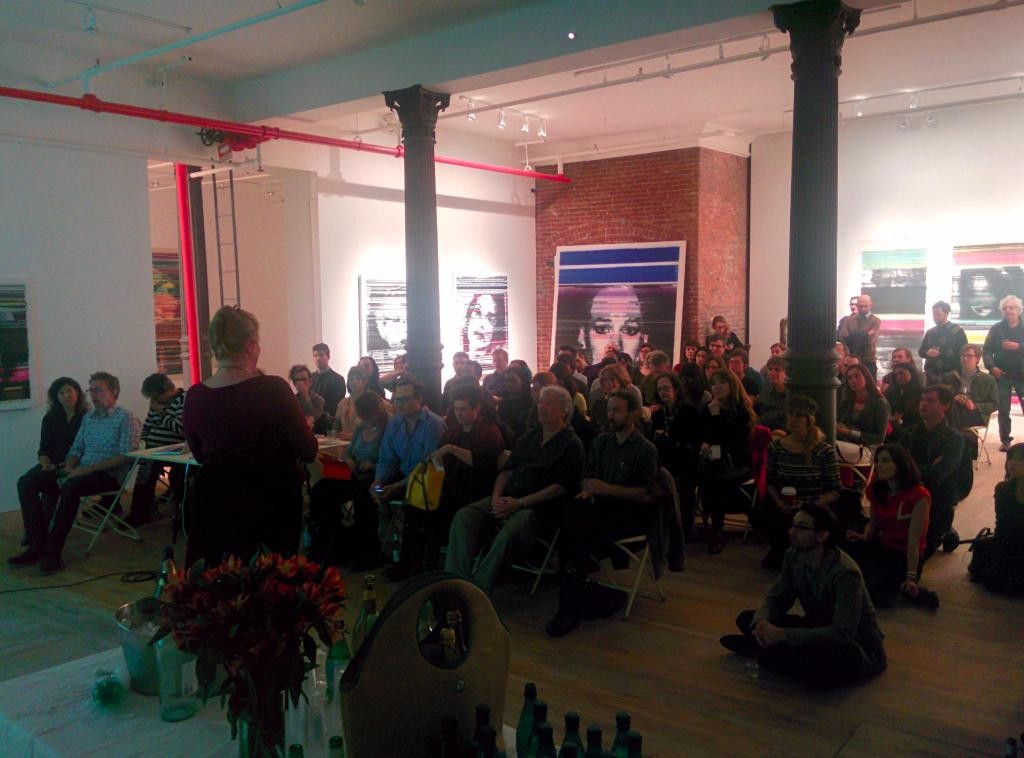
lisa salon

While in NYC I also spoke at the LISA (Leaders in Software and Art) Salon at Postmasters Gallery
Screen Shot 2015-12-03 at 9.06.29 AM

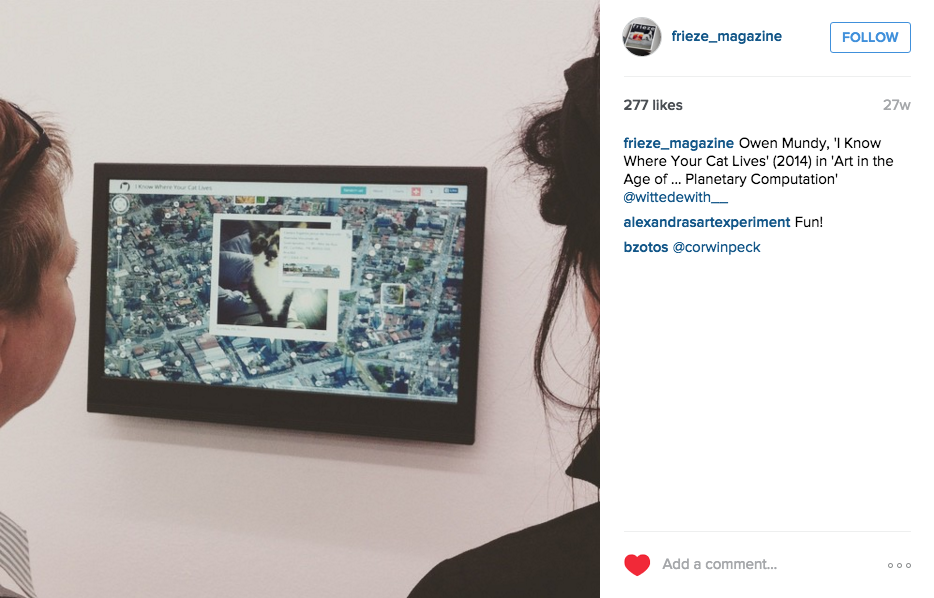
In May 2015 it was featured among works by Trevor Paglen and Jason Salavon in the exhibition Art In The Age Of… Planetary Computation, at the Witte de With Center for Contemporary Art in Rotterdam curated by Adam Kleinman. This was followed by an exhibit on interactive storytelling and the future of digital media at the Polish National Audiovisual Institute (NInA) in Warsaw curated by Anna Desponds.

Finally, I was very honored to be interviewed this summer for two separate European journalism projects around the cultural impact of technology.

Silvia Font published an extensive discussion which included many of my previous works for El Diario. The interview, Las fotos de tu gato en internet ponen en jaque tu privacidad (in Spanish), was part of a series that included interviews with Laura Poitras and Jacob Appelbaum.
touslesinternets

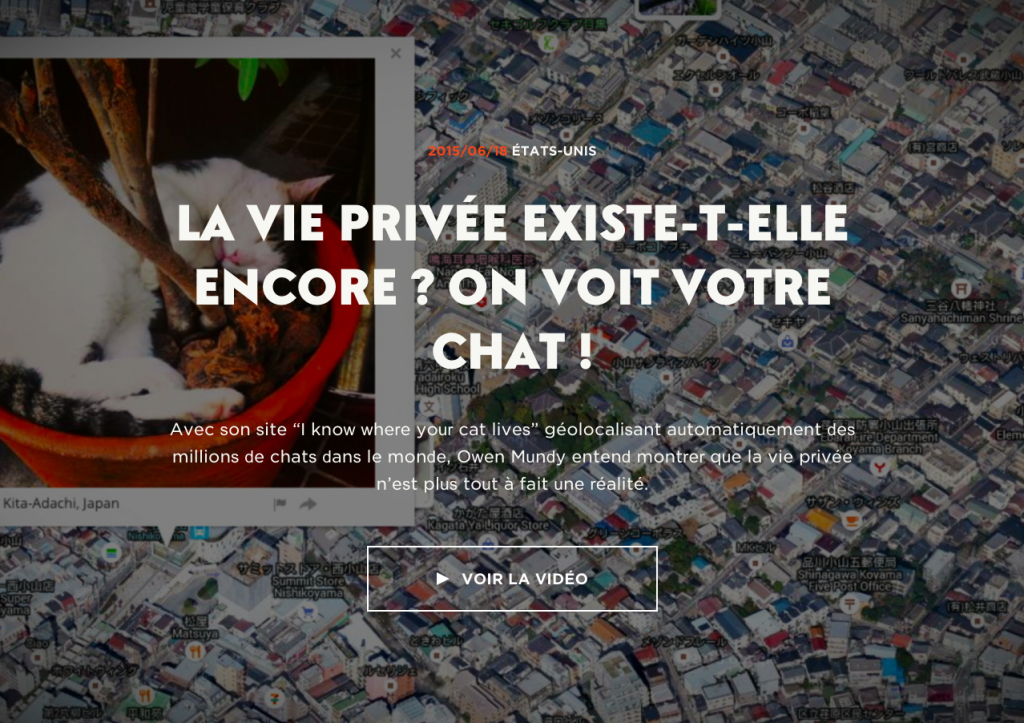
And, Charles-Henry Groult interviewed me for an ARTE web special about people shaping the culture and politics of the internet. The interview is in English but the interface elements are only in French and German

The dialog with these professionals was really gratifying. I’m so glad to have created something that is so thought-provoking, has proven impact, and yet is extremely fun to use. Thanks to everyone for the support :-)

Owen Mundy on Arte

Thinking Through Digital Media: Transnational Environments and Locative Places

I’m enjoying reading this new book which discusses three of my works (Give Me My Data, Camp La Jolla Military Park, and Keyword Intervention): Thinking Through Digital Media:Transnational Environments and Locative Places by Dale Hudson and Patricia R. Zimmermann (Palgrave Macmillan, 2015)

Give Me My Data offers users a tool to see, if not claim, their data under Facebook’s (frequently amended) privacy rights, which often make seeing one’s data impossible. In 2010, the new Facebook interface threatened to “erase” user data, so the app offered a way to save one’s data and “refill” one’s Facebook profile, which is also useful in cases of identity theft. Users select the data they would like to see and then choose a format in which to see it. Data can be imported into a document or spreadsheet or visualized as a graph or cloud. Users can speculate on how corporations automate their data: sorting it through different filters, running it through different programs, interpreting it for different reasons. The app allows users an opportunity to investigate the types and meanings of information about themselves available outside their control. They are prompted to reflect critically about data they freely and willingly give away to corporations and governments.
—Dale Hudson and Patricia R. Zimmermann

Thinking Through Digital Media Thinking Through Digital Media

Creativity and Technology Symposium (C.A.T.S.) at NCSU

This week I’m presenting at the Creativity and Technology Symposium hosted by the North Carolina State University Libraries.

Using our feline friends as a theme, we will explore a variety of topics that relate to the ever-expanding and complex work of libraries and academic institutions including: GIS-data enabled location tracking and the implications for privacy rights; the use of social media in research; how new technologies are expanding the possibilities for data gathering; and digital archiving as it relates to common computer usage and pop culture. Plus, we have a few special guests who will be paying a not-to-be-missed visit to the Libraries. All C.A.T.S. events are free and open to the public.

Track Your Cat
Researchers from NC State and the North Carolina Museum of Natural Sciences
Oct 25, 2015, 3:00–4:00 PM
At the Cameron Village Regional Library
Image Macros, Memes, and Viral Content
Amanda Brennan, Tumblr
Oct 26, 2015, 3:00–4:00 PM
At the Auditorium (Hill), D. H. Hill Library
A Life-Changing Cat
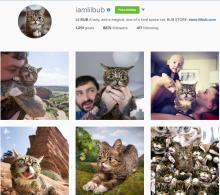
Mike Bridavsky and Lil BUB
Oct 26, 2015, 7:00–8:00 PM
At the Auditorium (Hunt), James B. Hunt Jr. Library
Animals, Technology, and Us: How the Internet is Affecting Participatory Science
A panel discussion with Dr. Rob Dunn, associate professor of biological sciences at NC State, Amanda Brennan of Tumblr, and Professor Owen Mundy of Florida State
Oct 27, 2015, 7:00–8:00 PM
At the Auditorium (Hunt), James B. Hunt Jr. Library
Using Technology to Measure Pain in Animals
Oct 28, 2015, 7:00–8:00 PM
At the South Theater (College of VM), Veterinary Medicine Library, College of Veterinary Medicine; 1060 William Moore Drive, Main CVM Administration entrance, South Theatre

UPDATE: C.A.T.S. was a success, AND I met the famous Lil Bub!

IMG_5054

Story-re-telling exhibition, National Audiovisual Institute (NInA), Warsaw, Poland

Photos from the Story-re-telling exhibition at the National Audiovisual Institute (NInA), Warsaw, Poland (September 25–October 18, 2015) curated by Anna Desponds.

“I know where your cat lives” proclaims artist and programmer Owen Mundy. And indeed – the website created by him can not only recognize pictures of cats from the web, but also precisely pinpoint where they were uploaded.

Cats, which had heretofore led a sheltered life, have recently become Internet mascots. They have entered the public sphere – much in the same way as information about Internet users. This seemingly innocent, funny and simple project in which we watch a map with thousands of photos of cats, moving in a matter of seconds from Bangkok to Rome, is in fact a commentary on the all-knowing web and the often unquestioning satisfaction with which we relinquish our privacy. After all, it’s easy to imagine a similar app for pictures of children instead of cats.

This is not the first one of Mundy’s projects to deal with the topic of the safety of data on the web. He has also created the app Give Me My Data which allows users to reclaim their own information from Facebook and use it for further analyses or visualizations.

Unlike Facebook’s creator Mark Zuckerberg, who claims that privacy is dead, Mundy thinks that it is evolving. Many people didn’t want to show their cats on the webpage – browsing the site you can see which pictures have been removed by users. On the other hand though, many people supposedly reached out to Mundy to ask how they could add their cat to the map.

I know where your cat lives
USA, 2014
Author: Owen Mundy
Team: Owen Mundy, Nicole Kurish, Tim Schwartz, Alissa McShane, Shana Berger
URL: iknowwhereyourcatlives.com

program-festiwal-wersja-beta-2015_top

DSC_9710

festiwalbeta3_51

DSC_0001

festiwalbeta3_49

festiwalbeta3_76

Photos: Malwina Toczek/NInA